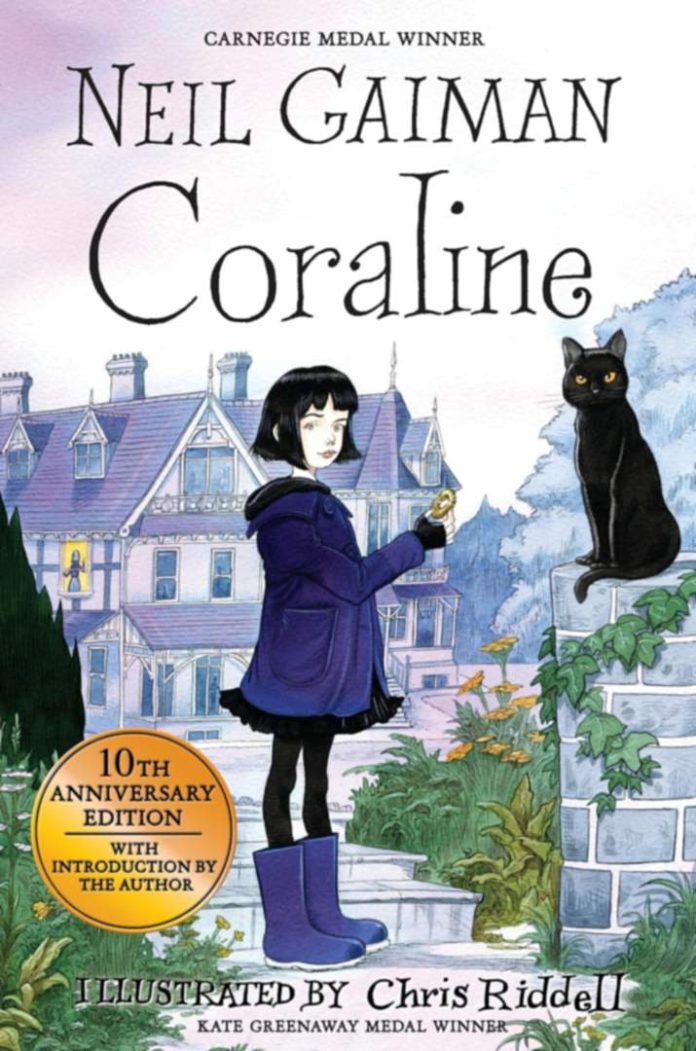
On the first wet day in the new flat, a girl with nothing to do takes a pen and paper and counts the house. One hundred and fifty-three blue things. Twenty-one windows. Fourteen doors, and thirteen of them open and close the way doors should. The fourteenth is carved, brown and locked, in the corner of a drawing room nobody uses. Her mother finds the oldest, blackest key on the ring and opens it to show her: bricks. The door goes nowhere. Then her mother walks away without locking it again, because why would you lock a door that goes nowhere? Coraline by Neil Gaiman is about the one person in that flat who keeps thinking about the door.
Everything Coraline Wants, Served Hot
When she gets through at last, the passage leads to her own flat, or almost. Same carpet, same wallpaper, same picture in the hall, except the boy in the painting now looks at his soap bubbles as if he means them harm. In the kitchen a woman who resembles her mother is cooking. She is taller and thinner, her fingers never stop moving, and she has big black buttons where her eyes should be.
The genius of this half of the book is that the other mother is not cruel at first. She is attentive. She makes a roast chicken that tastes of something. Her bedroom for Coraline has wind-up angels and books whose pictures crawl. The other father wants to talk. Everyone has been waiting for her. For a child whose real parents answer every question while facing a screen, it is the most seductive offer imaginable, and Gaiman lets the reader feel its pull before the price arrives on a china plate: a spool of black thread, a silver needle and two buttons.
From there the stakes widen in a way that is properly chilling. Locked in a cupboard behind the hall mirror, Coraline meets the faint ghosts of three children from other centuries who came through long ago and have forgotten their own names. They are the book’s quiet argument: being loved like that means being kept, and being kept means being eaten. Coraline’s answer is to propose a game, and the second half of Coraline by Neil Gaiman follows her through a world that is visibly wearing thin as she plays it.
Her best tool is a small pebble with a hole worn through it, given to her by the old actresses downstairs and matching a folk charm, the adder stone, said to let its holder see through enchantment. Gaiman never explains it, which is right for a story pitched between fairy tale and nightmare.
Boring Parents Are the Point
The counterweight is home. Coraline’s real father cooks what she calls recipes, leek and potato stew with tarragon and melted cheese, and she answers with microwave chips. Her mother refuses the bright green gloves Coraline wants and buys grey school blouses like everyone else’s. When Coraline rings the police to report that her parents have been taken into a world behind the mirror, the officer suggests a mug of hot chocolate and a hug. These scenes are funny, and they do serious work: the only thing standing against the other mother’s perfect home is an ordinary, inattentive, imperfect one.
What makes Coraline by Neil Gaiman more than a creepy premise is that Coraline chooses the dull version knowing exactly what it is. Gaiman writes her as stubborn, literal and brave in the specific way children are brave, scared and doing it anyway. She calls herself an explorer whenever her nerve goes, and the self-description becomes a small engine of courage. Even the old man upstairs, who is training a mouse circus that refuses to play his songs, passes on a warning from the mice. The prose is plain and quick, and the scariest images (a cellar, a cocoon, a door that will not close) arrive in the same calm voice as the jokes.
Where Coraline by Neil Gaiman Gives Ground
- The real parents stay faint. The book’s whole argument rests on Coraline preferring them, yet they get only a handful of scenes, and the final reconciliation lands on small gestures rather than anything they have learned. Adults may wish they mattered as much on the page as they do in the theme.
- The hunt runs on rails. Once the game is agreed, Coraline visits three locations for three hidden objects, and the pattern is clear early. Each set piece is vivid, but this stretch of Coraline by Neil Gaiman reads more like a quest checklist than the dread of the opening, and older readers will feel the tension dip.
Read These Next
If Coraline by Neil Gaiman hooked a young reader, these are the natural next steps.
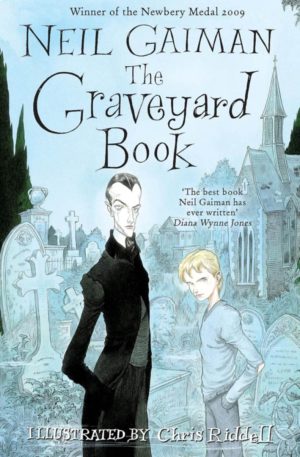
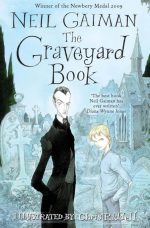
- The Graveyard Book by Neil Gaiman, the next step up for the same reader: a boy raised by ghosts after a murder.
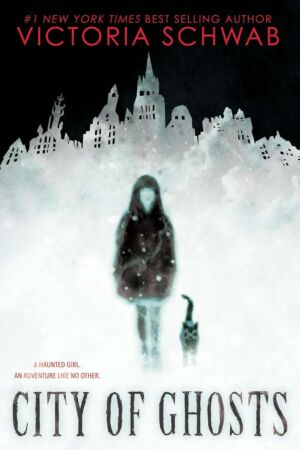
- City of Ghosts by Victoria E. Schwab, a modern middle-grade ghost adventure with a girl who crosses into the other side.
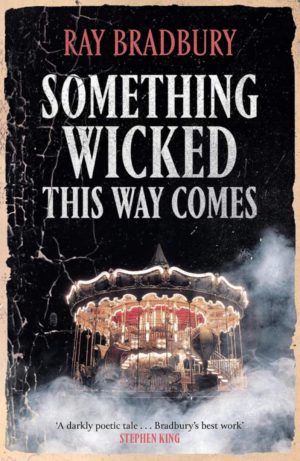
- Something Wicked This Way Comes by Ray Bradbury for children tempted by an offer from something old and hungry.
- Alice’s Adventures in Wonderland by Lewis Carroll, one of the stories Gaiman has named as a direct influence.
- The Wolves in the Walls by Neil Gaiman and Dave McKean, a picture book with the same house-gone-wrong feeling for younger siblings.
You will find more Halloween classics, for every age, in our Halloween books guide.
Neil Gaiman, and a Few Things About Coraline
Neil Gaiman was born in Portchester, Hampshire, in 1960 and made his name in comics with The Sandman, which ran from 1989 to 1996, before turning to prose with Good Omens, written with Terry Pratchett, and American Gods. Coraline by Neil Gaiman was his first novel for children. He started it in 1990 and it was published in July 2002 by Bloomsbury in Britain and HarperCollins in America, with illustrations by his longtime collaborator Dave McKean. Six years later came The Graveyard Book, the first book to win both the Newbery and the Carnegie medals.
- A clean sweep of genre prizes: the Hugo and Nebula awards for Best Novella in 2003, the Bram Stoker Award for Best Work for Young Readers, and the Locus Award for Best Young Adult Book.
- A modern classic on paper: The Guardian placed it 82nd in its 2019 list of the hundred best books of the twenty-first century.
- The film: Henry Selick’s 2009 stop-motion version, made by Laika, was nominated for the Oscar for Best Animated Feature and lost to Up. It adds a boy, Wybie, the novel never gives a page to.
- Other forms: P. Craig Russell adapted it as a graphic novel in 2008, and Mark-Anthony Turnage turned it into an opera that premiered at the Barbican in London in March 2018.
- A cancelled musical: a new stage version due to open at Leeds Playhouse in April 2025 was called off that January, with the sexual misconduct allegations against Gaiman cited as the reason.
The Verdict
Coraline by Neil Gaiman is short enough to finish in an evening and strong enough to follow a reader for years. Its parents are thinner than its monster and its middle is more checklist than nightmare, but the central idea has not aged a day: the most dangerous person in a story can be the one who gives you exactly what you asked for. Hand it to a brave child this October, then read it yourself after they are asleep.
Check the locks on any door that opens onto bricks.