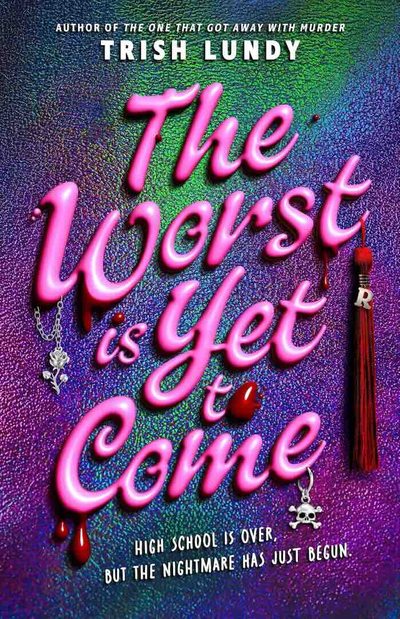
The first chapter is stamped Tuesday, July 28, 2009, a quarter past one in the morning. A teenage girl steps off a country road into a stand of birch trees to meet someone she believes is helping her, and the chapter closes as that person’s hands move toward her neck. The second chapter is stamped Now, a June evening seventeen years later, at a graduation party where a hockey player spills vodka and energy drink down a different girl’s shirt. By the end of that night the second girl has walked the same road to the same trees, and her best friend is dead. A few chapters on, where the time should be, the header reads only three question marks. The Worst Is Yet to Come by Trish Lundy shows you its machinery before anything else: two clocks, ticking in alternate chapters, and a gap in one of them.
How The Worst Is Yet to Come Works
Rose Cleary is about to graduate from Prudence High, outside Rochester, New York, with no college place and no plan. She was once premed, until her mother, a hospital obstetrician, crashed her car and came home with a brain injury. On the night of the senior send-off, Rose catches her best friend Kennedy, a valedictorian a year out from a kidney transplant, kissing her ex-boyfriend. She storms out and walks to Autumn Birch, a half-built subdivision abandoned after the Kodak and Xerox layoffs and since fenced off by Beryl, the hospital that bought every lot and now dominates the town.
Someone is waiting on the unfinished staircase. Rose comes to in a doorway with a split scalp and an hour gone, escapes, and is driven to the emergency room by the school quarterback, where she watches Kennedy wheeled in on a gurney. She is the only witness, she cannot describe the attacker, and the evidence on her own body starts to point back at her.
The rules of The Worst Is Yet to Come by Trish Lundy, laid out cleanly:
- Rose’s chapters are first person, present tense, dated and timed to the minute across a single June.
- Brian’s chapters go back to 2009 and the week Abigail Amaro, a teen mother, vanished into the same woods. Brian is the baby’s father and the town’s default suspect, and his own father is the officer now questioning Rose.
- Between them sit found documents: newspaper clippings, text threads, a LinkedIn profile, a yearbook inscription, patient notes.
Two Clocks, and the Worst Still Yet to Come
The structure is doing two jobs. First, it makes the mystery auditable. Because every Rose chapter is timestamped, the reader can check alibis against the clock: when she left the party, when the quarterback found her on the road, how long she lay in that doorway. Suspects rise and fall on twenty-minute windows, and the missing hour becomes a puzzle the reader can work on alongside her.
Second, the 2009 strand runs ahead of the present one. Brian knows things the 2026 investigation does not, and he hides some of them for reasons that are human rather than sinister. The reader is consistently half a step ahead of Rose and well behind whoever is doing the killing, which is exactly where a thriller wants its audience. The Worst Is Yet to Come by Trish Lundy also knows what genre it is borrowing from. Rose’s grandmother embroiders a Ghostface mask in her armchair and talks about horror heroines, and Rose understands, while running through the weeds bleeding, that she has been cast as the final girl. The abandoned houses, the hooded figure and the doorless basement are slasher furniture, and Lundy arranges them with a fan’s affection.
What Works
The engine is the narrator, but the setting and the second timeline earn their keep too.
- Rose’s voice. Sardonic, self-mocking and very specific, she jokes about star signs and grooming while concussed, then turns raw without warning. Her grief runs in two directions: a friend who is gone, and a mother who is still there but cannot talk to her.
- Brian’s week in 2009. The boy everyone suspects, written from inside, scared and eighteen with an infant daughter and a ruined hockey career. These short chapters are the best thing in The Worst Is Yet to Come by Trish Lundy and they carry its strongest moments of dread.
- The romance as a relief valve. Jake is a blood-shy quarterback with a well-read streak, and his slow, tender pursuit of Rose gives the book somewhere to breathe between bodies.
- A real place. Rochester comes through in its ballparks, supermarkets and summer storms, and a town that defers to one institution is drawn with quiet menace.
Where The Worst Is Yet to Come Gives Ground
For a book this carefully engineered, the joins show in predictable places.
- The suspect of the week. The ex, a lovesick hockey player, his hard-drinking father, a drunk Ivy-bound boy, a grieving cheerleader: each is raised, interrogated and cleared on a schedule you can almost set your phone by.
- Adults as obstacles. A detective with an obvious conflict of interest, a reporter who ambushes a concussed teenager with leaked evidence, a father who sits on test results. They exist to make Rose act alone, and it shows.
- The solution is told. The final act explains itself in a long confined-space confession. The logic is coherent and fairly seeded, but it arrives as a speech rather than a discovery.
- A coda that reaches for a sequel. The last chapter switches perspective to plant a fresh threat, which undercuts an ending that had earned its rest.
Read It If / Skip It If
The Worst Is Yet to Come by Trish Lundy suits a particular kind of thriller reader.
Read it if:
- You like a mystery you can audit by the clock.
- You want a dark, funny teenage narrator with a goth wardrobe and a sharp mouth.
- You enjoy a cold case seeping into the present.
Skip it if:
- Red herrings that are cleared one by one wear you out.
- You need the adults in a YA thriller to be competent.
- You want the killer unmasked by deduction rather than confession.
Content notes: strangulation; a detailed head wound and stitches; drugging; underage drinking; a forced kiss; a parent with a traumatic brain injury; teen pregnancy; an on-page suicide by gunshot; human remains. Heat level is warm and non-explicit: kissing, a hickey and one scene of sexual touching that stops short of sex on the page.
Read These Next
Lundy’s debut, The One That Got Away with Murder, was a B&N Best Book of the Year and is in development as a Hulu series; start there if The Worst Is Yet to Come by Trish Lundy is your first. Then:
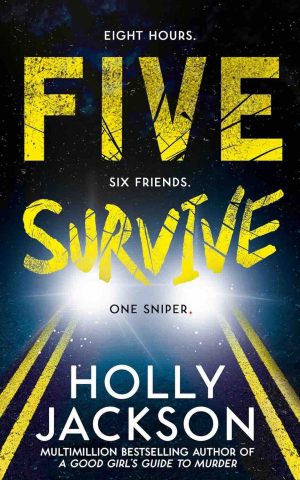
- Five Survive by Holly Jackson, for another tight teenage thriller run against the clock.
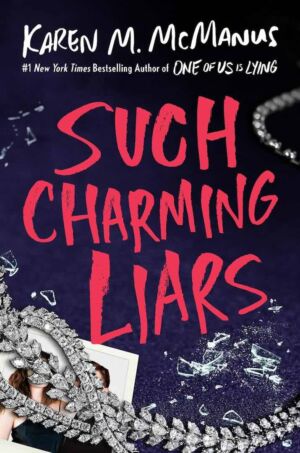
- Such Charming Liars by Karen M. McManus, for rotating suspects and family secrets with a lighter touch.
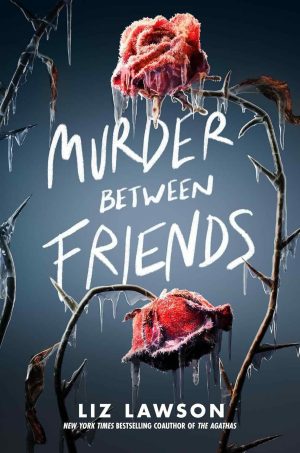
- Murder Between Friends by Liz Lawson, for a dead best friend and the friendship that has to be reconstructed around her.
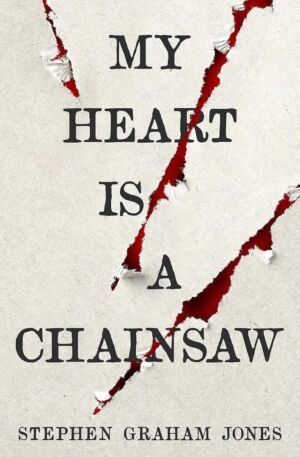
- My Heart Is a Chainsaw by Stephen Graham Jones, the slasher novel Rose’s grandmother is reading, for a heroine who knows the genre rules better than the killer does.
What Stays With You
Not the reveal, which is competent and slightly overexplained, but those three question marks. Lundy builds a whole novel around a heroine who cannot account for an hour of her own life, in a town that would rather she stopped asking about it, and she makes the missing time feel like a wound that needs closing as much as the one on Rose’s head.
The book’s title is a promise, and The Worst Is Yet to Come by Trish Lundy keeps it chapter by chapter. Then, in its last pages, it decides to keep it one chapter too long.