The Booker Prize 2026 shortlist was announced on 22 September at the Southbank Centre in London, and the thirteen novels of July’s longlist are now six. Two former winners survived. So did the campus novel about a man zipped inside a leather bag. The books that did not survive include the one the judges had described in the most excited language of the entire longlist announcement, which tells you something about how the final meeting went.
Mary Beard, chairing, called it a meeting none of the judges will forget, and said it was painful to let books go with “their now bent spines and dog-eared pages”. The six that remain were chosen from 163 submissions. The winner is announced on Monday 9 November at Old Billingsgate in London and receives £50,000. Each of the six shortlisted authors receives £2,500.
We have read and reviewed all thirteen longlisted novels on this site over the past two months, so what follows is not a press release with the quotes rearranged. Every book below carries the judges’ verdict and ours, and the final section revises the ranking we published in July, including the two predictions the shortlist demolished.
The Six Books on the Booker Prize 2026 Shortlist
Listed in the official order, alphabetical by author surname.
1. The End of Everything by M. John Harrison
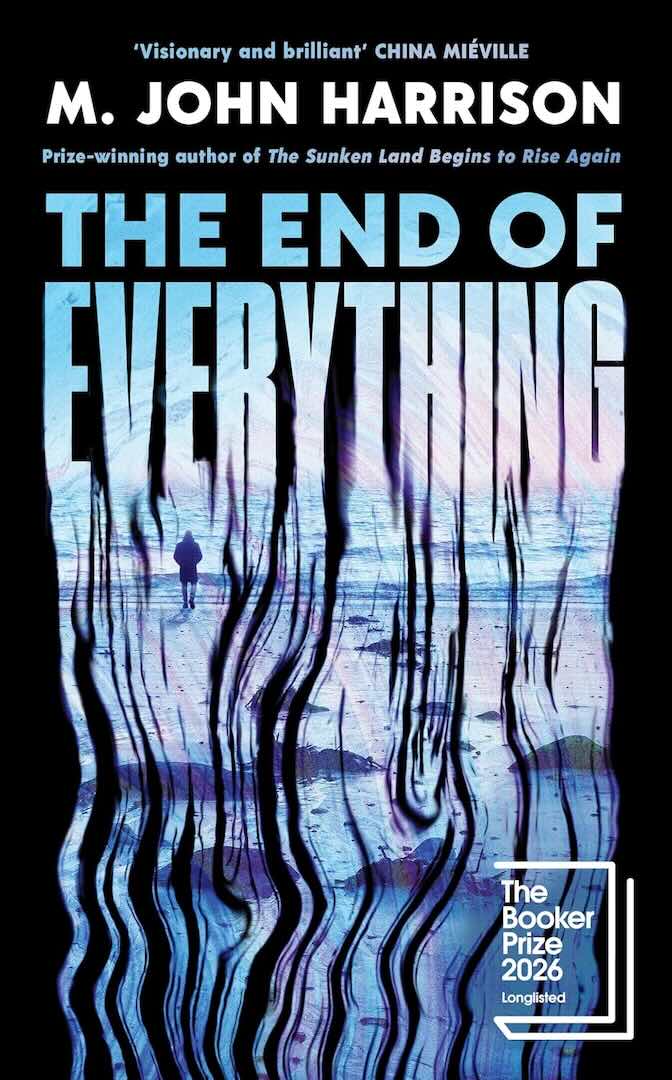
Phillip Tennant scavenges the Kent tideline with his aunt in a Britain that has come through an unnamed catastrophe. Something has occupied the City of London, and the sea keeps returning pieces of what we threw into it, some of which have learned to imitate human speech and then human shape.
The judges said the novel can be read as a thriller, a mystery, a satire, a dystopia or a work of realism, and that whatever a reader is looking for can be found in it. They singled out the humour as “subtle, surreal, and sly”, and noted that they laughed aloud despite the bleakness. Serpent’s Tail, an imprint of Profile Books, publishes it.
Our full review of The End of Everything by M. John Harrison calls it magnificent sentence by sentence, entirely unwilling to explain itself, and genuinely hard to love. We rated it 3 out of 5, the lowest score we gave any book on the Booker Prize 2026 shortlist, which has not stopped us thinking about it since.
2. The Disappearers by Marlon James
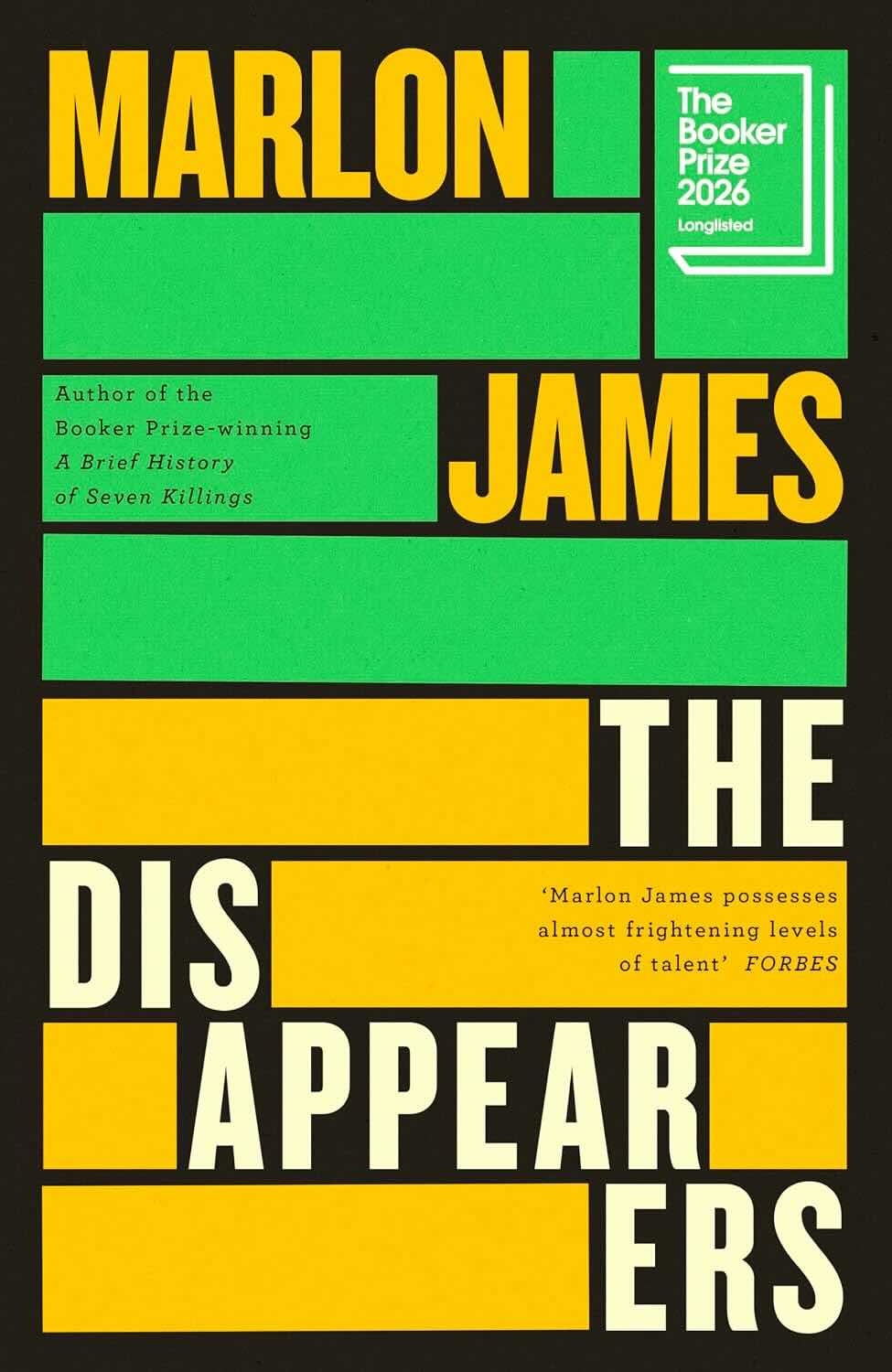
Kingston, 1988. A company of gay men rehearse what is being billed as Jamaica’s first openly gay play. A mob attacks, an actor is killed, and members of the cast vanish. The survivors are followed across seventeen years and five voices.
This is the longest book on the Booker Prize 2026 shortlist by a distance and drew the longest answer from the judges, who called it a queer, voice-led Jamaican epic and praised a shifting register of dialogue “pierced through with sharp double-edged humour”. They also noted how deliberately James twins the period with the height of the AIDS epidemic and the era of openly homophobic dancehall hits. Hamish Hamilton, a Penguin Random House imprint, publishes it in the UK.
Our full review of The Disappearers by Marlon James found it savage, formally astonishing and unexpectedly funny, with a middle that circles. We rated it 4 out of 5.
3. Black Bag by Luke Kennard
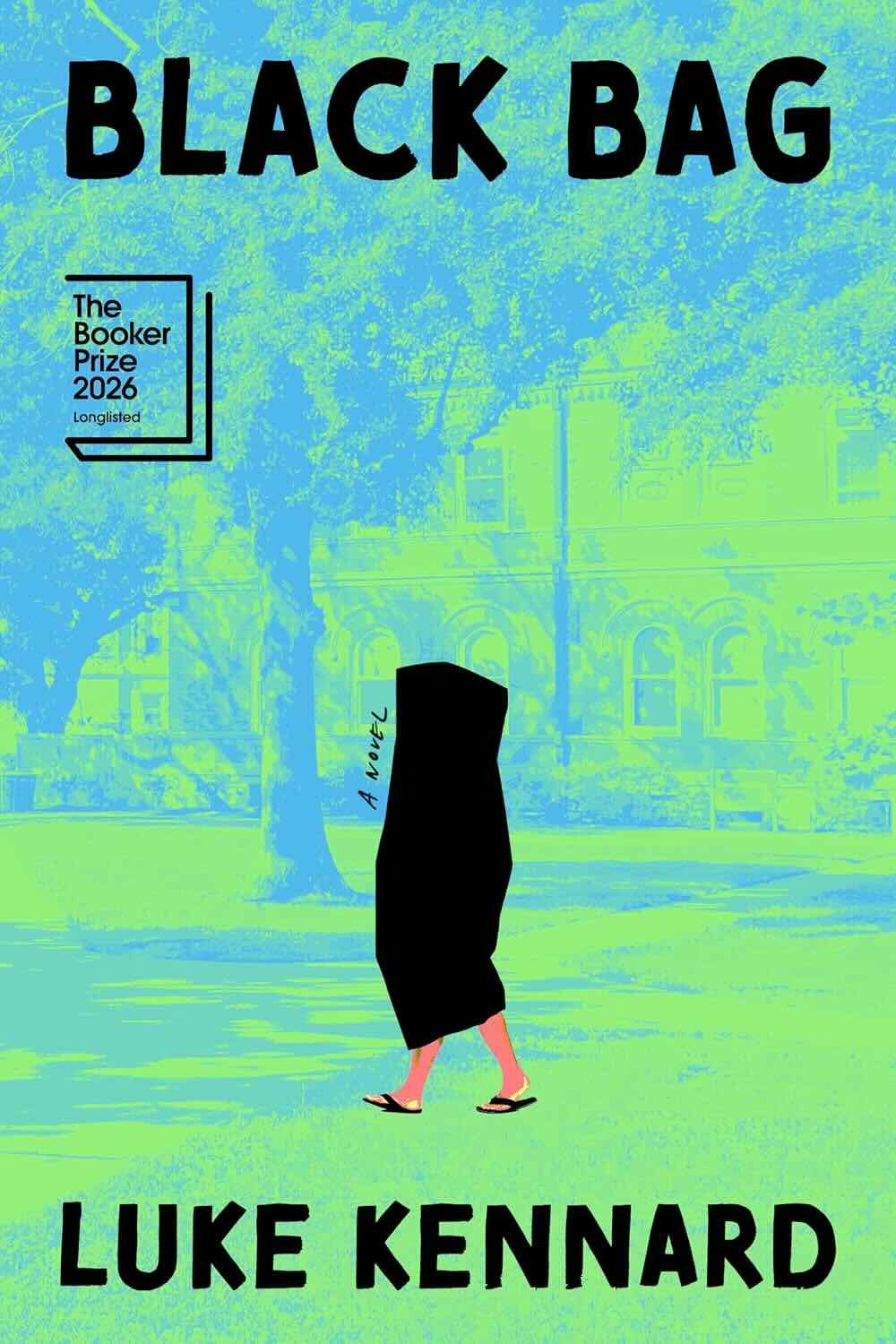
An actor whose career has stalled at murder-mystery dinner parties takes a job attending a term of university psychology lectures zipped inside a large black leather bag. The experiment is real: it ran in the 1960s to see whether students would eventually adjust to, and even befriend, a man they could not see.
The judges called it “a wonderfully quirky campus novel” and made the point that it survives a second reading with the jokes intact, which comic novels rarely do. They were also struck by a scene in which the bagged actor sits opposite his lover on a train and she does not recognise him, because she has never seen his face. John Murray, part of Hachette, publishes it in the UK.
Our full review of Black Bag by Luke Kennard calls it the funniest book on the longlist, exact about being broke and quietly devastating about shame, and nothing on the Booker Prize 2026 shortlist is better company. We rated it 4 out of 5.
4. May We Feed the King by Rebecca Perry
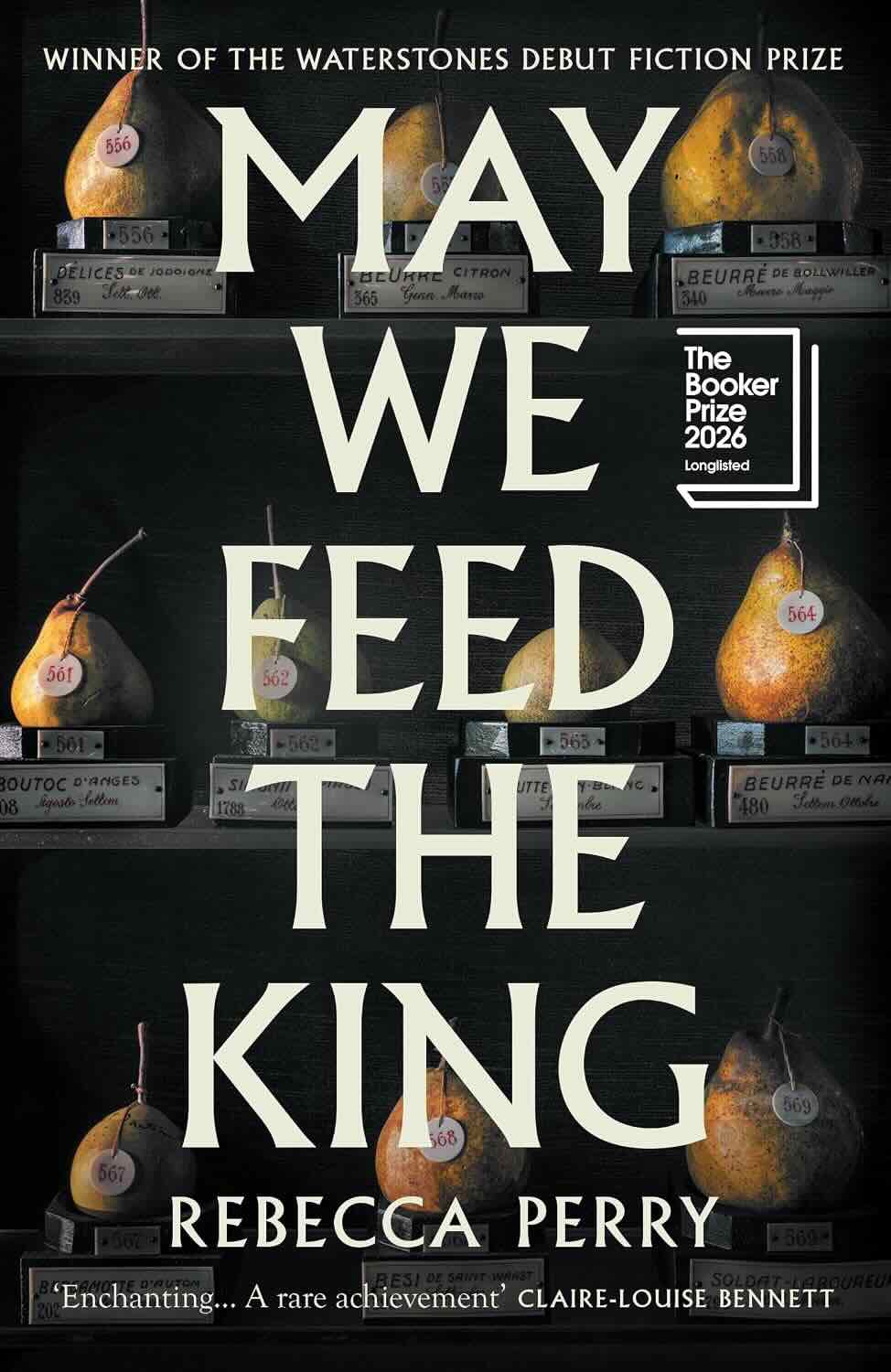
A museum curator dresses historic rooms with replica food, and researches an obscure medieval king whose reign the records were assembled to belittle. The two strands run side by side until the modern one starts to look like an act of restoration.
This is the only debut on the Booker Prize 2026 shortlist, and it had already won the Waterstones Debut Fiction Prize in July. The judges described it as “an affecting and lush jewel of a novel” and were taken by its curator’s asides on the plastic food trade, where Camembert apparently replicates beautifully and new potatoes do not. They also praised a king who wants to garden rather than conquer, and is despised for it. Granta publishes it.
Our full review of May We Feed the King by Rebecca Perry calls it a debut of extraordinary control and the best-structured book on the longlist. We rated it 4 out of 5.
5. The Things We Never Say by Elizabeth Strout
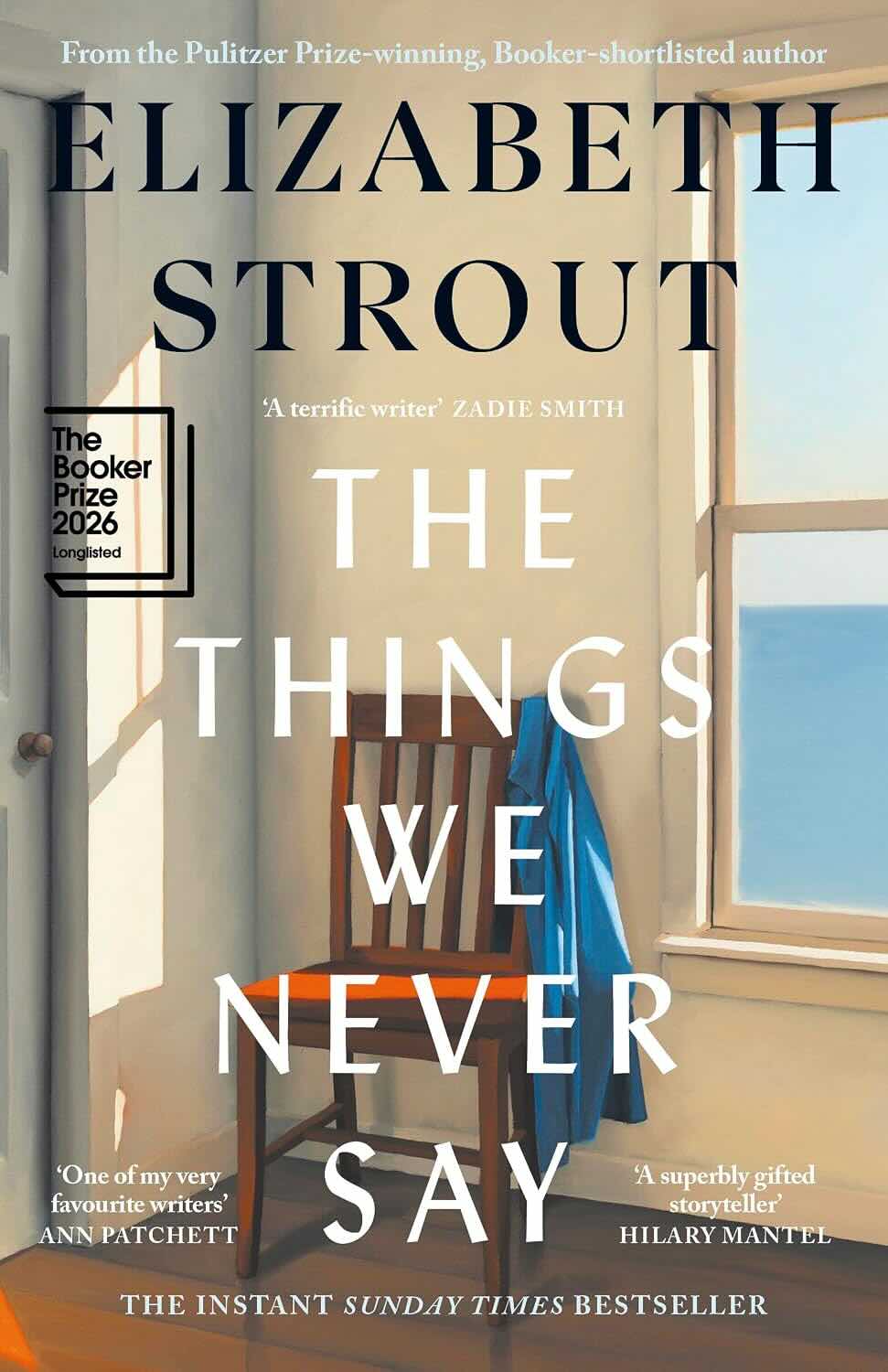
Artie Dam teaches high-school history in coastal Massachusetts, is in his late fifties, and is carrying a secret. Then he learns that something has been kept from him. The novel is set in the run-up to the 2024 US election and takes in its result.
The judges summarised it in a single sentence as a picture of where America is now, and argued that it engages with a divisive political moment without becoming divisive itself. They floated a name for what it does: “radical normalcy”. Viking, a Penguin Random House imprint, publishes it in the UK.
Our full review of The Things We Never Say by Elizabeth Strout calls it patient and compassionate about loneliness and long marriage, uneven in stretches, and heavier in the chest than its page count suggests. We rated it 4 out of 5.
6. John of John by Douglas Stuart
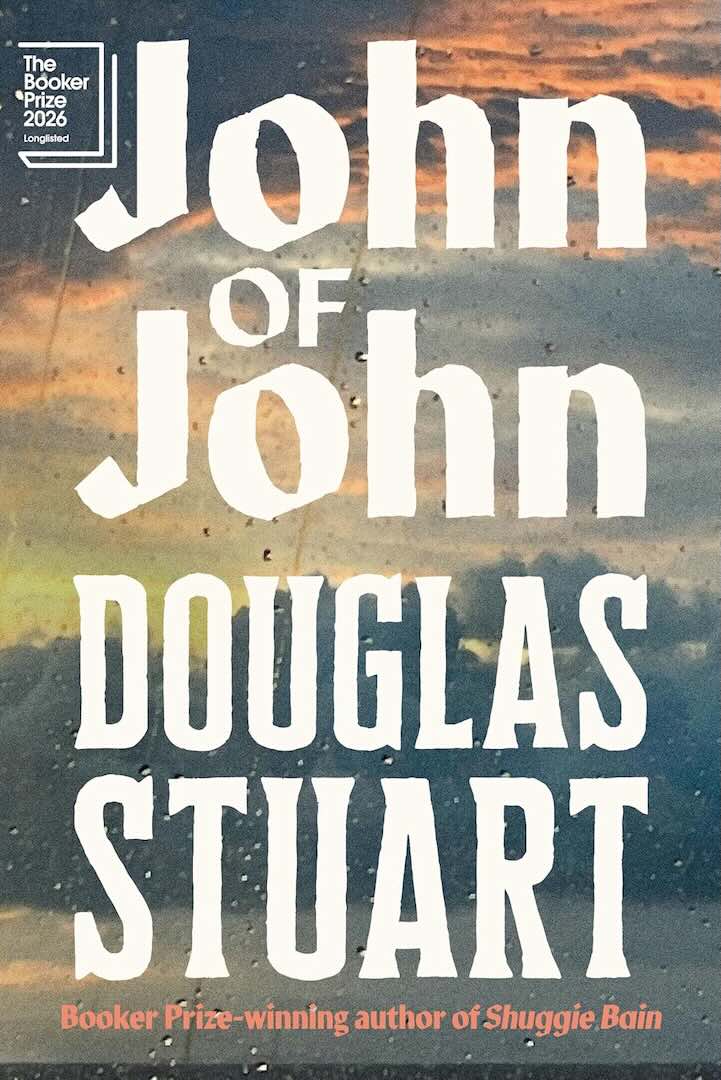
John-Calum MacLeod comes back from art school to a windswept Hebridean island in the 1980s, into the silence between his Presbyterian weaver father and his Glaswegian grandmother. Stuart wrote it while travelling the Western Isles, and the island itself is invented.
The judges praised a commitment to old-fashioned storytelling that takes its time, and the imagistic eye Stuart brought from his fashion career: the colour of a swollen foot, the scent of a lover’s soap, a boy standing in a mill’s blending shed while coloured dust falls on him like snow. Picador, part of Pan Macmillan, publishes it.
Our full review of John of John by Douglas Stuart finds it less explosive than his debut, deliberately harder to warm to, and weighted by the patience it demands. We rated it 4 out of 5.
What the Booker Prize 2026 Shortlist Left Behind
Seven novels went out on 22 September, and at least three of them will be argued about for longer than the Booker Prize 2026 shortlist itself.
The loudest absence is The Vivisectors by Missouri Williams, which the judges had described in July as genuinely experimental, rollicking and in places truly menacing. That was the most enthusiastic verdict attached to any longlisted title, and it did not convert. Our review of The Vivisectors by Missouri Williams admired three extraordinary set pieces and noted that the novel keeps making the same argument, which may be the thing a second reading exposed.
Switzy by Emma Cline is the second surprise, and the calendar is the likeliest culprit: it reached shops less than a fortnight before the judges met. Our review of Switzy by Emma Cline rates its dementia writing as the finest on the longlist. The Shadow of the Object by Chloe Aridjis was praised in warm rather than urgent terms in July, and warmth rarely survives a cut.
Also out: Helen of Nowhere by Makenna Goodman, the shortest and strangest book on the list; The Renovation by Kenan Orhan, the debut that made the panel laugh out loud; The Palm House by Gwendoline Riley, whose dialogue the judges had compared to Henry Green; and All Them Dogs by Djamel White, the youngest author’s debut. Our full guide to the thirteen-book longlist covers all of them in detail.
How Our July Prediction Survived the Booker Prize 2026 Shortlist
We ranked all thirteen books in July, before we had read most of them, as a prediction about a panel rather than a judgement of prose. Here is the scorecard, because a prediction nobody settles up on is just decoration.
- Four of our top six went through: Harrison, James, Kennard and Strout.
- Our number two is out. We had The Vivisectors second, on the strength of the judges’ own language. Wrong.
- Our number twelve is in. We put May We Feed the King twelfth and wrote that delicacy of touch was not the vocabulary of a panel that asked for dynamite. That is the worst call we made, and reading the book made it worse: it is one of the best-built novels of the year.
- Our number five and seven are out: Helen of Nowhere and The Renovation.
- Our number ten is in. John of John survived despite the repeat-winner problem.
Two lessons. First, we over-read the judges’ adjectives in July and under-read the books. Second, this panel turned out to be less interested in formal danger for its own sake than the longlist suggested, and more interested in novels that hold up to a second and third reading. Beard said most of the six had been read at least twice by the time of the meeting.
Themes That Run Through the Booker Prize 2026 Shortlist
Gaby Wood, chief executive of the Booker Prize Foundation, named the connective tissue better than anyone: in all six novels “we find forms of isolation”, people withholding, closing themselves off, or reaching across a gap towards someone. She framed the collection as a question about what we can actually know of each other.
That is a narrower theme than the longlist offered. In July the pattern was confinement, which is a physical idea: a cell, a bag, an island, a failing mind. The six survivors turn it inward. Artie Dam sits inside a marriage he has stopped describing accurately. A bagged actor is happier unseen than seen. A father and son weave side by side and cannot speak. A Jamaican company is forced into a silence that outlasts the attack.
The range in the books themselves is wide, and the Booker Prize 2026 shortlist covers dystopia, campus satire, historical fiction and contemporary realism, with settings from the Outer Hebrides to a medieval court to post-catastrophe Kent. Beard made the point that the authors span roughly forty years in age, which is unusual for six books.
The third pattern is that comedy survived the cut. Three of the six are funny on purpose, and the judges reached for laughter in their notes on Harrison, Kennard and Perry. Prize shortlists do not usually keep their jokes.
The Judges Behind the Booker Prize 2026 Shortlist
The panel is chaired by Mary Beard, the Cambridge classicist, broadcaster and Times Literary Supplement classics editor, who set the tone in July by saying that great books are not cosy. She is joined by the British-Jamaican poet Raymond Antrobus, the first poet to win the Rathbones Folio Prize; the musician and broadcaster Jarvis Cocker, who formed Pulp at school and spent two years as an editor-at-large at Faber; the Guardian critic and editor Rebecca Liu; and the novelist and essayist Patricia Lockwood, shortlisted herself in 2021 for No One Is Talking About This.
Their published notes on the six are worth reading in full, because they are unusually candid about the process. The judges admit to rereading each shortlisted book several times, to changing their minds about John of John between a first and second reading, and to arguing. Beard’s summary of the final meeting is that they did not start with a checklist of the types of book they wanted represented, and were relieved to find the range in the six anyway.
One detail is telling for anyone predicting the winner. The judges’ answers on The Disappearers and May We Feed the King run to several hundred words of specific, delighted detail. Their answer on The Things We Never Say opens with a seven-word sentence. Enthusiasm is not evidence, but it is not nothing.
Records in Play on the Booker Prize 2026 Shortlist
M. John Harrison is 81. If he wins on 9 November he becomes the oldest winner in the prize’s history, ahead of Margaret Atwood, who was 79 for her joint win in 2019. He judged the prize himself in 2022 and has thirteen novels, five story collections and an anti-memoir behind him.
Two former winners are here. Douglas Stuart won in 2020 with Shuggie Bain, Marlon James in 2015 with A Brief History of Seven Killings. Only four writers have won twice in fifty-seven years: J.M. Coetzee, Peter Carey, Hilary Mantel and Margaret Atwood. Our full list of Booker winners shows how rarely the prize repeats itself.
Elizabeth Strout is on her third nomination without a win, after the 2016 longlisting for My Name Is Lucy Barton and the 2022 shortlisting for Oh William!. She is a Pulitzer winner, which the Booker has never held against anyone.
Rebecca Perry is the only debut novelist, and six debuts have won in the prize’s history, the most recent being Shuggie Bain. Half the shortlist, Harrison, Kennard and Perry, is on a Booker shortlist for the first time. Four countries are represented: England, Scotland, Jamaica and the USA.
Who Publishes the Booker Prize 2026 Shortlist
Two independents have a book each. Serpent’s Tail, the Profile Books imprint, is shortlisted for the fourth time, with Harrison. Granta has Perry, and has published six previous shortlisted novels, including Eleanor Catton’s 2013 winner The Luminaries. A debut from an independent on a six-book list is worth noticing.
The other four sit inside the large houses. Penguin Random House has two, Hamish Hamilton with James and Viking with Strout. Pan Macmillan’s Picador has Stuart, and Hachette’s John Murray has Kennard. Readers buying American editions will find different names on the spine, because several of these books are published by other houses in the US.
Ranking the Booker Prize 2026 Shortlist: Our Revised Prediction
In July we ranked thirteen books we had mostly not read. We have now read all six of these, twice in two cases, so this version is built on the prose as well as the panel. Ranked from most likely to win to least.
- The Disappearers by Marlon James. We are moving off our July pick, and the reasons are the judges’ own notes, which are longer and more specific about this novel than about anything else on the list, and a critical reception that has been extraordinary, including a New York Times review calling it the novel of the decade so far. The obstacle is real: a second Booker would put James in a club of five. Our rating: 4 out of 5.
- The End of Everything by M. John Harrison. Our July pick, and still the book this panel seems least able to stop discussing. The age record would hand the ceremony its story. We found it cold, which is not usually a winning quality in a room of five people who must agree. Our rating: 3 out of 5.
- May We Feed the King by Rebecca Perry. The book we underestimated most. It is the shortlist’s most elegant piece of construction, it already carries a debut prize, and the judges’ notes on it read like advocacy. Debut maths is the only thing holding it at three. Our rating: 4 out of 5.
- Black Bag by Luke Kennard. Comedy that survives rereading is rarer than the panel’s praise makes it sound, and Beard has been consistent that she wanted books that reward a second pass. Funny novels still lose this prize more often than they win it. Our rating: 4 out of 5.
- John of John by Douglas Stuart. The judges changed their reading of it between passes, which is the kind of book that gathers votes late. The repeat-winner problem applies here too, and more heavily than for James, because the novel is quieter. Our rating: 4 out of 5.
- The Things We Never Say by Elizabeth Strout. The overdue-author narrative is genuine and the novel is the most broadly readable of the six. It also drew the shortest, flattest praise from the panel, and this is the chair who said cosy is the enemy. Our rating: 4 out of 5.
Treat this as a reading of the room rather than a tip, and note that we were badly wrong twice in July. We will settle up on 9 November.
The Last Word on the Booker Prize 2026 Shortlist
The longlist was a provocation: a talking sea, a gardening insurgency, a man in a bag, a prison cell fitted where a bathroom should be. The Booker Prize 2026 shortlist is a quieter document. The most formally aggressive books went out and the most durable ones stayed, which suggests a panel that started by being excited and finished by being persuaded.
That is not a criticism. Six books that hold up to three readings is a better result than six books that startle once. Full details, extracts and the judges’ notes are on the official Booker Prize site, and the prize’s longer history is useful context for anyone tempted to bet against a repeat winner. For comparison, our coverage of the 2024 shortlist shows how differently a final six can be shaped.
Our reviews of all thirteen longlisted novels are linked above, and this page will be updated on 9 November when one of these six takes the £50,000.







