The killer is still upstairs when the baby makes his escape. Woken by a crash, the eighteen-month-old drags his teddy bear into the corner of the cot, uses it as a step and topples over the rail. He bumps down the stairs on his bottom, leaves his nappy in the hall and toddles out of a door someone forgot to close, up the misty hill towards the old cemetery. By the time the man with the knife comes looking, the dead have the boy, and they are arguing about whether to keep him. The Graveyard Book by Neil Gaiman opens with a murder seen almost entirely through its aftermath, then hands the story to the most unlikely adoptive family in children’s fiction.
How It Works
The rules are laid out cleanly in that first chapter. A ghost couple, Mr and Mrs Owens, dead for a couple of centuries and childless in life, agree to be the boy’s parents. A tall, dry, unexplained figure called Silas, who lives in the chapel spire and belongs to neither the living nor the dead, becomes his guardian, because he alone can leave the graveyard to buy food. The graveyard grants the child its Freedom, which lets him see in the dark, pass through stone and walk paths closed to the living. They name him Nobody Owens, Bod for short, because he looks like nobody but himself.
The structure is the clever part. The Graveyard Book by Neil Gaiman runs to eight chapters plus a short interlude, and each chapter jumps roughly two years, so Bod goes from toddler to about fifteen. Every chapter is a complete adventure with its own monster, and every one teaches him something the dead know: Fading so eyes slide off him, Dreamwalking, raising Fear in the living. Running underneath is the man Jack, who has never stopped looking for the child who got away, and who belongs to an organisation that wants the job finished.
A Graveyard Book Built Like a Story Collection
What Gaiman is doing is borrowing a shape. Each episode can be read on its own, yet the skills and friendships gathered in one chapter keep returning in the next, so the book accumulates like a childhood. That gives The Graveyard Book by Neil Gaiman an unusual rhythm: a ghoul abduction, a witch’s grave, a midwinter dance, a stint at a real school. Children get variety; adults get a slow-building portrait of a boy learning what it means to be alive among people who no longer are.
What works
- Silas. The best guardian in modern children’s fiction is defined by what he never explains. He teaches by questions, brings bananas he has never tasted, and his rare moments of anger land harder for the restraint around them.
- The ghoul chapter. Ghouls named after their first meal (the Duke of Westminster, the Bishop of Bath and Wells) are funny and genuinely horrible, and the strict, beetroot-soup-serving babysitter who rescues Bod is the book’s best reveal.
- The midwinter dance. One chapter turns on a once-in-a-lifetime danse macabre in which the living and the dead dance together in the town square and nobody admits it afterwards. It is the most beautiful thing in the novel.
- The comic dead. Nehemiah Trot, a poet who took revenge on a critic by refusing to publish, gives the cemetery a cast of grumbling, vain, kind neighbours rather than spooks.
Where It Gives Ground
- The villain goes missing. For the long middle of The Graveyard Book by Neil Gaiman, the man Jack appears in a page or two at most. The episodes are satisfying, but readers who come for a hunt will feel the tension drain away for several chapters at a stretch.
- The backstory comes as a speech. The reason anyone wanted a toddler dead is withheld until the climax, then explained in one burst of exposition by a minor villain. It is a thin answer to a question the book has asked for three hundred pages.
- Voices from every century. The dead talk in Roman, Tudor, Georgian and Victorian registers, which is half the charm, but young readers may stumble on the older dialect, and a few chapters lean on it heavily.
Read These Next
Our more Halloween classics shelf has plenty of older-reader picks. For fans of The Graveyard Book by Neil Gaiman, start with these:
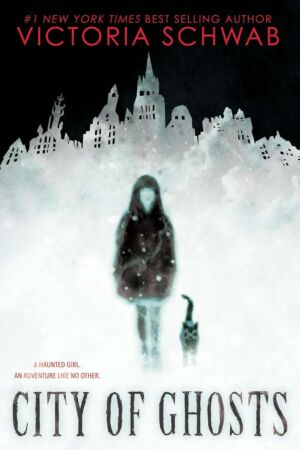
- City of Ghosts by Victoria E. Schwab, a middle-grade ghost story about a girl whose best friend is a ghost.
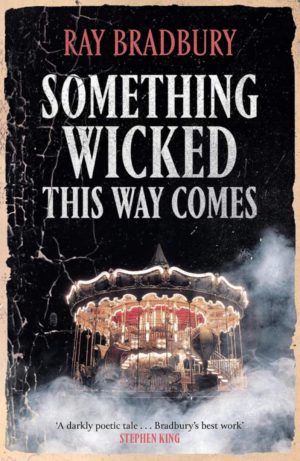
- Something Wicked This Way Comes by Ray Bradbury, the October novel that shaped Gaiman, for older children ready for denser prose.
- The Jungle Book by Rudyard Kipling, the direct model: a boy raised by a community that is not his own kind.
- Coraline by Neil Gaiman, shorter and creepier, for readers who want more of the same author.
- A Monster Calls by Patrick Ness, for a later, sadder book about a boy, a monster and loss.
About Neil Gaiman and Some Graveyard Book Trivia
Neil Gaiman was born in Portchester, Hampshire, in 1960 and first made his name in comics with The Sandman, which ran from 1989 to 1996. His novels include Stardust and American Gods, and he turned to younger readers with Coraline in 2002. HarperCollins published The Graveyard Book by Neil Gaiman in the United States on 30 September 2008, with the British edition following a month later.
- The idea came in 1985, when Gaiman watched his two-year-old son pedal a tricycle among the graves near their home in East Grinstead. He decided he was not yet a good enough writer and kept postponing it for more than twenty years.
- It is a deliberate reworking of Kipling’s The Jungle Book, and the ghoul chapter mirrors the story in which Mowgli is carried off by monkeys.
- It was the first book to win both the American Newbery Medal (2009) and the British Carnegie Medal (2010), and it also took the 2009 Hugo Award for Best Novel and the Locus Award for Best Young Adult Book.
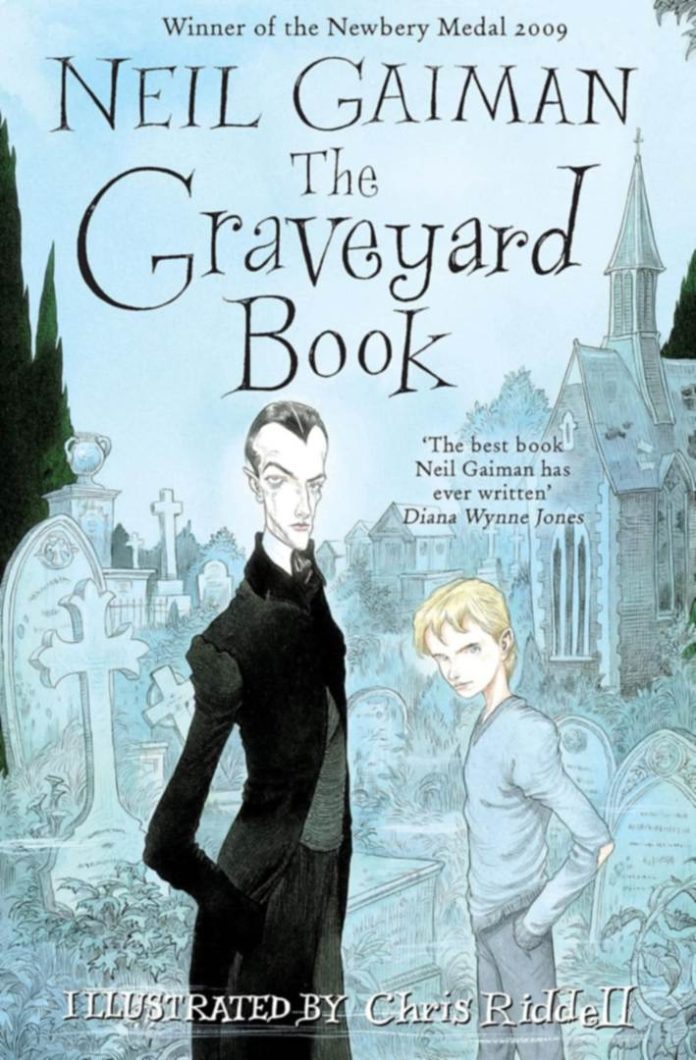
- Two artists illustrated it: Dave McKean for the American and adult editions, and Chris Riddell for the British children’s edition, which put Riddell on the Kate Greenaway Medal shortlist.
- P. Craig Russell led a team of artists who adapted it as a two-volume graphic novel in 2014.
What Stays With You
Not the ghouls, and not even the knife. What lingers from The Graveyard Book by Neil Gaiman is a community of the dead deciding, against all their rules, to raise a living child well, and a boy who keeps choosing kindness while learning to frighten people. Gaiman understood that every childhood ends with leaving the place that kept you safe, and he made a cemetery the warmest home in the genre.
Read it to someone in October. Leave the gate open for them.