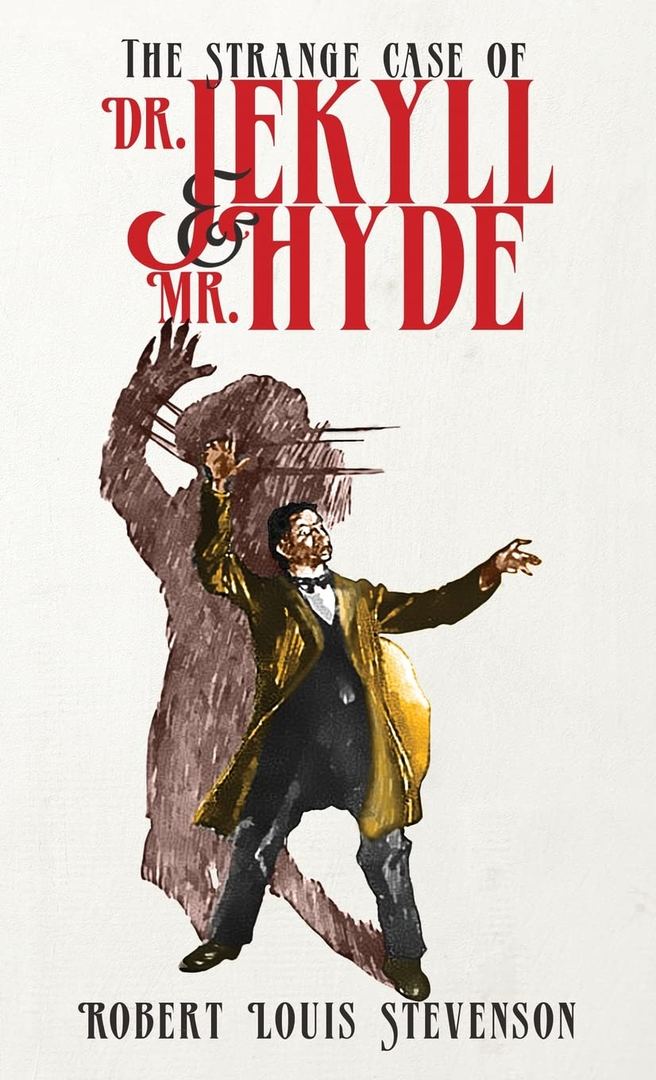
At three o’clock on a black winter morning, a little man walking fast through a lamplit, empty London street collides with a girl of about eight. He does not stop. He walks straight over her and leaves her screaming. The man who catches him, a cheerful idler named Enfield, extracts a hundred pounds for the family, and the culprit fetches it from behind a shabby door in a side street, partly in gold and partly as a cheque signed by one of the most respected names in London. The cheque is genuine. Dr Jekyll and Mr Hyde by Robert Louis Stevenson opens with that transaction, and everything that follows is an attempt to explain how a monster came to be carrying a good man’s chequebook.
Everybody now knows the answer. Stevenson published the book in January 1886 as Strange Case of Dr Jekyll and Mr Hyde, and its solution has long since become a figure of speech. The surprise is how well the machine still runs when you know where the parts go.
How Dr Jekyll and Mr Hyde Is Built
Dr Jekyll and Mr Hyde by Robert Louis Stevenson is a case file. For eight of its ten chapters the point of view belongs to Gabriel John Utterson, a lawyer so dry that his friends find his company restful. He holds Jekyll’s will in his safe, and he hates it: in the event of the doctor’s death or unexplained disappearance for more than three months, everything passes to one Edward Hyde. Enfield’s story gives that name a face, and Utterson sets out to learn more.
What follows is an investigation conducted almost entirely through paper: the will, the cheque, a letter signed by Hyde, a sealed envelope from a dying friend, a note to a firm of wholesale chemists. Then, in the last two chapters, the inquiry stops and the documents speak for themselves: first a physician’s narrative, then Jekyll’s own full statement. The reader moves from outside the mystery to inside it, from a lawyer guessing at blackmail to the voice of the man who made the potion.
A House With Two Faces
The thesis of Dr Jekyll and Mr Hyde by Robert Louis Stevenson is written into its floor plan. Jekyll’s home stands in a handsome old square, warm and well kept, with a flagged hall Utterson thinks the pleasantest room in London. Behind it, across a yard that used to be a garden, sits the dissecting theatre Jekyll bought from a surgeon’s heirs, and that building opens onto the side street through the blistered door with no bell and no knocker where tramps strike matches on the panels. Two addresses, one property: the respectable front faces the square, the back opens onto the street where a child was trampled.
Stevenson never states the metaphor. He lets Utterson walk round the block and the geography does the arguing, which is why the story still feels like horror rather than a moral fable.
What works
- Utterson is the perfect witness. He is loyal, unimaginative and slow to suspect, which means every alarm he feels has been earned. A cleverer detective would solve the case in a chapter; this one has to be pushed.
- Poole’s night is still frightening. The chapter in which Jekyll’s butler of twenty years, too scared to touch his wine, leads Utterson back to listen at the laboratory stairs is the finest sustained suspense in the book. The servants huddled round the hall fire, the footsteps pacing above, the voice that is wrong: none of it depends on not knowing the secret.
- The violence is short and shocking. Hyde’s two great acts of cruelty take a paragraph each and land like blows, and restraint makes the reader fill in the worst.
- The confession understands addiction. Jekyll compares himself to a drunkard reasoning with his vice, and his account of promising to stop, holding out for two months and then slipping is painfully modern.
Where It Gives Ground
- The famous answer defuses the puzzle. The first eight chapters of Dr Jekyll and Mr Hyde by Robert Louis Stevenson are engineered as a mystery, and for most readers today the cover has already solved it. The atmosphere survives; the detective pleasure largely does not.
- The confession tells more than it shows. Jekyll’s statement is the book’s longest stretch, and it is abstract. His secret pleasures are called undignified and then monstrous, and never described, which keeps the moral argument clean but leaves Hyde’s life in Soho a blank.
- The chronology slips. Jekyll’s urgent letter to Lanyon is dated in December while the physician says it reached him in January. Small, but in a book built from dated documents it shows.
Read These Next
If Dr Jekyll and Mr Hyde by Robert Louis Stevenson sends you looking for more Halloween classics, our seasonal guide has a full shelf of them, and our list of bone-chilling classic horror books goes further back.
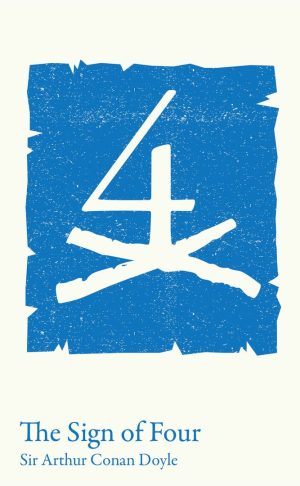
- The Sign of the Four by Sir Arthur Conan Doyle, for a short Victorian London mystery with a darker undertow than its reputation.
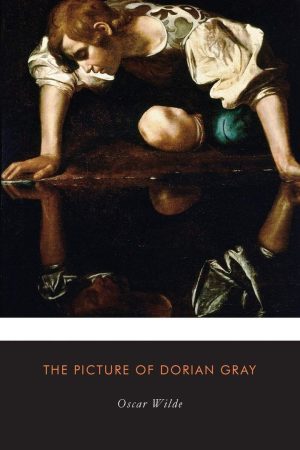
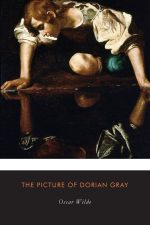
- The Picture of Dorian Gray by Oscar Wilde, for another respectable gentleman whose sins are kept somewhere else.
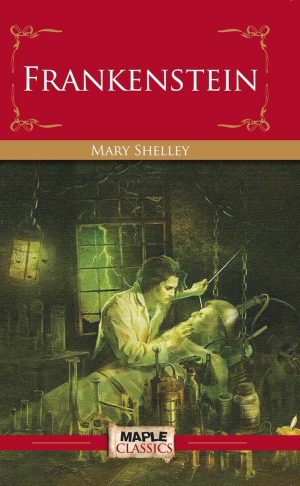
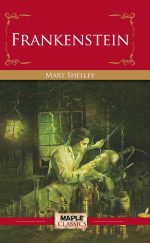
- Frankenstein by Mary Shelley, for the original scientist undone by his own experiment.
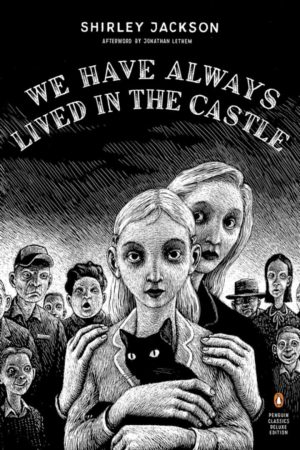
- The Haunting of Hill House by Shirley Jackson, for a house whose layout is itself the threat.
About Robert Louis Stevenson, Plus Some Dr Jekyll and Mr Hyde Trivia
Robert Louis Stevenson (1850 to 1894) was born in Edinburgh into a family of lighthouse engineers, studied engineering for the family trade and then law, and became a writer instead. He wrote Dr Jekyll and Mr Hyde by Robert Louis Stevenson in Bournemouth, where he had moved for his weak lungs, in the same productive stretch that gave us Treasure Island (1883), A Child’s Garden of Verses (1885) and Kidnapped, which came out the same year as Jekyll.
- It began as a nightmare. His wife Fanny woke him one night because he was crying out in his sleep, and he was annoyed: she had interrupted a good horror story at its first transformation.
- The first draft took about three days. His stepson later recalled the speed of it. Stevenson is also said to have burned that draft and started again after Fanny’s criticism, a story scholars still dispute.
- It was a cheap paperback. Longmans, Green issued it in London at one shilling, the price of a shilling shocker. Sales were slow until a warm review in The Times on 25 January 1886, after which close to 40,000 copies sold in six months.
- The stage version ran into Jack the Ripper. Richard Mansfield’s adaptation opened in Boston in 1887 and moved to London, where it closed in 1888 after newspapers floated the actor as a possible Ripper suspect.
- It has been adapted endlessly. There have been more than 120 stage and film versions, plus a 1990 stage musical by Frank Wildhorn, Steve Cuden and Leslie Bricusse.
The Last Word
Dr Jekyll and Mr Hyde by Robert Louis Stevenson is shorter than most modern horror novels and better made than nearly all of them. The puzzle no longer surprises and the confession leans on statement over scene, but the house, the lawyer and the butler are as good as ever, and the closing pages remain grim and strange.
Come for the monster everyone knows. Stay for the door in the side street, and for the man on the other side of it who knows exactly what he has done.