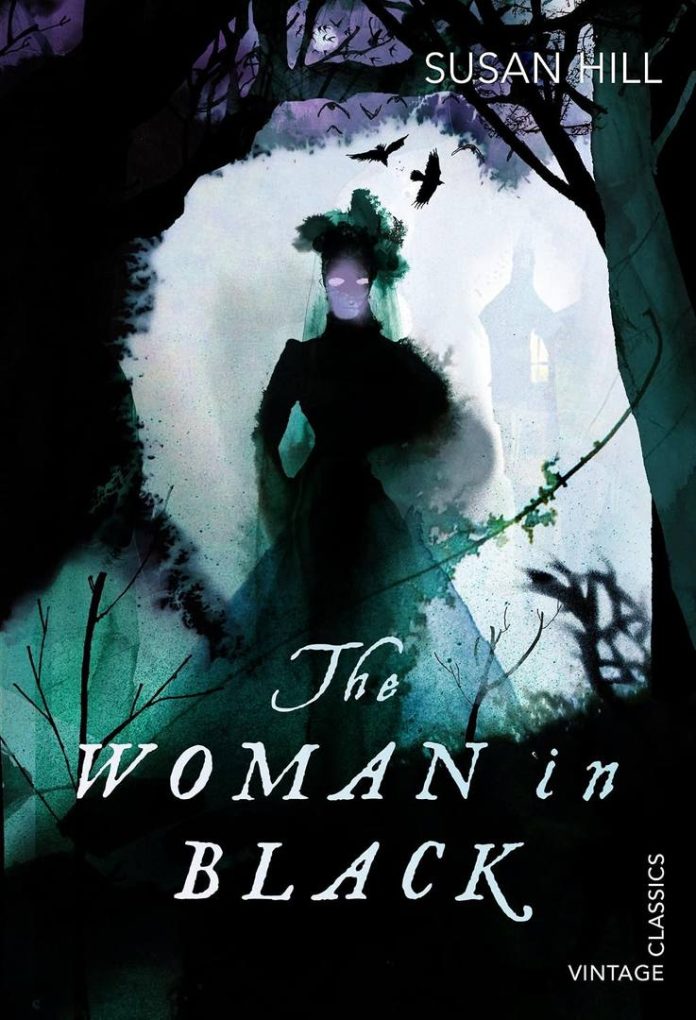
There are three mourners at Mrs Drablow’s funeral, and two of them are paid to be there. Arthur Kipps, a twenty-three-year-old solicitor sent up from London by his firm, stands beside the local land agent, Mr Jerome, in a cold parish church. Near the end of the service he hears a rustle, half turns, and sees a woman several pews back in rusty, old-fashioned mourning, so thin that her skin seems stretched over bone. He feels sorry for her. Outside, a row of schoolchildren grips the railings and watches without a sound. When Kipps asks who she was, Mr Jerome turns grey and grips his wrist hard enough to hurt. The Woman in Black by Susan Hill has barely begun, and its central trick is already on the table: the ghost is never the frightening part. The people who know what she means are.
A Sceptic on the Nine Lives Causeway
The first thread is Kipps himself, and how fast his certainty drains. He arrives as a Londoner with a Londoner’s condescension, sure that remote towns breed silly legends and that the job will take an afternoon. The house he has to clear, Eel Marsh House, stands on a scrap of raised ground in an estuary and can only be reached when the tide is out, which gives the book a rule as strict as any locked-room mystery. Miss the window and you are stuck until the water drops again.
Hill builds the fear from that geography. The second sighting comes in a ruined burial ground behind the house, where the woman stands by a headstone and Kipps finally sees her expression, a look the narrator calls “a desperate, yearning malevolence”. He is not hurt, simply unable to move, and the paralysis is described so physically that you feel it in your own knees.
Then comes the passage that made The Woman in Black by Susan Hill famous. Kipps tries to walk back to town, and a sea fret rolls in off the water and erases the world. Somewhere out on the marsh he hears a pony and trap, then the horse screaming, then a small child crying as the mud and the tide take them. He sees none of it. The whole set piece is sound and blindness, and it is far more upsetting than any apparition, because there is nothing to do but listen.
What keeps this thread of The Woman in Black by Susan Hill honest is that Kipps keeps going back. He is stubborn, proud of being brave, and Hill lets that pride carry him further into the house than any sensible person would go. Mr Jerome, meanwhile, is a man terror has emptied out: polite, evasive and visibly unable to say the house’s name.
What the Locked Nursery Holds
The counter-thread is grief, and it lives upstairs. One door at the end of a second-floor passage has no keyhole and will not open. At night Kipps hears something behind it, a soft, regular bump and pause that he cannot place, and when he finally does place it the recognition lands as one of the cleverest moments in the genre. The sound belongs to a rocking chair, and to his own childhood. What should be comforting is the thing that makes the hair rise.
The room beyond, when he reaches it, is a child’s nursery kept in perfect order for decades: lead soldiers in regiments, a model ship, a night-light still in its holder. Hill lists the toys with a care that turns sinister through sheer tidiness. And when Kipps stands in that room he feels not fear but a sudden, crushing bereavement that is plainly not his own. This is where The Woman in Black by Susan Hill earns its reputation as more than a fright machine. The haunting is a grief that has curdled into something vicious, and the book makes you understand both halves before it asks you to be afraid of them.
Where The Woman in Black Gives Ground
- The foreshadowing does too much work. The older Kipps keeps reminding us that this was the final night he slept well, that worse is on its way. By the fourth warning the dread has started to feel announced rather than earned.
- The history arrives as a lecture. After chapters of careful suggestion, the backstory of The Woman in Black by Susan Hill comes in one long fireside explanation from a single character. It is efficient and it flattens the mystery.
- The women are ciphers. The fiancée in London exists to be written to and worried about. Beyond the ghost, no woman in the book has a scene of her own.
- The prose piles up. Hill writes in a deliberately old-fashioned register, and sometimes that means three adjectives where one would cut deeper and paragraphs that circle the same feeling twice.
Read These Next
If The Woman in Black by Susan Hill has you checking the windows, there are more Halloween classics on our shelf, and these make natural companions:
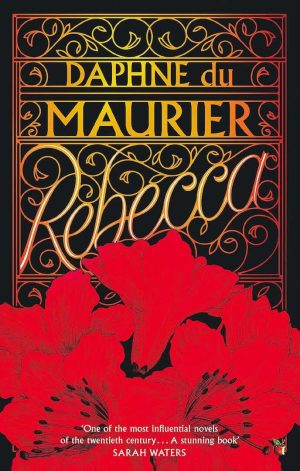
- Rebecca by Daphne du Maurier for another English house possessed by a woman who is no longer alive.
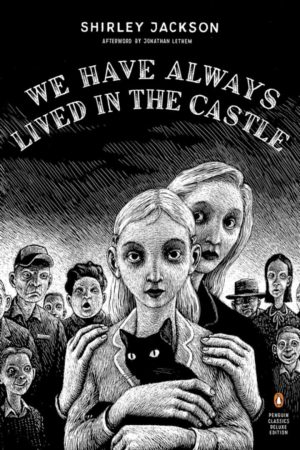
- The Haunting of Hill House by Shirley Jackson for a haunting that may live in the house or in the person reading it.
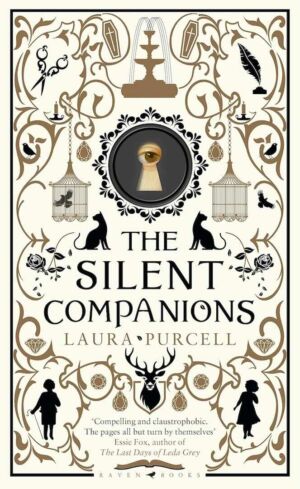
- The Silent Companions by Laura Purcell for a modern novel that borrows Hill’s period voice and isolated estate.
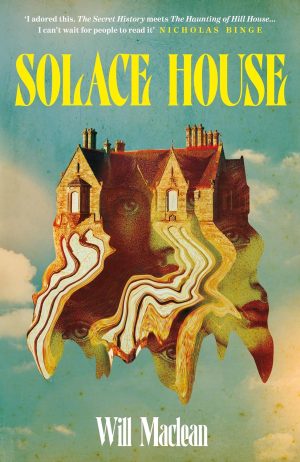
- Solace House by Will Maclean for a present-day British haunting that also trusts atmosphere over spectacle.
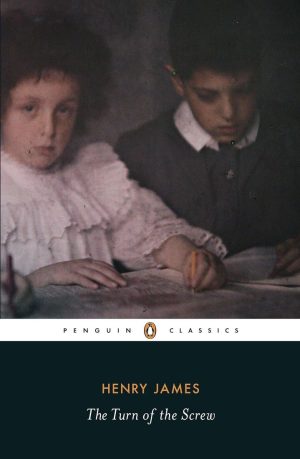
- The Turn of the Screw by Henry James, the source Hill herself points to.
About Susan Hill and Some Woman in Black Trivia
Susan Hill was born in Scarborough on 5 February 1942 and had her first novel, The Enclosure, published while she was in her first year at King’s College London. By thirty she was established as a literary novelist: I’m the King of the Castle won the Somerset Maugham Award in 1971, and The Bird of Night took the Whitbread Novel Award in 1972 and was shortlisted for the Booker. Later readers know her for the Simon Serrailler detective novels. The ghost story was a deliberate change of key, a writer of quiet literary fiction setting out to build the old kind of English chiller from scratch.
- Hill has said the seed came from Henry James, whose novella contains a pale, dreadful woman in black seen across a lake.
- Hamish Hamilton published the first edition on 10 October 1983, with a cover by the illustrator John Lawrence.
- Stephen Mallatratt’s stage version began as a low-budget Christmas show in Scarborough in 1987, reached the West End in 1989 and played 13,232 performances before closing in March 2023, second only to The Mousetrap among the West End’s plays.
- Hammer’s 2012 film, with Daniel Radcliffe as Kipps, grossed around $129 million worldwide while changing much of the story.
- The novel is a GCSE English Literature set text, so many British teenagers first meet it at school.
The Verdict
Its flaws are real: it tells you too often that something terrible is coming, and it explains more than it needs to. But the funeral, the fog and the rocking chair are as good as the English ghost story gets, and The Woman in Black by Susan Hill achieves them with almost nothing on the page, a sound, a shape, a door that should not be open.
Read it with the lights on. You will still hear the chair.