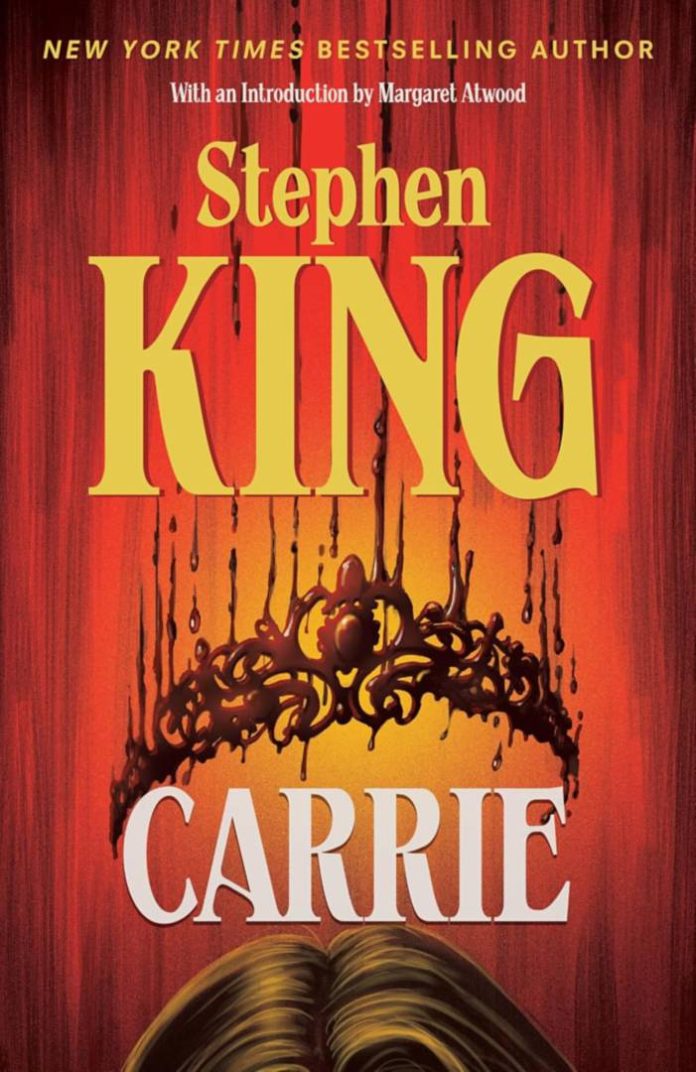

The novel opens with a local newspaper paragraph from August 1966. Stones, it reports, fell out of a clear sky onto a single house on Carlin Street in the small town of Chamberlain, Maine, cracking the roof and ruining the gutters, damage put at about twenty-five dollars. The widow who lives there with her three-year-old daughter could not be reached for comment. Within a page, the narrator tells us plainly that the girl, now sixteen, is telekinetic and that her classmates have no idea. Carrie by Stephen King puts its secret on the table before the first scene is over, and everything that follows is about watching the fuse burn down.
How It Works
The story itself is simple. Carrie White, the scapegoat of Ewen High School, gets her first period in the gym showers at nearly seventeen, because her fundamentalist mother never told her such a thing existed. The other girls pelt her with tampons and chant until the gym teacher, Rita Desjardin, bursts in. That humiliation wakes something that has slept in Carrie since early childhood: the ability to move objects by will alone.
The telling is the clever part. King breaks his third-person chapters up with invented documents written after the disaster. There is a scholarly study called The Shadow Exploded, a survivor’s memoir by Sue Snell, a magazine profile of a former neighbour, a Reader’s Digest first-person piece, sworn testimony before a state inquiry known as the White Commission, a dictionary of psychic phenomena, and urgent bulletins from the Associated Press wire. Each arrives from the future and knows how the night ended.
The power has rules, and King lays them out with a straight face. Carrie describes it as a flexing, like a weak muscle that grows with use. It surges under stress. It costs her body something every time, sending her heart racing and her temperature down, and she practises at night in her room by holding a hairbrush in the air, then her bed, then the whole bureau.
Why Stephen King Shows His Hand Early
The documents do something a straight narrative could not. Because a scholar is already arguing about the death toll and a commission is already cross-examining witnesses, every ordinary scene becomes unbearable. A girl buys velvet for a dress. A boy asks her to the dance. The reader of Carrie by Stephen King knows these are the last quiet days of a town, and the tension comes from watching people who do not.
The other source of fear is closer to home. Carrie lives with her mother, Margaret, in a bungalow full of tracts and plaster saints, and the worst room in the book is not the gym. It is the prayer closet, lit by a single blue bulb, where Carrie is locked for hours with a painting of sinners falling into fire. King understood that a supernatural premise lands harder when it grows out of something real. The scenes between mother and daughter remain the most frightening pages of Carrie by Stephen King, because nothing in them is impossible.
What works
- The structure. The cutting between scene and document gives the book a documentary chill, as if you were reading the case file of a real catastrophe. Reports contradict each other, and the gaps between them are where the dread lives.
- The sympathy. Carrie is never a monster to the reader. King lets us inside her head, with her longing for pantyhose and short skirts and a life outside the house, so that the horror and the pity arrive together.
- Rita Desjardin. The gym teacher is the most honest adult in the book. She admits to herself that Carrie disgusted her too, and her fury at the other girls is partly fury at herself.
- Pace. The first edition ran to fewer than two hundred pages, and it moves like a short story that refused to stop.
Where It Gives Ground
- The documents spend suspense as well as build it. Telling us the ending works brilliantly for the first half of Carrie by Stephen King. By the climax, so many sources have described the same events that some passages feel like reruns, and the academic voices all sound like the same author.
- The prose is a debut’s. King was in his mid-twenties and it shows: piled-up similes, characters described by their bodies first, and a fondness for the gross-out image.
- The villains are cartoons. The ringleader who plans the prom prank and her greaser boyfriend have one note each, and their scenes together, including a violent sexual encounter, read as leering rather than revealing.
- Some attitudes have soured. Several characters think in racial and antisemitic slurs, and one witness compares Carrie to a minstrel-show caricature. The novel presents these as the town’s ugliness, but they still land hard on a modern reader.
Read These Next
Our guide to more Halloween classics has the full shelf. These sit closest:
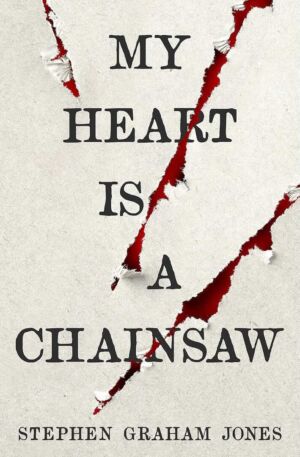
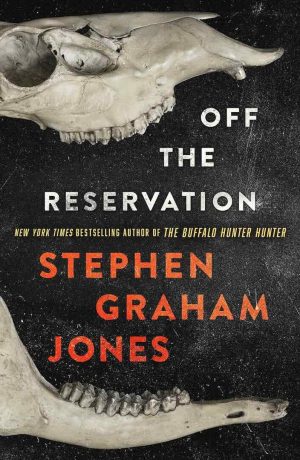
- My Heart Is a Chainsaw by Stephen Graham Jones, for another outcast girl in a small town who knows exactly how horror stories end.
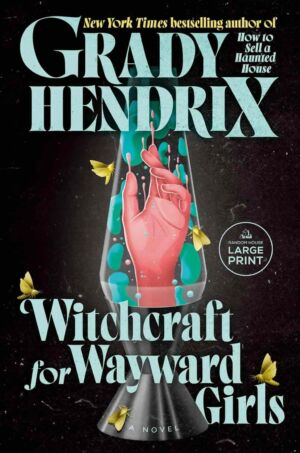
- Witchcraft for Wayward Girls by Grady Hendrix, for teenage girls punished for their bodies and finding a dangerous kind of power.
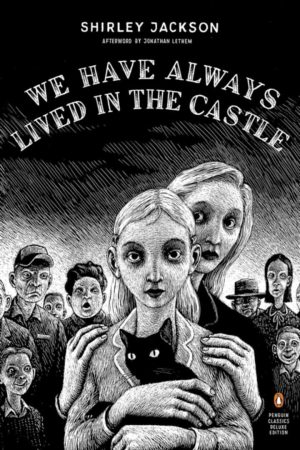
- We Have Always Lived in the Castle by Shirley Jackson, for a town’s hatred of one strange household, seen from inside.
- The Shining by Stephen King, for a family pulled apart in a building that magnifies its worst impulses.
- Firestarter by Stephen King, which returns to a girl whose mind is a weapon and the people who want to use it.
About Stephen King and Some Carrie Trivia
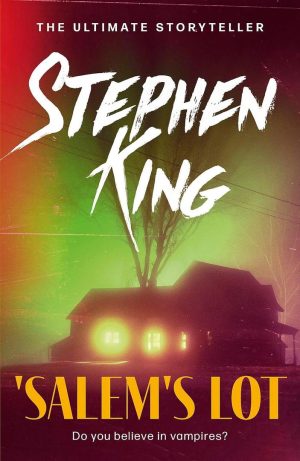
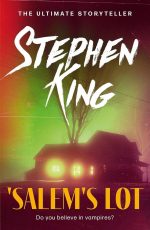
Stephen King was born in Portland, Maine, in 1947, and he was teaching high school English and selling short fiction to men’s magazines when he wrote his first published novel. Carrie by Stephen King was not his first finished book, only the first anyone bought, and he tells the story of its writing in On Writing. ‘Salem’s Lot followed in 1975 and The Shining in 1977, and he has since written more than sixty novels.
- He gave up after three pages, unsure he could write a teenage girl, and threw them out. His wife, Tabitha, fished them from the wastebasket and told him to keep going.
- Doubleday paid an advance of $2,500 and printed 30,000 hardbacks for publication on 5 April 1974. The paperback rights later sold for $400,000, and King’s half let him quit teaching.
- His first ending had Carrie sprouting horns and bringing down an aeroplane. His editor, Bill Thompson, talked him into something quieter.
- Brian De Palma’s 1976 film earned Oscar nominations for Sissy Spacek as Carrie and Piper Laurie as her mother.
- A 1988 Broadway musical closed after five performances, losing more than $7 million.
Worth Your Shelf
Half a century on, the seams show. The sentences are rough, the bullies are sketches, and some of what the town thinks is ugly in ways the book only half intends. But the design of Carrie by Stephen King is as sharp as anything he has written since: a disaster told through its own paperwork, so that every kindness in the first half reads like a countdown and the bullying at its heart feels like the real cause of the fire.
Plenty of novels end with a town in ashes. This one tells you on the first page, and still makes you hope it will not happen.