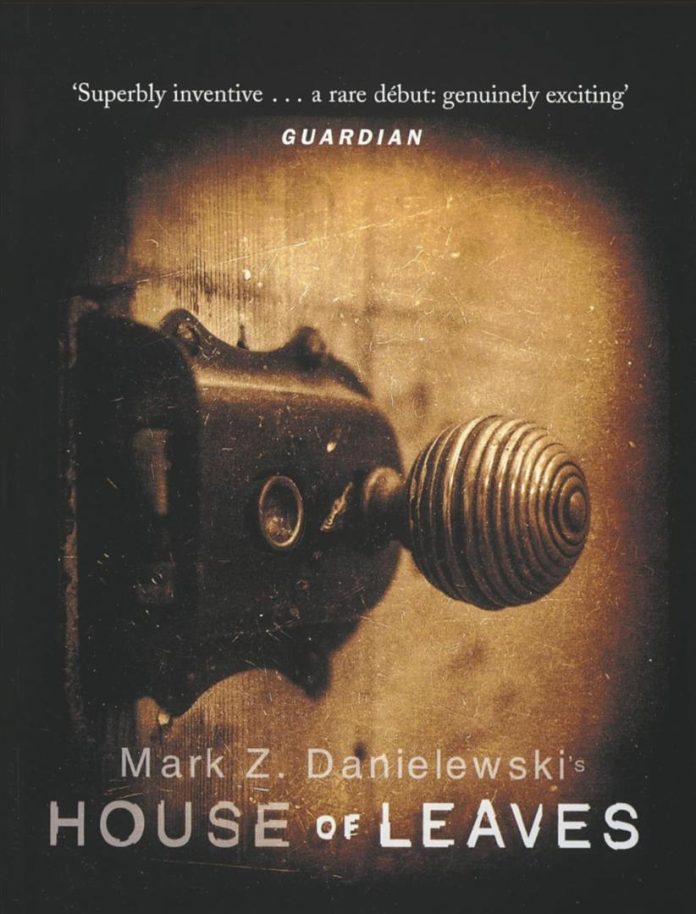
Will Navidson does not believe it the first time, so he drills holes through two outside walls. With Karen holding one end, he threads a length of fishing line clean across the master bedroom, the small new closet that appeared while the family was away at a wedding, and the children’s room, then pulls it taut and marks it. Outside, he stretches the same line along the clapboard. It comes up a quarter of an inch too long. The inside of the house is bigger than the outside, and no tape measure, laser or engineer can make the fraction go away. House of Leaves by Mark Z. Danielewski begins its horror with arithmetic, and it never stops counting.
How It Works
The premise sits inside three frames, and the frames are the point. At the centre is The Navidson Record, a documentary a Pulitzer-winning photojournalist shot about his family’s house on Ash Tree Lane after a dark, freezing corridor opened in the living room wall. Nobody has ever seen this film, because it does not exist.
Around it is a long critical study of the film by Zampanò, a blind old man found dead on his apartment floor in Los Angeles beside four claw-like gouges in the wood. Around that are the footnotes of Johnny Truant, the young tattoo-shop apprentice who carried the old man’s trunk of notes home and started assembling them. A layer of anonymous editors sits outermost of all, correcting both. Every voice has its own typeface, and the appendices add poems, journal scraps and his mother’s letters from a psychiatric institute.
The rules of the house in House of Leaves by Mark Z. Danielewski are simple and terrible. It is always near freezing inside. There is no light, no furniture, no fixture, no true north. The walls shift without a crack appearing. Animals will not stay in the corridors. And somewhere far off, a low growl rolls through the dark like distant thunder.
What Mark Z. Danielewski Builds Out of a Corridor
The cleverest decision in House of Leaves by Mark Z. Danielewski is that you experience the labyrinth twice: once through Navidson’s camera and once through the page. On his first secret visit, Exploration A, Navidson walks beyond the reach of his torch, loses the doorway, and finds his way out only by shouting and following the echoes until his small daughter’s voice calls him home. Later a professional explorer, Holloway Roberts, leads a team down a spiral staircase so deep that dropped flares never land.
As the expeditions go further, the typography goes with them. Pages thin to a handful of words, lines run down the margin or break apart, and the reader turns pages faster at the precise moments the characters are running. Danielewski has called this kind of design signiconic; scholars file the book under ergodic literature, writing that makes you work physically to get through it.
What works
- The set pieces are genuinely frightening. The rescue, the long wait at the radios and the night the house turns on its owners rank with anything in modern horror.
- The marriage is the real subject. Navidson’s need to go in and Karen’s terror of enclosed spaces turn a haunted house into a story about two people who cannot stop leaving each other.
- The satire is very funny. Zampanò cites invented critics, made-up journals and absurd academic quarrels, and the mock scholarship skewers a whole industry of interpretation.
- The editing itself carries the dread. One sequence is cut in a rhythm of three short shots, three long, three short, a distress call hidden in the montage.
Where It Gives Ground
- The scholarship stalls the story. Long digressions on echoes, labyrinth etymology, architecture and geology sit between the action, and the untranslated Latin, German and French will lose many readers.
- Johnny’s footnotes sprawl. They hold the book’s most moving revelations, but also pages of drunken nights and graphic sex that feel adolescent and repetitive. In House of Leaves by Mark Z. Danielewski, the margins are where the book is most alive and most tiresome.
- Some games run too long. Lists of names and buildings go on for pages, by design, and the joke lands well before the list ends.
- The emotional payoff is back-loaded. The heart of the novel arrives late, and you have to survive the apparatus to reach it.
Read These Next
If House of Leaves by Mark Z. Danielewski leaves you wary of your own hallway, there are more Halloween classics on our shelf, and these are its closest kin:
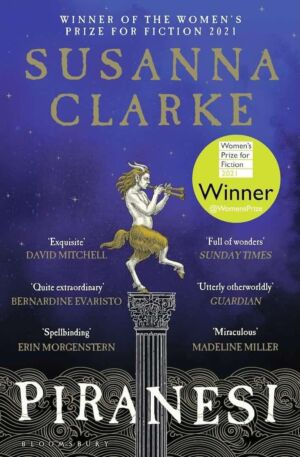
- Piranesi by Susanna Clarke for an endless house of halls seen by the one man who lives inside it.
- The Haunting of Hill House by Shirley Jackson for the house whose wrong angles started it all.
- Strange Houses by Uketsu for horror read straight off a floor plan.
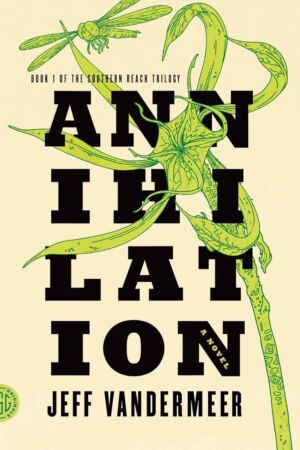
- Annihilation by Jeff VanderMeer for an expedition into a place that rewrites the people who enter it.
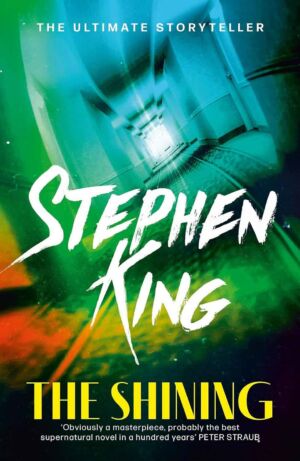
- The Shining by Stephen King for a family, a building and a father drawn deeper into both.
About Mark Z. Danielewski and Some House of Leaves Trivia
Mark Z. Danielewski was born in New York City on 5 March 1966. He spent roughly ten years on House of Leaves by Mark Z. Danielewski, his first novel, and Pantheon published it in March 2000 after a signed hardback appeared on 29 February. It won the New York Public Library’s first Young Lions Fiction Award in 2001 and was a nominee for the Bram Stoker Award for First Novel. He followed it with the novella The Fifty Year Sword, Only Revolutions, a 2006 National Book Award finalist, five volumes of The Familiar before that series was paused, and the western Tom’s Crossing in 2025.
- The seed was a long piece called Redwood, written over three sleepless days on a Greyhound bus in 1990 as his father lay dying; his sister later rescued the torn-up pages from a dumpster.
- Around thirty-two publishers passed before Edward Kastenmeier at Pantheon took it on.
- While writing it, Danielewski paid the rent as a tutor, a barista and a plumber.
- Chapters circulated online before publication, and his sister, the singer Poe, released her album Haunted alongside it; the siblings toured bookshops together in 2000.
- Its shifting impossible rooms are widely credited as an influence on the Backrooms, the video game Control and the Doom mod MyHouse.wad.
Worth Your Shelf
This is a novel you get lost in on purpose, and it knows exactly how much you will resent it on the way. The mock scholarship really is too long and Johnny’s excesses really do grate, but underneath them House of Leaves by Mark Z. Danielewski is a frightening story about a family, a love story about a damaged couple and a book that makes reading itself feel like walking into the dark.
Keep a torch by the bed. You will check the hallway anyway.