 1
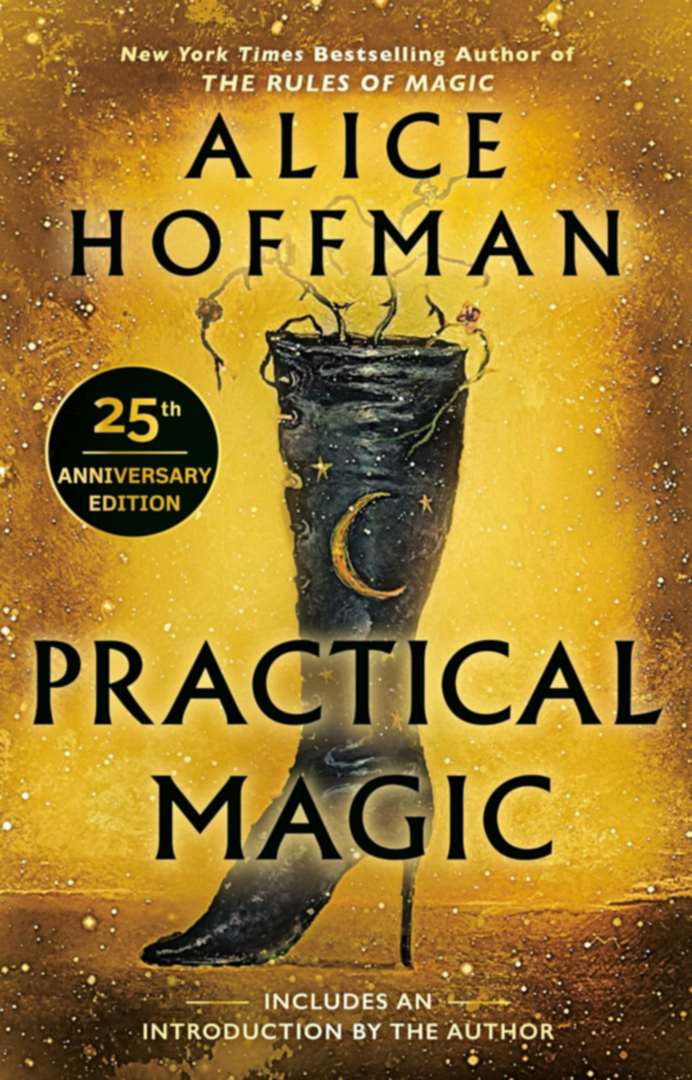
Every midsummer’s eve a sparrow gets into the old house on Magnolia Street, however many saucers of salt are set along the sills. It circles the dining room three times, and three times means trouble. Then one year, when Sally Owens is twenty-one and sure her life will be nothing but floors and laundry, the bird does not come. She laughs out loud, runs out of the house, and collides with the hardware-store clerk she will marry. That is how Practical Magic by Alice Hoffman thinks about fate: not as a curse handed down, but as a pattern that can, very occasionally, skip a beat.
Where Practical Magic Sits in the Owens Saga
Hoffman published this novel in 1995 as a standalone. It was her eleventh book, and for more than twenty years it was the only Owens story. Then the family grew backwards and forwards, and the books now stand in two orders.
By publication date:
- Practical Magic (1995)
- The Rules of Magic (2017)
- Magic Lessons (2020)
- The Book of Magic (2021)
By the story’s own timeline:
- Magic Lessons, the seventeenth-century origin of Maria Owens
- The Rules of Magic, the aunts as young women in the 1960s
- Practical Magic
- The Book of Magic, the sequel
We have not yet reviewed the three later books, so they appear here unlinked.
What Practical Magic Adds
Read today, after the prequels, Practical Magic by Alice Hoffman feels like the source the other three keep borrowing from. The aunts’ herb garden, the black soap, the gray eyes, the women who come to the back door at twilight asking for help with a man: all of it starts here, and none of it is explained. Hoffman never stops to set out rules. Magic is simply part of the housekeeping.
The book is built in four long parts, titled Superstition, Premonitions, Clairvoyance and Levitation. Each opens with a page of folk wisdom about weather, luck and love before the plot resumes. The first part covers twenty-odd years of childhood, marriage and grief. The rest compresses one hot Long Island summer, after Gillian, the younger sister, arrives on Sally’s doorstep in the middle of the night with a dead boyfriend in the passenger seat.
What works
- The sisters. Sally has made a religion out of ordinary; Gillian is trouble in red cowboy boots. Neither is right about the other, and the book is patient enough to let them find that out slowly.
- Magic as weather. A hedge of lilacs over a shallow grave blooms out of season until strangers weep on the pavement. A ticking deathwatch beetle is heard beside the chair of a man nobody wants to lose. The supernatural arrives as an atmosphere, never as a special effect.
- The comedy. Ben Frye, the biology teacher who cannot stop doing magic tricks once he falls for Gillian, is a delight, and so is his house-trained rabbit. The aunts’ arrival on a Greyhound bus, with a suitcase the driver can barely lift, is pure pleasure.
- The teenagers. Antonia and Kylie get full, prickly inner lives. Their slow move from rivals to allies is one of the warmest threads in the book.
Where It Gives Ground
- The men are interchangeable. Ben and the investigator from Arizona who comes looking for the dead man are both tall, tender, emotionally fluent and smitten on sight. In Practical Magic by Alice Hoffman almost every man falls at first glance, which wears thin.
- It tells more than it shows. The omniscient narration summarises feelings in paragraphs that circle the same point, and whole seasons of change pass in a line.
- The tone lurches. Whimsy sits right beside frank, sometimes graphic, scenes of abuse and sex. Readers who know only the film may be startled.
- The ending is too tidy. The danger in the garden builds for a hundred pages and is dealt with quickly, and the legal threat dissolves offstage.
Do You Need the Prequels First?
No. Practical Magic by Alice Hoffman is where the series began, and it was written to stand alone; the prequels assume you already know how the sisters turn out. Reading Magic Lessons or The Rules of Magic first will fill in Maria Owens and the aunts, but it also spoils some of the fun of meeting them here as mysteries.
Read These Next
If Practical Magic by Alice Hoffman puts you in the mood, our list of more Halloween classics has plenty of company. These are the closest neighbours:
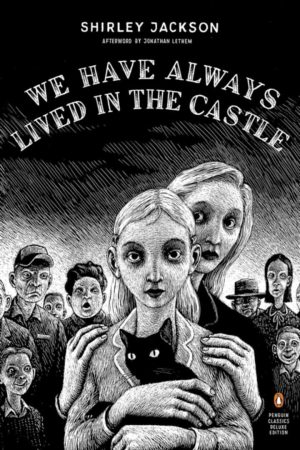
- We Have Always Lived in the Castle by Shirley Jackson, for two sisters, a shut-up house and a village that fears them.
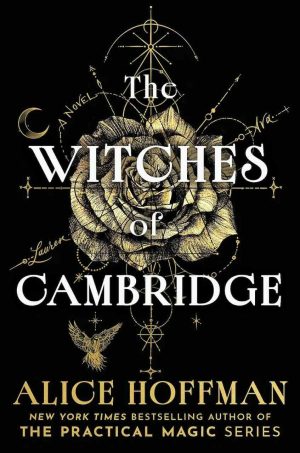
- The Witches of Cambridge by Alice Hoffman, her 2026 return to Massachusetts witches, darker and more historical.
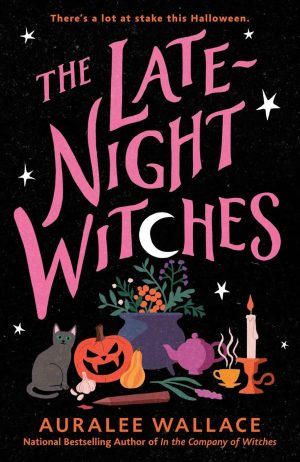
- The Late-Night Witches by Auralee Wallace, for a worn-out older sister, her reckless younger one and an October full of witchcraft on Prince Edward Island.
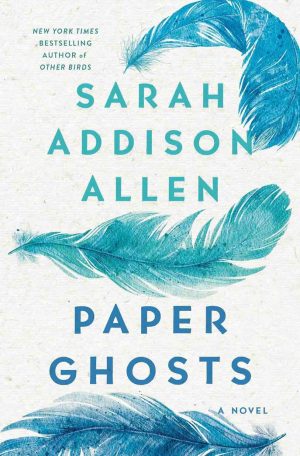
- Garden Spells by Sarah Addison Allen, the most direct descendant, with its own pair of estranged sisters and a garden with opinions.
- The Rules of Magic by Alice Hoffman, the natural next Owens book, about the aunts’ own youth.
About Alice Hoffman and Some Practical Magic Trivia
Alice Hoffman was born in New York City on 16 March 1952 and grew up on Long Island, which is where she sends Sally to build her ordinary life. Her first novel, Property Of, came out in 1977, and by the time Practical Magic by Alice Hoffman arrived she had ten books behind her and a reputation for blending the everyday with the uncanny. She lives in Boston, and after her own treatment for breast cancer she helped set up the Hoffman Breast Center at Mount Auburn Hospital in Cambridge.
- G. P. Putnam’s Sons published the hardcover in June 1995; Berkley’s paperback followed a year later.
- Griffin Dunne directed the Warner Bros. film, released on 16 October 1998; it took about $94.4 million worldwide.
- The film’s town scenes were shot in Coupeville on Whidbey Island, Washington, and the Owens house was built for the production on San Juan Island.
- Stevie Nicks recorded her own version of “If You Ever Did Believe”, a song she wrote in the 1970s, for the soundtrack.
- A 2004 CBS television pilot, Sudbury, recast the sisters with Kim Delaney and Jeri Ryan, but was not picked up.
- Practical Magic 2, directed by Susanne Bier and drawn from The Book of Magic, opened in American cinemas on 10 September 2026.
Worth Your Shelf
Its weaknesses are real: men cut from the same soft cloth, a narrator who explains too much, and a climax that ends almost before it starts. But the house with no clocks, the aunts in their black boots and two sisters who cannot live together or apart give Practical Magic by Alice Hoffman a pull the films never quite matched.
Keep it for the next October night when you want something that smells of lavender and trouble.