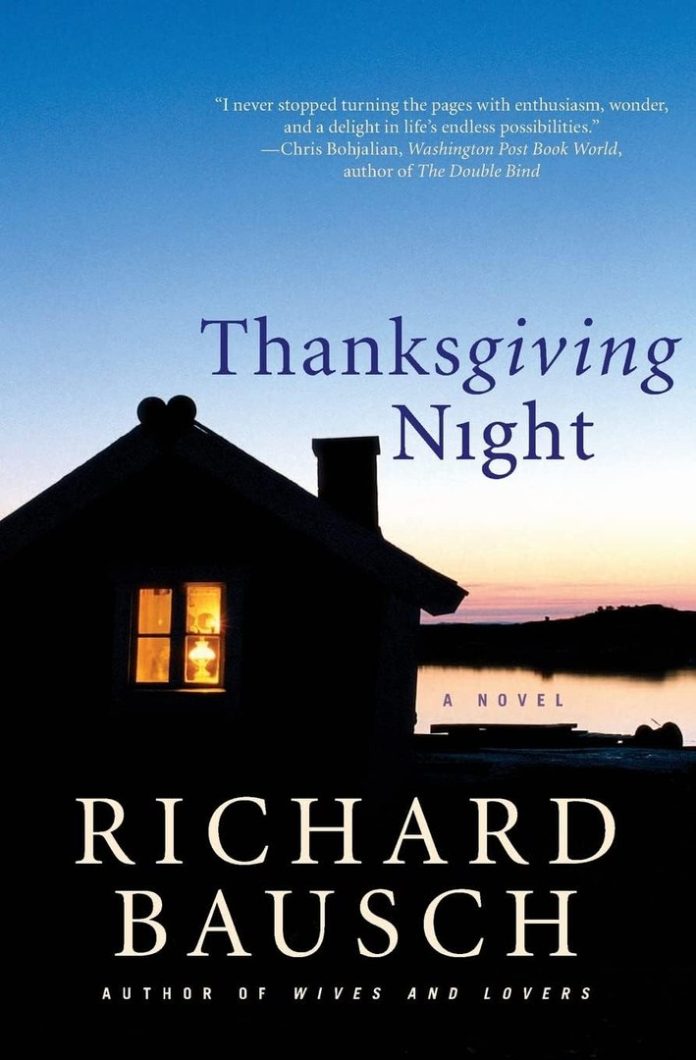



A contractor with a clipboard rings a broken doorbell on Temporary Road and is met by an old woman in a bathrobe who is on her way out, purse on her shoulder, to get away from her niece. Within five minutes Oliver Ward has been accused, interrogated about Shakespeare, grabbed by the shirt and told to collect his sixty-dollar call-out fee from the niece’s son two streets over. The son turns out to be a gentle bookseller arriving home with an armful of wild roses for his wife, for no occasion at all. Oliver drives off thinking his daughter deserves a marriage like that. Thanksgiving Night by Richard Bausch spends the next four hundred pages testing whether he was right.
The Marriage at the Center of Thanksgiving Night
Will Butterfield is forty-eight, runs a used-book shop called The Heart’s Ease on a trust fund his mother set up, and is a gentle man who mistakes drift for peace. Fourteen years ago his first wife excused herself from a fast-food table on the interstate, left a goodbye written in lipstick on the restroom mirror, and vanished. He raised two children alone, then married Elizabeth, a high-school English teacher whose brightness sits on top of a much darker childhood.
Bausch is very good on what a decade of marriage feels like from the inside: the private jokes, the shared joint after a long day, the way one partner’s restlessness can be read by the other long before it is admitted. Elizabeth is the novel’s conscience. She notices everything, including the new couple who buy the empty house next door, and the book lets her watch Will before he has noticed himself. Without giving the turns away, the strongest stretch of Thanksgiving Night by Richard Bausch is the slow, almost comic awfulness of a decent man doing something he knows is wrong, and the way guilt makes him clumsy in every other part of his life.
The structure helps. The novel opens at the end of August, runs through a miserable Labor Day weekend visit from Will’s grown children, and then marches through autumn toward the holiday. The radio in the background is all impeachment fallout, end-times preaching and fear of the Y2K bug, so the whole town seems to be waiting for something to break.
The Other Households of Point Royal
What lifts Thanksgiving Night by Richard Bausch above a marriage drama is the company it keeps. Point Royal is a fictional Virginia town in the Shenandoah Valley, and Bausch moves among half a dozen households in short numbered scenes, close third person, present tense.
- The Crazies. Will’s mother Holly, a seventy-five-year-old former union organizer, and her barely older aunt Fiona, a drinker and a fervent Catholic, are a two-woman weather system. They decide to split their house into a duplex and spend the autumn arguing over who should get the better kitchen. Fiona’s lecture on consumerism to strangers in a Kmart checkout line is one of the funniest scenes in the book.
- Oliver and his daughter. Oliver is a Vietnam veteran whose shrapnel wound left him with a tic that makes him look as if he is always saying no. He drinks more than he should and lives with his daughter Alison, a police sergeant raising two children alone. Their scenes, quietly affectionate and frank about money, are the tenderest in Thanksgiving Night by Richard Bausch, and a health scare in mid-autumn gives them real weight.
- The rectory. Brother Fire, the seventy-two-year-old pastor, has begun to listen to confessions with a curiosity he finds shameful, and one confession in particular, from a well-loved assistant principal frightened of his own longings, follows him through the novel. Bausch handles it with tact and without sensation.
All of these threads converge on the holiday. The old women decide that everyone, family and near strangers alike, will eat together in their half-divided house, and the final chapter puts fourteen people at a long table built from boards and sawhorses, beside a half-built partition wall the children have covered with drawings. It is a wonderful image for a book about people who cannot live with each other or apart.
Where Thanksgiving Night Gives Ground
- The temptation arrives as a type. The new neighbor is a restless, knowing bartender who seems to exist to trigger the plot, and she is never given an inner life to match Will’s.
- Coincidence does the sewing. The policewoman is called to the old women’s house, her son sits in Elizabeth’s class, a troubled student lives across her street. The mosaic is satisfying and also visibly arranged.
- The school thread tips into melodrama. Calvin Reed, a hulking student on probation, is described with a revulsion that grows uncomfortable, and the late events around the high school feel louder than the rest of the book.
- Will’s guilt goes round in circles. His self-reproach is precise the first few times and repetitive by the tenth, which makes the middle of Thanksgiving Night by Richard Bausch longer than it needs to be.
Read These Next
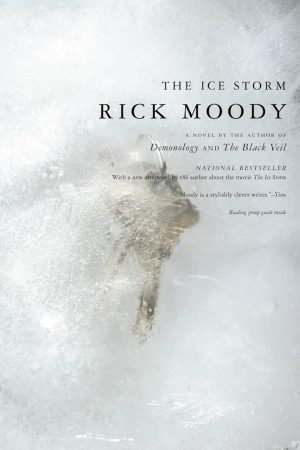
- The Ice Storm by Rick Moody for another holiday week in which adult misbehavior collides with a winter storm.
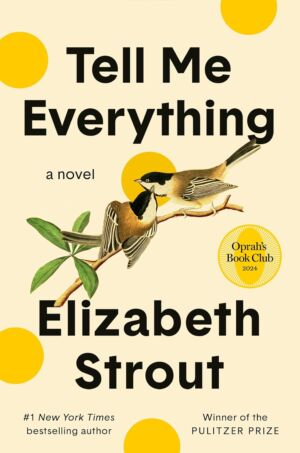
- Tell Me Everything by Elizabeth Strout for a small town told through many overlapping lives, with the same patience.
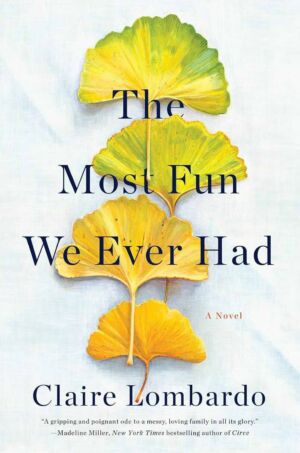
- The Most Fun We Ever Had by Claire Lombardo for a long marriage seen from inside and the grown children circling it.
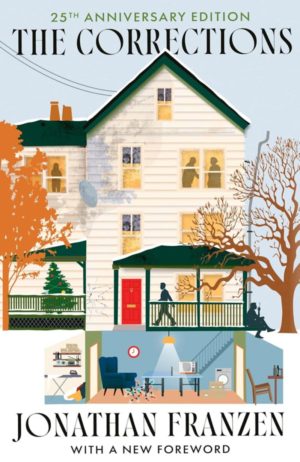
- The Corrections by Jonathan Franzen, the defining holiday-homecoming family novel, which we are reviewing for this season.
About Richard Bausch
Richard Bausch has published more than a dozen novels and ten story collections, and he is admired above all as a short-story writer. Thanksgiving Night by Richard Bausch came out in 2006, between Hello to the Cannibals and his war novel Peace. We have not yet reviewed his other books.
- Born on 18 April 1945 at Fort Benning, Georgia.
- His twin brother, Robert Bausch, is also a novelist, and this book is dedicated partly to him.
- Before teaching, he served in the US Air Force and toured the South and Midwest singing in a rock band and doing stand-up comedy.
- He won the PEN/Malamud Award for excellence in the short story in 2004.
- Peace won the 2009 Dayton Literary Peace Prize, and his novel The Last Good Time was filmed by Bob Balaban in 1994.
What Stays With You
Not the affair, in the end, and not the big events of November, but the small acts of decency that keep breaking through: a contractor carrying a single rose home in his truck, two old women who cannot stop fighting and cannot do without each other, a priest who keeps showing up. Thanksgiving Night by Richard Bausch is a big, uneven, generous novel, and its faults are real. Its best scenes, though, understand families better than most books on the shelf.
Save it for the week before the holiday, and read the last chapter on the night itself.