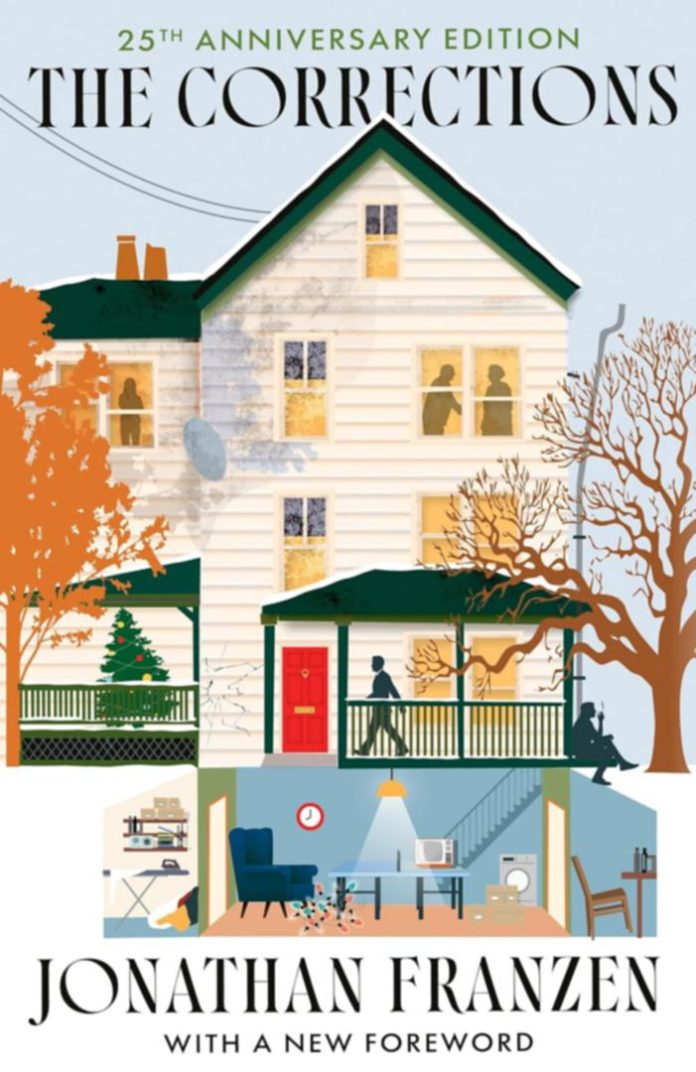

In the basement of a house in the suburb of St. Jude, a Ping-Pong table has become a battlefield. At the eastern end, Alfred Lambert keeps his bank statements and a printing calculator that now produces columns of meaningless numbers. At the western end, his wife Enid has buried the television under old magazines, candy tins and things she means to take to the consignment shop. Upstairs she is hiding a registered letter from a company that wants to license one of his patents, because there are parts of that story she would rather he never pieced together. Downstairs he is losing a war with a can of paint. The Corrections by Jonathan Franzen starts there, on an autumn afternoon with a cold front coming in, and it never really leaves the house, even when its characters run as far as Lithuania.
The novel’s calendar runs from that first cold snap to the end of December, so Thanksgiving week sits in the middle of it, and the gathering everything bends toward is a Christmas Enid has decided will be the family’s last in the old house. If you want the definitive novel of going home for the holidays and regretting it, The Corrections by Jonathan Franzen is the one later books keep measuring themselves against.
Alfred and Enid, Downstairs and Up
The first thread, and the one that makes the book great, is the marriage. Alfred is a retired railroad engineer with Parkinson’s disease, and Franzen writes his decline from the inside with a precision that is hard to read. One early sentence follows Alfred as he loses his way in the middle of answering a simple question, wandering through a forest of words for half a page before stumbling back to the noun he needed. It is funny, then it is frightening, and by the end you understand how he experiences every conversation now.
He is also a tyrant losing his kingdom one word at a time. The flashbacks show the younger Alfred: rigid, punishing, reading Schopenhauer to justify his gloom, and sleeping through his marriage rather than having the arguments it needed. Enid is the comic engine of The Corrections by Jonathan Franzen, a bragging, coupon-hoarding, relentlessly cheerful woman who hides mail in Nordstrom bags behind the dust ruffles. She is also, quietly, its hero. The book lets you laugh at her campaign for one last Christmas and then shows you exactly what it is costing her to keep a sick husband upright in a house that is falling apart.
The patent subplot ties the two together. A biotech firm is preparing a miracle treatment for brain disorders, named, to Enid’s lasting embarrassment, Corecktall. What Alfred’s old invention is worth, and who knew what when, gives the parents’ story a slow fuse.
How Jonathan Franzen Builds a Family
The counter-thread is the three children, each of whom has organised an adult life around not becoming their parents.
- Gary, the eldest, is a Philadelphia banker who tracks his own moods like a stock portfolio, assigning numbers to his brain chemistry while insisting he is not depressed. His war with his wife over whether anyone will fly to St. Jude for Christmas is one of the sharpest marriage fights in modern fiction, and it ends in a single drunken evening involving a grill, a hedge trimmer and his son’s secret camera that is as painful as it is ridiculous.
- Chip, the middle child, is a fired professor writing a screenplay nobody wants. His section contains the book’s most famous set piece, a fillet of salmon smuggled out of a gourmet grocery down the front of his leather trousers.
- Denise, the youngest, is a gifted chef whose control in the kitchen hides a private life she shares with no one.
The structure is the achievement. Each child gets a long section of their own, and each section quietly rewrites what you thought you knew from the previous one. The flashbacks to their childhoods are some of the best writing in The Corrections by Jonathan Franzen, and they explain more about the grown-ups than any amount of summary could. By the time the family finally converges on St. Jude in the last section, you have met every one of them from the inside and you dread the reunion as much as they do. The satire on medicine, money and the late-nineties boom is still unnervingly current, and the novel’s title keeps paying off in new senses: market corrections, moral ones, the ones parents try to make in their children.
Where Jonathan Franzen Gives Ground
- The middle detour is long. One section leaves the main line hanging at its most suspenseful moment and spends a very long stretch on a single character’s backstory and love life. It is good writing. It is also where many readers abandon The Corrections by Jonathan Franzen for good.
- The gross-out streak. There is a lot of explicit sex and bodily comedy, and some of it, such as a hallucination involving a talking piece of excrement, is clever but deliberately repellent.
- Some people are cartoons. Gary’s wife, Chip’s girlfriend and several minor figures are seen only through someone’s contempt, and the narrator’s eye on women’s bodies can feel leering rather than observant.
- The Eastern European subplot tips into farce. It is entertaining, and it runs past its welcome.
Read These Next
If The Corrections by Jonathan Franzen leaves you hungry for more families behaving badly across the decades, start here.
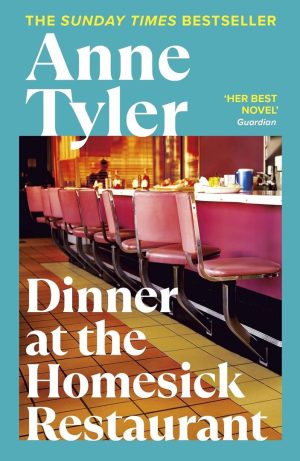
- Dinner at the Homesick Restaurant by Anne Tyler for three grown children circling a difficult parent and a family dinner that never quite gets finished.
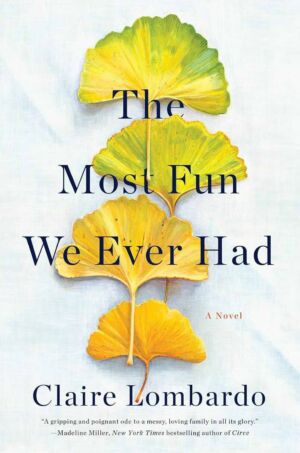
- The Most Fun We Ever Had by Claire Lombardo for a Midwestern parents-and-adult-children saga told across decades.
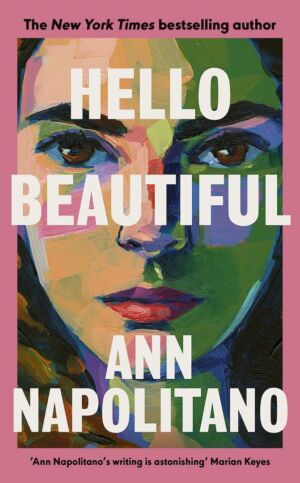
- Hello Beautiful by Ann Napolitano for a gentler, warmer take on how one family’s love and damage pass down.
- Freedom by Jonathan Franzen, his next novel, for another Midwestern family and another marriage under a microscope.
About Jonathan Franzen
Franzen was born in 1959 in Western Springs, Illinois, and grew up in Webster Groves, a suburb of St. Louis that is easy to glimpse behind fictional St. Jude. He studied German at Swarthmore and published two ambitious, puzzle-heavy novels before this one, which marked his turn toward straightforward realism about family life. The Corrections by Jonathan Franzen made him famous, and his later novel Freedom put him on the cover of Time.
- It won the 2001 National Book Award for Fiction and the 2002 James Tait Black Memorial Prize.
- It was a Pulitzer finalist; the prize went to Richard Russo’s Empire Falls.
- Oprah Winfrey chose it for her book club, then withdrew his television invitation after he spoke publicly about his unease with the pick.
- It was published on September 1, 2001, ten days before the attacks on New York.
- In 2026 Netflix ordered a limited series with Meryl Streep as Enid, adapted by Franzen himself.
What Stays With You
Plenty of novels are clever about families. Fewer are this clever and this tender at once. What lingers after The Corrections by Jonathan Franzen is not the satire or the salmon but a father who can no longer finish a sentence and children who finally understand, too late, how much of him they carry. It is long, it is uneven, and it is still the book to beat about going home.
Read it before the holidays. Then call your parents.