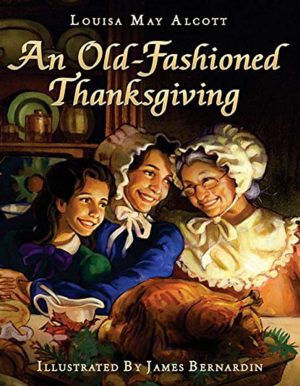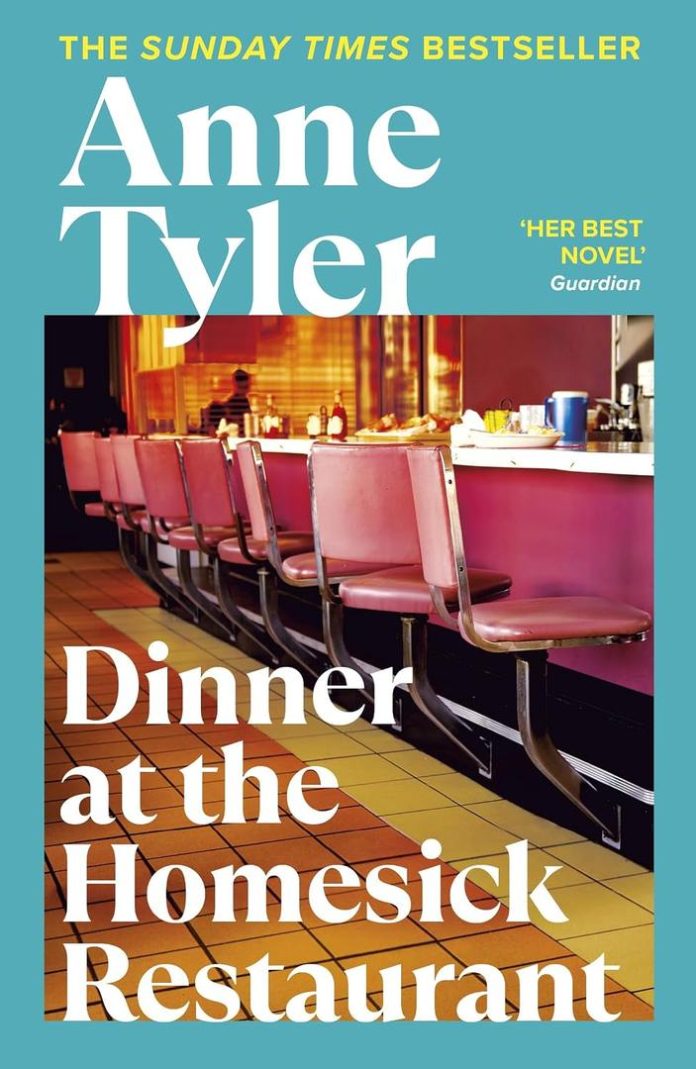





It is Thanksgiving 1944 in a Baltimore row house, and there is no turkey. Pearl Tull can only stretch to a small meal, so fourteen-year-old Cody shells pecans for the pie while watching the street for a girl who never comes. After dinner the family plays Monopoly, and for once nobody minds that Cody wins. Then the younger two beg for the old party piece: Pearl and Cody act out a creaky old melodrama about a mortgaged farm, with Cody twirling an imaginary moustache and Pearl fluffing her last line into a fit of giggles. Ezra and Jenny clap them back for three curtain calls. It is the happiest hour in Dinner at the Homesick Restaurant by Anne Tyler, and what makes it ache is that the children’s father walked out months earlier, Pearl still has not told them, and on other nights that same mother hurls a spoon in Cody’s face.
The Son Who Keeps Setting the Table
The first thread belongs to Ezra, the middle child and Pearl’s open favourite. He is large, fair, slow to answer and incapable of holding a grudge, and his answer to every hurt is to feed somebody. As a teenager he makes hot milk with honey for his sister after their mother’s rages. As a young cook at Scarlatti’s, a formal restaurant on St. Paul Street, he so charms the owner that she sells him a partnership for a dollar, and years later he carries his garlicky gizzard soup to her hospital bed. Pearl walks out of the partnership dinner before the food arrives.
That walkout becomes the novel’s running joke and its wound. Ezra renames the place the Homesick Restaurant, where people can eat the dish they have been longing for, and he spends decades inviting his family to dinner there. Every meal collapses. Someone storms off before the main course, or a quarrel breaks out over dessert, and Ezra is left at a long white table wishing that, just once, they could finish.
It would be easy to make Ezra a saint, and Tyler is too sharp for that. His kindness is real, but so is his passivity. When his brother takes something precious from him, he simply lets it go, and the book is honest that this costs him as much as it spares him. The restaurant at the centre of Dinner at the Homesick Restaurant by Anne Tyler is warm and crowded and, for the man who runs it, a little lonely.
Pearl, Seen From Three Chairs
The counter-thread is Pearl, and here the novel’s form does the arguing. Each of the ten chapters is told in close third person through one member of the family, moving from 1944 to 1979, and the same events come round again from a different seat. The archery accident that injures Pearl is told first by her and then by Cody, and the two versions do not agree about whose fault it was. Cody’s early chapter is a catalogue of pranks, from a rigged broken window to a staged photo of Ezra asleep among liquor bottles, and only from inside his head do you see the jealousy driving them.
Pearl is the hardest character in Dinner at the Homesick Restaurant by Anne Tyler to read, and the best. She weatherproofs every house against storms that never come, keeps up appearances for years after her husband Beck leaves, and loves her children fiercely. She also slaps them, screams that she wishes they were dead, and does things the grown children still argue about. Tyler gives you her loneliness without asking you to excuse what she does. Today we would simply call much of it child abuse, and the book never softens it. What it adds is the slow, unsettling sense that the three children were raised in the same house and remember three different mothers. Jenny, the youngest, a paediatrician who keeps a plaque on her office door telling patients that Dr. Tull is not a toy, has learned to meet everything with a joke. Her chapter shows how much that lightness is holding up.
Where Dinner at the Homesick Restaurant Gives Ground
- The central love story happens offstage. The courtship that splits the brothers over Ruth, a scrappy country cook, is told in summary and a few set pieces, and Ruth herself stays thinly drawn once she is married. For a turn this important, you see very little of it happen.
- The middle drifts. The structure of Dinner at the Homesick Restaurant by Anne Tyler is a string of vignettes rather than a plot, and the chapter in which Luke, Cody’s teenage son, hitches rides to Baltimore spends long stretches on the monologues of strangers who pick him up. Each is well done; together they stall the book.
- The language is of its period. Pearl’s girlhood diary contains a racial slur, a childhood friend is taunted with ableist insults, and a few descriptions of an immigrant family read as dated.
Read These Next
If Dinner at the Homesick Restaurant by Anne Tyler left you thinking about your own family table, these are good next stops:
- So Far Gone by Jess Walter, whose plot turns on a Thanksgiving dinner argument that blows a family apart.
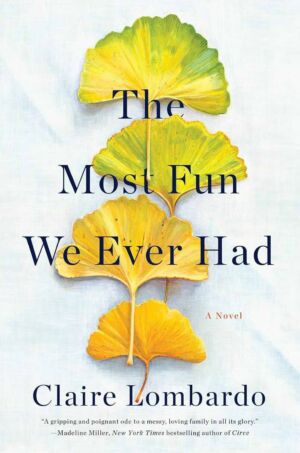
- The Most Fun We Ever Had by Claire Lombardo for four sisters measuring themselves against their parents across decades.
- Tom Lake by Ann Patchett for a mother telling her grown daughters the story of a life they only half knew.
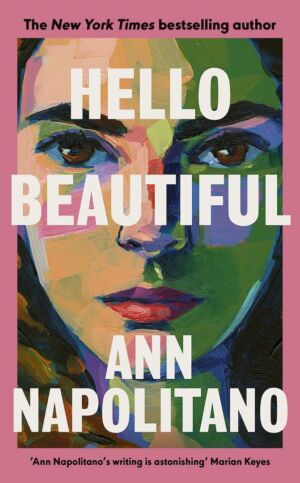
- Hello Beautiful by Ann Napolitano for siblings bound and broken by loyalty.
Behind the Homesick Restaurant: Anne Tyler and Some Trivia
Anne Tyler was born in Minneapolis in 1941 to Quaker parents and spent much of her childhood in Quaker communities in the South. She went to Duke at sixteen to study Russian and has lived in Baltimore, the setting of most of her fiction, since the late 1960s. Dinner at the Homesick Restaurant by Anne Tyler was her ninth novel, the book that made critics take her seriously; Breathing Lessons won her the Pulitzer in 1989. She is still writing, as Three Days in June by Anne Tyler shows.
- Knopf published it on 12 March 1982, in a jacket illustrated by Fred Marcellino.
- Five major prizes shortlisted it without handing it the trophy: the Pulitzer and the National Book Award (The Color Purple took both in 1983), the PEN/Faulkner (Toby Olson’s Seaview), plus the National Book Critics Circle Award and the Los Angeles Times Book Prize for 1982.
- John Updike reviewed it for The New Yorker and took his headline from a line in Pearl’s girlhood diary.
- Pearl grows up in Raleigh, North Carolina, the city where Tyler herself went to school.
The Last Word
It is not a tidy book. The middle meanders, and its biggest romance happens mostly out of sight. But Dinner at the Homesick Restaurant by Anne Tyler understands families better than almost any novel of its era: how one house can produce three incompatible histories, and how love and damage arrive on the same plate. Pearl is unforgettable, Ezra is one of the gentlest men in modern American fiction, and the closing chapter is as good as anything Tyler has written.
Set an extra place. Someone always leaves before dessert.