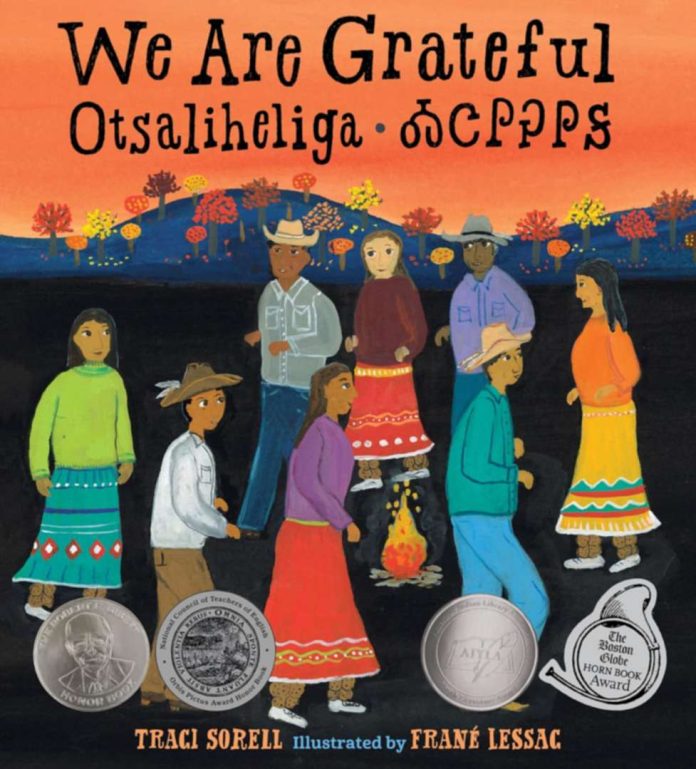

The book opens with a family walking under a tree painted with red, dark green and pale new leaves all at once, and a single sentence of instruction: Cherokee people say otsaliheliga when they want to give thanks. Then the year begins, and it begins in the fall. We Are Grateful by Traci Sorell is built on that choice. Its four sections run Uligohvsdi, Gola, Gogeyi and Gogi, which is fall, winter, spring and summer, because the Cherokee New Year arrives in autumn, and each section opens with a weather line that ends on the same three words: we say otsaliheliga.
It was Sorell’s first picture book, published by Charlesbridge in 2018 with art by Frané Lessac, and it has collected more honours than most debuts ever see.
How We Are Grateful Works
Each season gets three or four spreads. The first states the weather and the refrain; the rest finish the sentence, each line beginning with an ellipsis, so the whole season reads aloud as one long breath of thanks. Fall moves from a ceremony to basket weaving to a grandmother revealing a baby’s Cherokee name. Winter brings indoor crafts and a family supper. Spring has planting and a send-off; summer has creek fishing, a ceremony and a stickball game.
The device that makes it useful at home and in class sits at the foot of the page. Whenever a Cherokee word appears, a small line spells it four ways: the transliterated word, a phonetic guide with the stressed syllable in capitals, the word in Sequoyah’s Cherokee syllabary, and the English meaning. Durbin Feeling of the Cherokee Nation’s language program approved every one of them. By the end, a child has heard nine Cherokee words and seen each in a script most adults have never studied.
On the holiday question, be clear about what you are buying: We Are Grateful by Traci Sorell never mentions Thanksgiving. Its fall feast belongs to the Cherokee New Year, and its argument is that thanks is a daily habit, so it makes a quiet, Native-authored counterweight to the Pilgrim crafts that fill November classrooms.
Why We Are Grateful Skips the Plot
We Are Grateful by Traci Sorell is less a story than a calendar of a living nation. There is no protagonist, no problem and no turn. What it has instead is accumulation. Ordinary things (a bike ride through falling leaves, a dad pushing a stroller, kids building a snowman) sit on the same footing as ceremonies, and that levelling is the point. Sorell’s note at the back says that when she was growing up, very few books showed Cherokee children in the present day. This one fills its pages with sneakers, cowboy hats, a grey sofa and a red clapboard house.
What Works
- The refrain is perfectly judged for reading aloud. Short seasonal lines, a repeated word, and a closing line, “Every day, every season,” that lets small listeners finish it for you by the third time through.
- Lessac’s gouache does the warm work. Painted on Arches paper in a flat folk-art style, the palette shifts with the year: night-black ceremony scenes, grey-white snow, a rosy pink kitchen, acid yellow-green spring meadows, burnt-orange summer skies. You could tell the season with the words covered.
- The pages reward a second look. A woodpecker hides on almost every spread, and a little brown dog trots through many more.
- Hands are always busy. A teacher guides a long table of children through pucker-toe moccasins and coiled clay pots, and older kids show younger ones how to make corn-husk dolls and play cane flutes, which models how culture moves.
- The back matter is genuinely good. Eight short definitions, a full author’s note and the complete syllabary chart turn a ten-minute read into a lesson plan.
Where It Gives Ground
- It is a list, and some children will drift. With no character to follow, the middle stretch of We Are Grateful by Traci Sorell can feel like a slideshow for listeners under five.
- The faces are still. Lessac’s figures are stylised and mostly expressionless, which suits the crowd scenes but flattens the quieter pages that ask for feeling.
- The main text leans on the glossary. Stickball, the Green Corn Ceremony and the Cherokee National Holiday each get one line; without an adult reading the definitions, they are names rather than experiences.
Read These Next
If We Are Grateful by Traci Sorell becomes a family favourite, these make good companions.
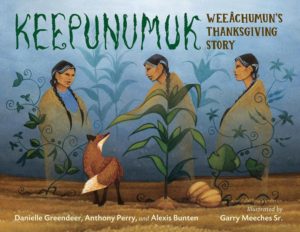
- Keepunumuk: Weeâchumun’s Thanksgiving Story by Danielle Greendeer, Anthony Perry and Alexis Bunten, for a Wampanoag retelling of the harvest story that the holiday borrowed.
- Fry Bread by Kevin Noble Maillard, for another Native family gathered around food and memory.
- We Are Water Protectors by Carole Lindstrom, for a picture book on the same theme of caring for the land.
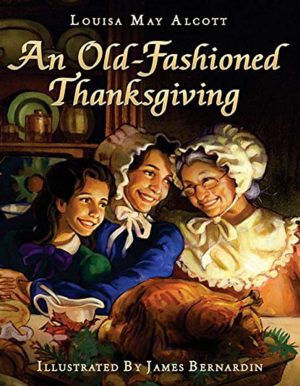
- An Old-Fashioned Thanksgiving by Louisa May Alcott, for a classic family-table story to read alongside it and compare.
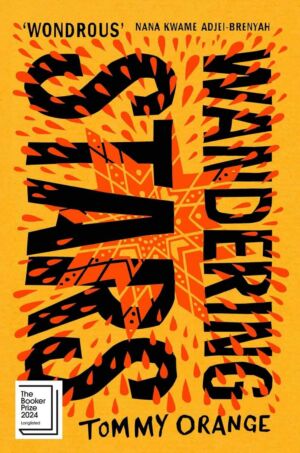
- Wandering Stars by Tommy Orange, for parents who want a Native novel about inherited history after the children are in bed.
About Traci Sorell and Frané Lessac
Traci Sorell is an enrolled citizen of the Cherokee Nation who lives in northeastern Oklahoma. Before writing for children she spent years working for Native nations, drafting legal codes, congressional testimony and federal budget requests. Frané Lessac is an American-born painter and author-illustrator based in Western Australia. Together they gave We Are Grateful by Traci Sorell its unusual double grounding: lived experience in the words, careful research in the pictures.
- Sorell studied Native American Studies at UC Berkeley and later earned a law degree from the University of Wisconsin.
- The pair reunited for We Are Still Here! (2021), a companion book of Native American truths.
- Lessac grew up in Cliffside Park, New Jersey, and began painting on the Caribbean island of Montserrat.
- She also illustrated The Mayflower (2014) for her husband, Mark Greenwood.
- Honours for this book: a 2019 Sibert Honor, a 2019 Boston Globe-Horn Book Picture Book Honor, a 2019 Orbis Pictus Honor and a 2020 American Indian Youth Literature Award Picture Book Honor.
Worth Your Shelf
The weaknesses are real but small. This is a book to browse and return to rather than a story to be gripped by, and adults will do some explaining. What it does better than almost any gratitude book on the shelf is show thanks as a practice woven through a whole year, in a community that is plainly here and now.
Buy We Are Grateful by Traci Sorell for November, then leave it out through spring. That is exactly what it asks you to do.