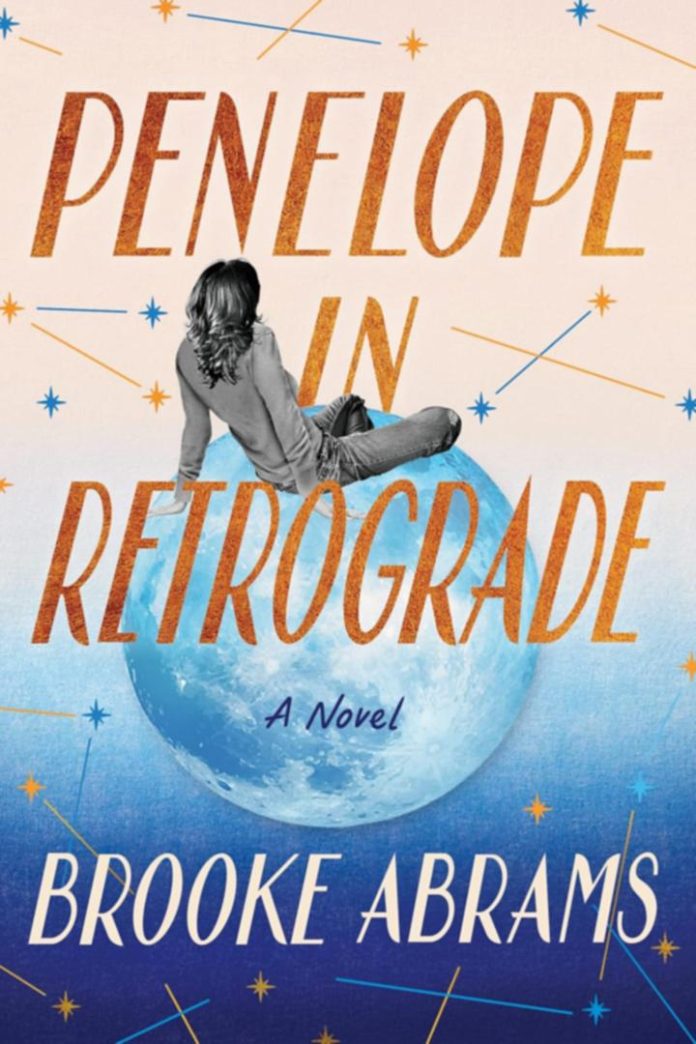


Penny Banks has a system. A month, two weeks and three days before every major holiday, her phone reminds her to have a conflict ready: a deadline, a cold, a burst pipe, sometimes all three, logged in careful notes so no excuse is ever repeated. It has kept her away from her parents’ house on Coronado Island for ten years. Penelope in Retrograde by Brooke Abrams opens on the day the system fails. She needs a loan from her father, so she is in the San Diego airport the evening before Thanksgiving with an elderly Pomeranian in a rolling crate, and the only rideshare that will take a dog is a shared van. The second passenger climbs in. It is her ex-husband.
How It Works
Penny is a midlist romance author with a USA Today bestseller to her name, all under a pen name her family has never heard. She shares a San Francisco house with two other romance writers, and the three of them want to open a bookstore that sells only love stories. They have the plan. They lack the cash. Her father, a rigid engineering executive who once tried to march her through Princeton, has plenty.
That is the engine of Penelope in Retrograde by Brooke Abrams, and Abrams loads it with obstacles: Smith Mackenzie, the boy from across the street she married and divorced inside a year, home to sell his late mother’s house; Martin Butler, the handsome new hire her mother has seated beside her at dinner, who agrees to pose as her boyfriend; a twin sister with news of her own; and a grandmother who drinks dirty martinis and keeps secrets in the backyard. Everything happens across one long holiday weekend, told in first person and present tense, with Penny’s two housemates commenting by text from the other end of the state.
The structural trick is in the chapter list. Interleaved with the present-day weekend are flashbacks, each one dated to a past Thanksgiving and titled like an episode of Friends. Each shows a different holiday dinner that went wrong: a teenage escape up a tree house with a bottle of stolen vermouth, a Princeton fax read aloud over the first course, a newlywed November abroad, a divorce discussed over pie. The present-day dinner is on the page too, and it lands as the sum of all of them.
What Penelope in Retrograde Builds Out of Old Holidays
The flashbacks are what lift Penelope in Retrograde by Brooke Abrams above a standard holiday romcom. They turn a family argument into a case file. By the time the turkey is carved, you know exactly which old wounds every barb is aimed at, and you understand that Penny’s habit of turning everything into a joke began as armour at that table.
What works
- The grandmother. Nana Rosie is the best character in the book. She invites the ex-husband in for cocktails out of pure mischief, pleads the Fifth when her backyard greenhouse is discovered, and counters by exposing her daughter-in-law’s cosmetic work. Every scene she enters gets louder and better, and she is the reason many readers will finish Penelope in Retrograde by Brooke Abrams smiling.
- The dinner farce. The Thanksgiving meal itself, with one guest quietly stoned and the head of the family blaming the smell on skunks, is a well-built comic set piece that escalates cleanly.
- Martin’s hidden hobby. The fake boyfriend runs a secret knot-tying channel with a large following, a detail so specific it makes him real, and his nervous habit of tying knots at the table pays off in small ways.
- Fairness to the family. Abrams lets Penny be wrong. Her version of the divorce was not the whole truth, and the people she has been avoiding have grievances that the book takes seriously.
Where It Gives Ground
- The jokes never rest. Nearly every paragraph of Penelope in Retrograde by Brooke Abrams ends on a quip or a pop-culture reference, and some of the quieter moments get stepped on before they can register.
- The romance is thin. Martin moves from accomplice to love interest in a compressed stretch, and a late revelation about his past is raised and then dropped. Readers expecting a romance first and a family novel second may feel the balance tilt the other way.
- The same exit, repeatedly. Penny walks out of scenes, or wants to, often enough that the pattern starts to drag rather than reveal.
- A tidy finish. The last chapters settle every account at once, including the money problem, by means that feel convenient. A small character-name slip in the final stretch also made it past the editors.
Read These Next
If Penelope in Retrograde by Brooke Abrams sent you looking for more writers, bookshops and families that cannot sit through one meal, start here.
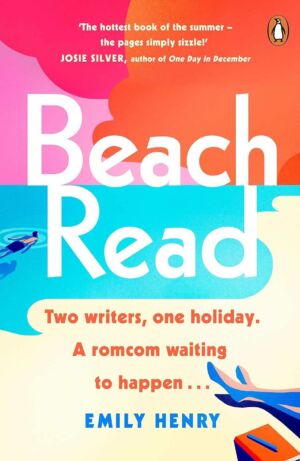
- Beach Read by Emily Henry, for another romance writer whose job is part of the story and part of the problem.
- Battle of the Bookstores by Ali Brady, from one of this book’s early champions, if the romance bookstore dream is what hooked you.
- Book Club Confidential by Julie Hatcher, a fellow Lake Union novel about women who take their cues from romance heroines.
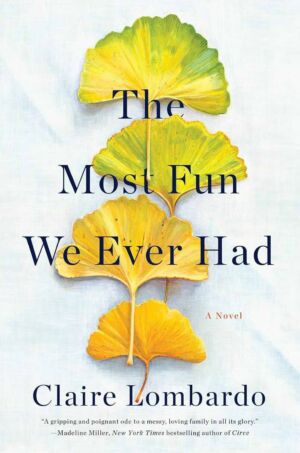
- The Most Fun We Ever Had by Claire Lombardo, for sisters, old grudges and a family that loves loudly, at literary length.
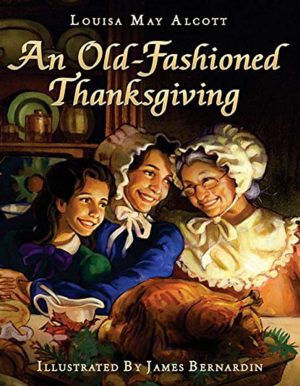
- An Old-Fashioned Thanksgiving by Louisa May Alcott, if you want the gentle version of the same holiday.
About Brooke Abrams
Brooke Abrams writes funny fiction with a soft centre, and this novel was her debut, published in 2023. She lives in the Sonoran Desert, which may explain the affection for a Californian coastline she writes about from the outside.
- The book came out from Lake Union Publishing, the Seattle-based imprint of Amazon Publishing.
- Her household, according to her own bio, runs to a husband, three children, three dogs and a cat.
- The audiobook is narrated by Eva Kaminsky.
- She writes a Substack newsletter about the writing life for readers curious about how books get made.
- The novel’s title nods to retrograde motion, the apparent backward drift of a planet that astrology fans blame for misfires; Mercury is retrograde on page one.
The Last Word
Penelope in Retrograde by Brooke Abrams is a debut that knows its strengths: a voice that can make an airport food court funny, a grandmother worth the price of admission, and a structure that makes one holiday weekend feel like twenty years of them. It talks too much, and it wraps up too fast. It is also honest about why some people stay away from home, and generous about what it costs to finally go back.
Take it home for the long weekend. Then call your sister.