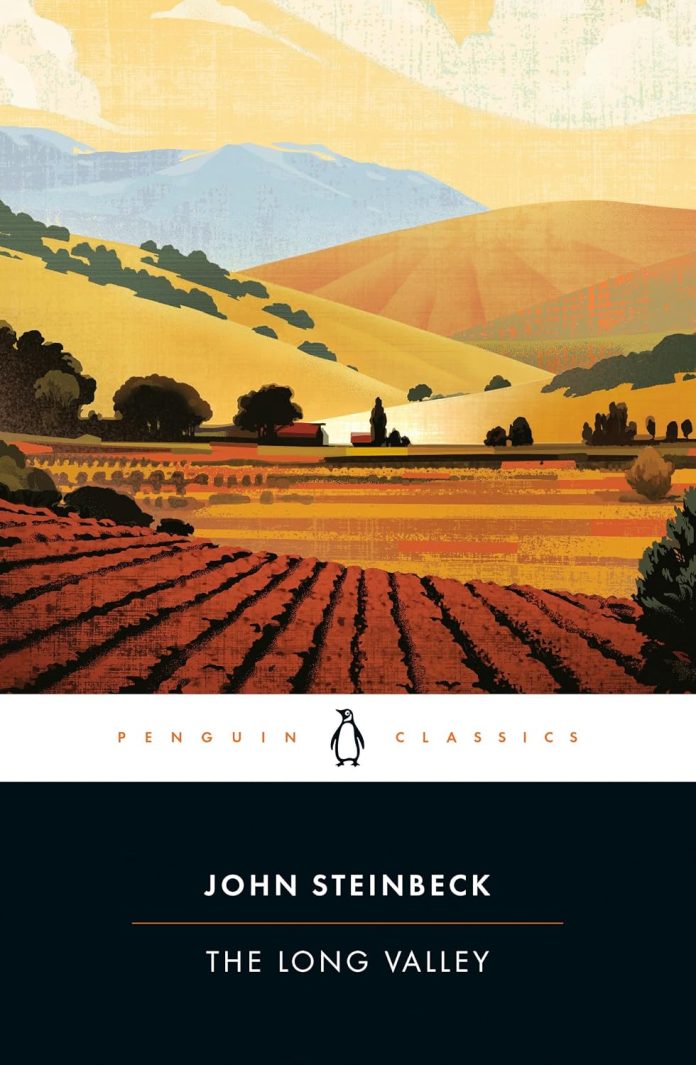
A woman kneels in her flower bed in the first story of The Long Valley by John Steinbeck and tries to explain to a passing tinker what it feels like to have a gift. It is in the fingers, she says. They pick and pick the buds and they never make a mistake. As she talks her hand moves toward his greasy trouser leg and stops, and she crouches lower, and she is ashamed.
Hours later, in the car with her husband, she asks whether women ever go to the prize fights, and then says it will be enough if they can have wine. She has turned up her coat collar so he cannot see her face.
That is “The Chrysanthemums”, and it is the finest short story he wrote.
The Year That Produced The Long Valley
Here is the fact that organises everything in The Long Valley by John Steinbeck.
In March 1933 his mother had a severe stroke. From June that year, with no employment and three published novels that between them had not earned a thousand dollars, he was back in the family house on Central Avenue in Salinas, nursing her in a room off the hall. He wrote at the dining table in ledger notebooks, one taken from his father’s office and cleared of notes on court cases.
Almost every story in The Long Valley by John Steinbeck comes out of the twelve months that followed: the four Red Pony pieces, then “The Chrysanthemums” in February 1934, then “The Raid”, “The Harness”, “Flight” and “The White Quail”, then “Johnny Bear” in June and “The Vigilante”, “The Snake” and “Breakfast” by the end of August. Most were turned down by magazines at the time. Several appeared in the North American Review for forty-five or fifty dollars apiece.
Viking published the collection in September 1938, six months before The Grapes of Wrath, and it reached the bestseller lists.
What works
- “The Chrysanthemums” is a complete masterpiece and Steinbeck knew it was the hardest thing he had tried. The manuscripts show several abandoned openings and notes in which he scolds himself for not being good enough to write it yet.
- “Flight” is the most physically exact thing in the book. A nineteen-year-old kills a man in a drunken quarrel, rides into the Santa Lucia range, and loses in turn his horse, his knife, his coat, his rifle and his hat. By the end he is scraping an infected hand with a shard of stone.
- “The Harness” is savage and almost funny. A respected farmer has worn a shoulder brace and a corset under his clothes for twenty years at his wife’s insistence. She dies, he throws them off, and plants forty-five acres of sweet peas.
- “Johnny Bear” has the best engine of any story here. A man who can reproduce any conversation he overhears, word for word and voice for voice, trades it for whiskey in the bar, and destroys the two women the town uses as proof that goodness exists.
- “The Snake” is the strangest thing in The Long Valley by John Steinbeck. A woman buys a male rattlesnake she does not want to take home, pays to watch it kill a rat, sways very slightly while it does, and never returns. Steinbeck said it happened to him and his friend Ed Ricketts roughly as written, and that he had no idea what it meant.
Where The Long Valley Gives Ground
- “Saint Katy the Virgin” is a dud. A medieval joke about a cannibal pig converted by a crucifix and canonised. It was written years before the others, it shows, and it closes nothing.
- “The Murder” has not survived its own morality. A rancher shoots his wife’s cousin in bed, is told by the coroner the charge will be dismissed as it always is in that part of the country, then takes a bull whip to the hayloft. She cooks him breakfast. The story treats this as a marriage finding its correct footing, and it is unreadable on those terms now.
- A third of the book has been published twice. Four of the thirteen pieces make up the Red Pony cycle, sold separately for decades and familiar to most readers in that form.
- It is not the unified work the title implies. The pieces were written separately and gathered on his editor’s suggestion, and reading The Long Valley by John Steinbeck as a designed cycle rather than a collection sets up an expectation the book cannot meet.
The Three Pages Nobody Mentions
“Breakfast” is barely a story. Two pages, and it opens with the narrator admitting he cannot account for why the memory keeps returning to him.
A man on a cold country road before dawn comes on a tent and a rusty stove. A girl is cooking and nursing a baby at once. Two men come out with their faces still wet, in new dungarees they are quietly pleased about, having had twelve days of work. They feed him bacon, high biscuits and hot bitter coffee, offer to get him on at the cotton, and when he declines everybody walks away.
That is the whole of it. Nothing is at stake. It is also the clearest statement in The Long Valley by John Steinbeck of what he actually valued, and five years later the same observation, stretched to six hundred pages and handed a political argument, made him famous.
Read it if
- You want The Long Valley by John Steinbeck for the sentences, which are better here than in any of the novels.
- You are interested in how a writer works when he has nothing to lose and no reason to believe anyone is going to publish him.
- You like short stories where the significant thing is withheld and the reader has to notice it.
Skip it if
- You need every piece in a collection to be worth your time, because two of these are not.
- Casual period racism and a story that approves of a man whipping his wife are more than you want to read around.
- You have already read The Red Pony and resent paying for it twice.
How The Long Valley Ranks in the Backlist
The Long Valley by John Steinbeck belongs near the top of the bibliography, which is not where it usually sits.
The argument about Steinbeck is nearly always conducted on the novels’ ground: the politics of The Grapes of Wrath, the structure of East of Eden. Almost nobody argues about the short fiction, and the short fiction is where his control is tightest.
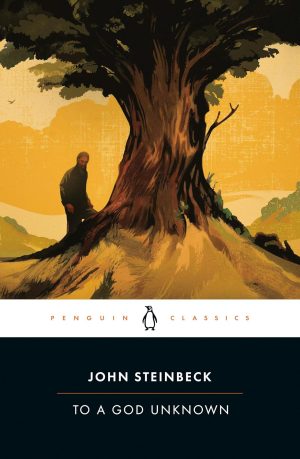
“The Chrysanthemums” does in fifteen pages what To a God Unknown could not do in two hundred. “Flight” is the Salinas country written without a single wasted clause. The reason is probably that the form would not let him editorialise. A novel gave him room for the intercalary chapter and the lecture; a story in the North American Review gave him four thousand words and no space to explain himself, and the restriction was good for him.
Content notes
Contains a lynching described in detail with period racial slurs used throughout by the narrator and characters, a man beating his wife with the narrative’s approval, a suicide, a pregnancy treated as cause for shame, animal killing in a laboratory, and a protracted death from infection.
Read these next
- A Literary Analysis of Of Mice and Men by John Steinbeck. The next thing he wrote at short length, and proof of what the discipline of these stories gave him.
- A Literary Analysis of The Grapes of Wrath by John Steinbeck. Published six months after this collection. “Breakfast” is its seed.
- A Literary Analysis of East of Eden by John Steinbeck. The same valley at full length, two decades on.
- A Literary Analysis of The Pearl by John Steinbeck. The late novella, and the closest he came to this compression again.
The Last Word
Buy it for four stories and accept the rest.
What stays is the quality of attention. A man at a dining table in 1933, nursing a dying woman, broke, fairly sure his career is over, noticing that a tinker’s dog retires under the wagon when outnumbered, that chrysanthemums smell bitter and a woman might be proud of it, that two cotton pickers inhale when hot bread leaves a rusty oven.
The Long Valley by John Steinbeck was assembled by an editor out of what happened to be in the drawer. It turned out to be the most concentrated thing he ever published, and the gap between the book’s modest reputation and its best pages is the widest in his bibliography.