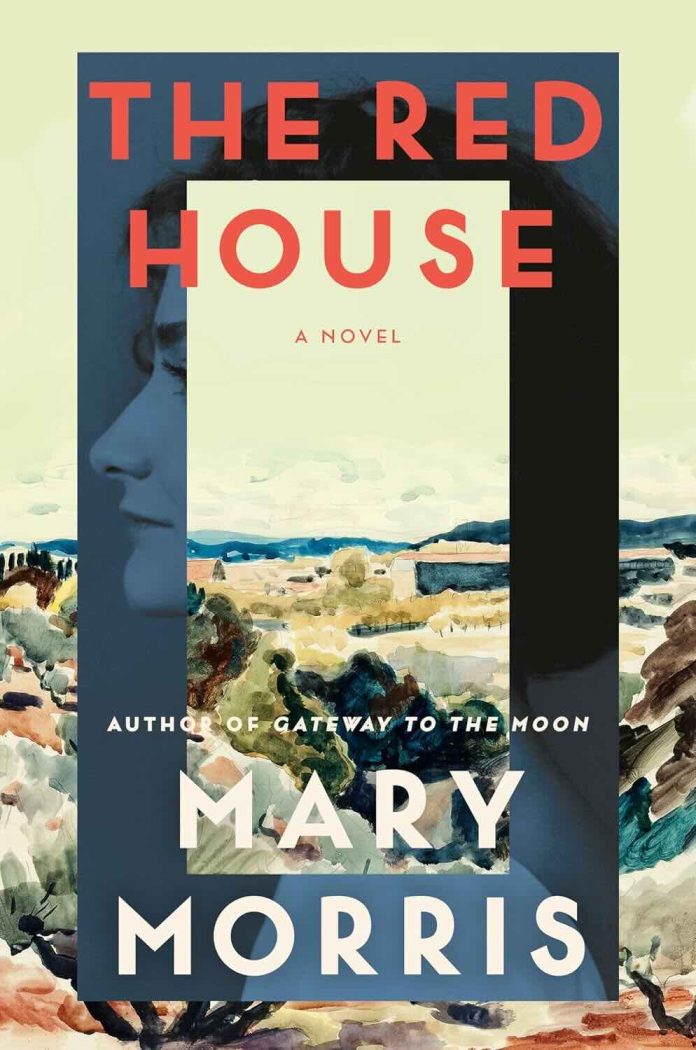
Mary Morris’s The Red House stands as a testament to the power of family secrets and the weight of unspoken history. This isn’t merely another World War II novel—it’s a deeply personal excavation of memory, trauma, and the cyclical nature of abandonment that spans generations. Morris, author of acclaimed works like Gateway to the Moon and The Jazz Palace, has crafted perhaps her most ambitious and emotionally resonant work yet.
The novel opens with Laura, a middle-aged woman whose life feels suspended in perpetual uncertainty, much like her mother Viola’s mysterious disappearance thirty years prior. When Detective Hendricks calls after decades of silence, Laura finds herself compelled to journey to Italy, following the cryptic clues left behind in her mother’s paintings of a red house. What begins as a search for answers becomes a profound reckoning with inherited trauma and the brutal realities of survival during wartime.
The Architecture of Memory
A Mystery That Transcends Genre
Morris expertly weaves together multiple narrative threads, creating what feels less like a traditional mystery and more like an archaeological dig through layers of suppressed history. The “red house” of the title—revealed to be an internment camp in Puglia where Italian Jews were detained during World War II—serves as both literal setting and powerful metaphor for the places we cannot escape, even decades later.
The structure of the novel mirrors Laura’s psychological journey, moving between past and present with a dreamlike quality that reflects how trauma fragments memory. Morris’s decision to divide the narrative into four distinct “stories” creates a sense of completion while acknowledging that some wounds never fully heal.
Characters Carved from Pain and Survival
Laura emerges as a complex protagonist whose professional life staging homes for sale becomes a poignant metaphor for her own inability to create lasting foundations. Her relationship with Detective Hendricks—inappropriate, desperate, and ultimately hollow—reveals the depths of her abandonment issues while raising uncomfortable questions about power dynamics and trauma responses.
Viola, revealed through flashbacks and testimonies, transforms from mysterious absence into fully realized character. Her journey from sheltered child to survivor of unimaginable circumstances to American housewife creates a portrait of resilience that’s both inspiring and heartbreaking. Morris refuses to sentimentalize Viola’s choices, presenting them as the desperate calculations of someone for whom survival always came first.
The supporting characters—particularly Tommaso, the young soldier who loved Viola, and Uncle Rudy, the brother she abandoned—provide crucial perspectives that illuminate different facets of wartime experience and its lasting psychological impact.
Historical Fiction with Unprecedented Authenticity
Illuminating Forgotten History
Morris’s greatest achievement lies in bringing to light a virtually unknown chapter of Holocaust history. The internment of foreign Jews in southern Italy, often presented as “protective custody,” receives the serious historical treatment it deserves. The detail with which Morris describes life at the Red House—the hunger, cold, makeshift education, and gradual erosion of dignity—feels meticulously researched yet never academic.
The novel’s progression from internment to the chaos of liberated Naples, where survival meant making impossible choices, demonstrates Morris’s commitment to historical accuracy without exploitation. Her portrayal of post-war Naples—with its black market economy, widespread prostitution, and moral ambiguity—provides crucial context for understanding how ordinary people became capable of extraordinary acts of desperation.
Emotional Truth Over Sensationalism
What distinguishes The Red House from other Holocaust fiction is Morris’s focus on emotional truth over dramatic revelation. The horror emerges not from single moments of violence but from the steady accumulation of losses—of home, identity, family, and ultimately hope. The scene where Viola must choose between her own survival and caring for her sick brother carries more devastating impact than any action sequence could achieve.
Literary Craftsmanship and Style
Prose That Mirrors Its Subject
Morris’s writing style evolves throughout the novel, beginning with the crisp, controlled voice of contemporary Laura and gradually becoming more impressionistic as the historical narrative takes hold. This stylistic shift mirrors the protagonist’s journey from surface-level understanding to profound emotional truth.
The author’s background in travel writing serves her well here, particularly in her vivid descriptions of Italian landscapes and cityscapes. Her portrayal of Puglia, Naples, and Turin creates a geography of memory where each location carries its own emotional weight.
Symbolism That Enriches Rather Than Overwhelms
The recurring motifs—birds, hooks, mirrors, and of course the red house itself—emerge organically from the narrative rather than feeling imposed. Morris’s use of Viola’s paintings as both literal clues and metaphorical representations of memory demonstrates sophisticated understanding of how art can carry meaning across generations.
Areas Where the Novel Struggles
Pacing and Structure Concerns
While the novel’s non-linear structure serves its themes well, some sections feel more compelling than others. The contemporary portions occasionally lack the emotional intensity of the historical narrative, making Laura’s present-day struggles feel somewhat pale by comparison. The relationship with Patrick, Laura’s husband, never quite achieves the depth necessary to make their marital crisis feel as urgent as her family mystery.
Resolution and Closure
The novel’s ending, while emotionally satisfying, may leave some readers wanting more concrete answers. Morris’s decision to focus on emotional truth over factual closure serves the story’s themes but might frustrate readers seeking more traditional mystery resolution.
Literary Context and Comparisons
The Red House stands alongside other recent works exploring hidden Holocaust history, such as The Invisible Bridge by Julie Orringer and The World to Come by Dara Horn. However, Morris’s focus on Italian Jewish experience and its intergenerational impact places it in conversation with Elena Ferrante’s Neapolitan novels, particularly in its unflinching examination of how historical trauma shapes individual choices.
The novel also recalls the work of Nicole Krauss, particularly The History of Love, in its exploration of how family secrets ripple across generations. However, Morris brings a more grounded, less mystical approach to similar themes of loss and recovery.
Final Assessment: A Necessary and Beautiful Book
The Red House succeeds brilliantly as both historical fiction and family drama, offering readers an emotionally devastating yet ultimately redemptive journey through one of history’s darker chapters. Morris has created a novel that honors both the specific suffering of Italian Jews during World War II and the universal experience of families fractured by trauma and silence.
The book’s greatest strength lies in its refusal to offer easy answers or simple redemption. Instead, it presents the messy, complicated reality of how trauma passes between generations and how understanding our history—however painful—remains essential to healing.
For readers of historical fiction, particularly those interested in lesser-known aspects of World War II, The Red House offers both education and emotional engagement. Those drawn to family mysteries will find a story that rewards patience with profound psychological insight.
While the novel isn’t without flaws—some pacing issues and an occasionally uneven contemporary narrative—these concerns fade against the power of Morris’s central achievement: creating a work that illuminates forgotten history while providing genuine insight into the nature of survival, abandonment, and the possibility of redemption across generations.







