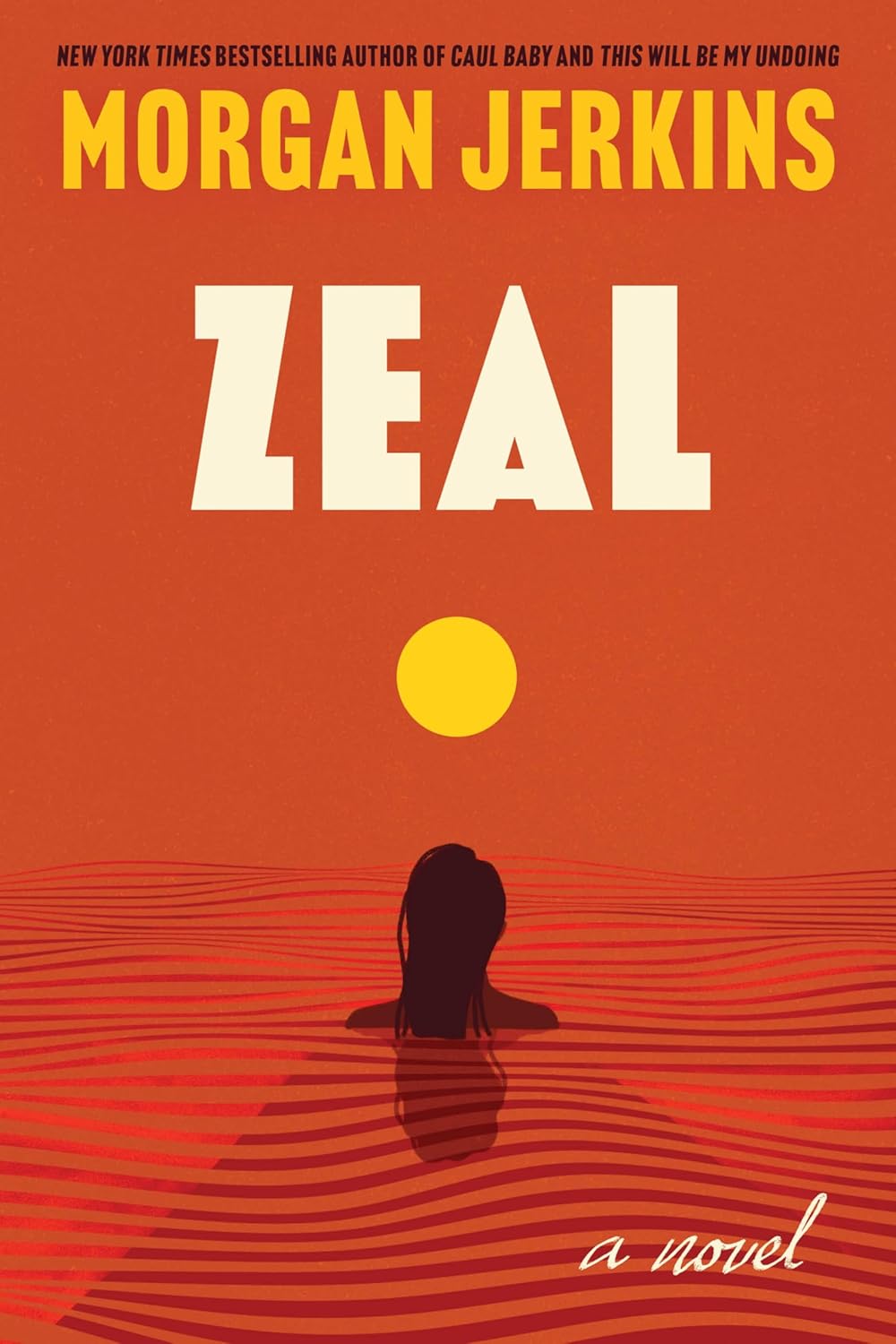
Morgan Jerkins’s Zeal (2025) is a sweeping, hauntingly lyrical, and emotionally resonant novel that traverses 150 years of African American history, threading together postbellum Mississippi, Great Migration-era Kansas, and contemporary Harlem. Known for her incisive nonfiction (This Will Be My Undoing, Wandering in Strange Lands) and fiction (Caul Baby), Jerkins once again demonstrates her exceptional narrative craftsmanship. With Zeal, she delivers not only a love story but a deeply researched literary excavation of identity, trauma, and longing that echoes across generations.
This review dives into the novel’s ambitious narrative structure, thematic brilliance, emotional power, and literary merit, while also offering measured critiques of its scope and pacing.
Plot Overview: When the Past Beckons the Present
Spanning from 1865 to 2020, Zeal by Morgan Jerkins unfolds through interwoven timelines and character arcs. At its core is the tragic yet enduring love between Harrison, a newly freed Black Union soldier, and Tirzah, an emancipated teacher. Circumstances, social constructs, and a meddling Freedmen’s Bureau officer separate them despite their attempts to reunite.
The novel then traces their descendants: from Tirzah’s determined line settling in Nicodemus, Kansas, through economic despair and social resistance, to the present-day romance of Ardelia Gibbs and Oliver Benjamin. When Oliver gives Ardelia a letter written by Harrison to Tirzah during their engagement party, the past begins to unravel, reshaping their understanding of family, love, and history.
Each era is given weight and voice. In 1882, we see the cultural fragmentation post-Reconstruction. In 1912 and the early 20th century, Black resilience and artistic expression bloom. By 2020, the racial inequities, familial burdens, and unhealed wounds rear their head in the wake of George Floyd’s murder.
Writing Style and Language: A Voice Both Poetic and Grounded
Morgan Jerkins writes with measured elegance, deftly combining the emotive resonance of literary fiction with the authenticity of vernacular storytelling. Her prose is at once poetic and accessible, enriched by a historian’s precision and a novelist’s intuition.
- Jerkins frequently shifts registers: biblical cadences in 19th-century passages, blues-inspired rhythms in 1912, and academic introspection in Ardelia’s voice.
- Dialogue feels lived-in and era-appropriate. From the clipped, coded speech of Reconstruction survivors to the modern idioms of Harlem millennials, the characters’ voices ring true.
- Her descriptive passages, particularly of Harlem rooftops or drought-stricken Nicodemus, create rich sensory experiences without ever feeling overwrought.
One minor critique is that in her effort to maintain historical accuracy and emotional weight, Jerkins occasionally leans into exposition. A few chapters in the middle century feel slower, more instructional than immersive.
Major Themes: Zeal as a Multigenerational Compass
1. The Endurance of Love
At its heart, Zeal by Morgan Jerkins is a story of love—not just romantic love, but filial love, ancestral love, self-love. The title itself comes from the intensity, the zeal, with which Tirzah wrote letters to Harrison, letters later rediscovered generations later.
- Tirzah and Harrison’s connection transcends the brutal realities of slavery, forced separation, and societal interference.
- Ardelia and Oliver’s contemporary love story explores the burden of inherited trauma and how it affects intimacy, especially among Black couples navigating racialized expectations.
2. History as Haunting
Jerkins masterfully illustrates that the past is not past. Each generation lives in the residue of the previous one.
- The novel’s structure—shifting back and forth through time—emphasizes how memories, even when undocumented, manifest in bodily aches, spiritual unrest, and emotional rifts.
- Ardelia’s obsession with discovering her lineage mirrors a broader desire among descendants of enslaved people to reconstruct broken genealogies and reclaim narrative agency.
3. Black Womanhood and Resistance
From Tirzah to Novella to Ardelia, Zeal by Morgan Jerkins champions the strength, vulnerability, and multiplicity of Black women’s experiences.
- Tirzah, a schoolteacher under threat, uses her intellect as resistance.
- Ardelia, a cultural curator at the Schomburg Center, seeks to honor erased legacies while grappling with her father’s absence and her partner’s emotional withdrawal.
4. Letters as Legacy
Letters serve as spiritual artifacts throughout the novel. They bridge temporal gaps and act as confessions, revelations, and healing mechanisms. Whether it’s Harrison’s wartime letter, Ardelia’s unsent letter to her father, or Novella preserving Tirzah’s intimate writings, these documents embody both trauma and transcendence.
Character Analysis: A Lineage of Grit and Grace
Harrison and Tirzah
Their story sets the emotional and historical tone. Harrison’s journey from soldier to seeker and Tirzah’s transformation from enslaved woman to community educator are both tender and tragic. Their separation—engineered by well-meaning but flawed bureaucrats—sets off a generational ripple effect.
Ardelia and Oliver
In the contemporary storyline, Ardelia is a fierce, brilliant archivist whose longing for belonging stems from a fractured paternal bond. Oliver, her loving but passive fiancé, represents the complexities of navigating privilege within Blackness. His family’s upper-class legacy clashes with Ardelia’s working-class trauma.
Their relationship serves as both mirror and divergence from Harrison and Tirzah’s. While love still burns, it is embattled by silence, grief, and cultural expectations.
Novella, Free, and Miriam
In Nicodemus, the extended Benjamin clan plays out social dynamics of power, inheritance, and gender. Novella’s quiet leadership contrasts with her husband Free’s instability. Miriam’s migration northward symbolizes the onward movement of the Great Migration and the cost of survival.
These characters demonstrate how love, zeal, and loss can warp and evolve depending on who holds the narrative reins.
Historical Resonance and Setting
One of Zeal’s greatest strengths is its rootedness in real Black history:
- The Forks of the Road slave market, Nicodemus, and the Freedmen’s Bureau are not just backdrops—they are living, breathing players in the story.
- Jerkins’s historical detail enhances immersion without becoming didactic. Her fictional characters live within real timelines and events, from Reconstruction violence to Watch Night church services to the erasure of blues landmarks in Chicago.
This makes Zeal by Morgan Jerkins a rare work that bridges historical fiction and sociocultural scholarship without losing its emotional core.
Pacing and Structure: A Minor Hurdle
While the novel’s structure is ambitious and mostly successful, the frequent shifts across decades—though thematically powerful—may challenge some readers. There are moments where the narrative momentum dips, especially during the transitions from 1912 to 2020.
- The layering of generations is rewarding but occasionally dizzying.
- Some minor characters, though intriguing, feel underexplored (e.g., Violet, Booker Stone).
- Readers expecting a tight, linear plot may find themselves reaching for a family tree.
Still, for those who appreciate literary complexity and thematic layering, these challenges become part of the immersive experience.
Comparison and Literary Context
Fans of The Love Songs of W.E.B. Du Bois by Honorée Fanonne Jeffers, Homegoing by Yaa Gyasi, The Vanishing Half by Brit Bennett, and The Water Dancer by Ta-Nehisi Coates will find Zeal by Morgan Jerkins similarly ambitious and rewarding.
Where Caul Baby explored mystical realism within Harlem’s matriarchal structures, Zeal is more grounded in historical realism, but no less enchanting. It feels like a culmination of Jerkins’s nonfictional explorations into Black ancestry and belonging.
Final Verdict: A Novel of Rare Fire and Tenderness
Morgan Jerkins has achieved something remarkable with Zeal. It is a multi-generational love story, a meditation on legacy, and a historical epic all at once. Despite minor pacing issues, the novel is luminous in its language, courageous in its scope, and deeply affecting in its character arcs.
Recommended For:
- Readers of literary and historical fiction
- Fans of intergenerational storytelling
- Those interested in African American history and cultural legacy
- Book clubs seeking layered, discussion-rich narratives
Not Ideal For:
- Readers preferring fast-paced thrillers or light romance
- Those who struggle with non-linear timelines
It’s a dazzling and deeply felt novel that solidifies Morgan Jerkins as one of the most vital voices in contemporary American literature.
You might also like: Crook Manifesto by Colson Whitehead takes a narrower slice of the same Black American history, following one Harlem street through the arson years between 1971 and 1976.