 1
1 2
2 3
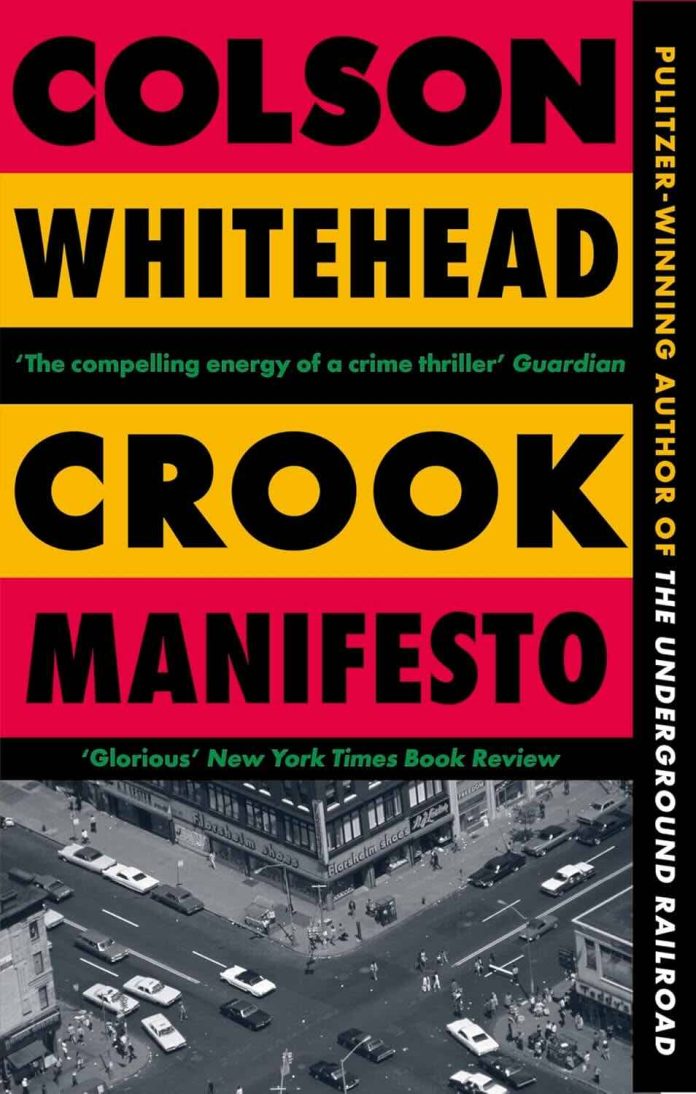
3The premise of Crook Manifesto by Colson Whitehead is a small domestic errand that turns into a body count. Ray Carney has been out of the stolen goods trade for four years, running his furniture store on 125th Street like a man who has quit smoking and does not talk about it. Then his teenage daughter wants tickets to see the Jackson 5 at Madison Square Garden, they are sold out everywhere, and the only person left in his address book with that kind of reach is a corrupt detective named Munson.
Munson gets the tickets. Munson also has a subpoena from the Knapp Commission, a partner he no longer trusts, and a plan to leave the city that requires a driver. By sunrise Carney has been an accessory to several felonies, and the second book of the trilogy has established its thesis: you do not get out, you only get further in.
Three Crimes, Three Years, One Burning City
Like its predecessor, the novel is three long novellas rather than a continuous plot, set in 1971, 1973 and 1976.
The first is the Munson night, framed by ringolevio, the street game the detective and Carney both played as boys. It is tag crossed with cops and robbers, and its rule is that you switch sides constantly. “You were a cop and then a robber and a cop again,” Munson says. “It didn’t matter how you saw yourself, you were both at the same time.” That is the book in one line.
The second follows Zippo, the arsonist turned photographer from the first novel, who is now directing a blaxploitation picture called Secret Agent: Nefertiti and shooting part of it inside Carney’s showroom. The third is set in the bicentennial summer, when an eleven-year-old boy is nearly killed in a torched building Carney happens to own.
Where Crook Manifesto by Colson Whitehead Sits in the Trilogy
This is the middle book, and it is the one most improved by reading in order. Running order:
- Harlem Shuffle (Book 1, 1959 to 1964)
- Crook Manifesto (Book 2, 1971 to 1976)
- Cool Machine (Book 3)
Characters, debts and old corpses from the first book return with consequence. A newcomer could follow the plot, but the payoffs land harder if you know who was owed what.
Pepper Steals the Book
The most significant change in Crook Manifesto by Colson Whitehead is structural. Pepper, the laconic career criminal who was a supporting player in the first novel, is handed enormous stretches of point of view here, and he walks off with the thing.
He gets a chapter about socks. Sent to lean on a drug dealer with a white carpet and a shoes-off policy, Pepper simply declines to remove his shoes, and the narration stops the plot dead to explain why: freezing Newark mornings, trench foot in Burma, a pair of clean cotton-polys after a job went wrong. It is very funny, it is genuinely moving, and it ends with a fight and a punchline that pays off the entire digression.
He also gets a war. Not the one in Burma, which the first book covered, but a dispute between two Harlem fried chicken restaurants that Pepper is hired to settle by burglary. It has no bearing on anything and it is one of the best things in either novel.
What Works
- The comedy is sharper than in book one. The bicentennial marketing alone earns its keep, with Carney trying and failing to write a patriotic sales advertisement he can stomach.
- The period is specific rather than decorative. Serpico and the police pad, the Black Liberation Army, the Panther 21 acquittal, the fiscal crisis, blaxploitation on its way out. None of it is set dressing.
- The roving omniscience returns and still works. A seamstress who dies in a fire gets her name, her hometown, and her reason for coming to New York in a single closing sentence, after the newspaper in the scene declined to print any of it.
- Zippo’s aesthetic manifesto. An acronym of his own name, ripped off from a real producer’s formula, deployed with total sincerity. A small, perfect joke about how art gets financed.
Where It Stumbles
- Carney nearly vanishes from his own novel. The middle third of Crook Manifesto by Colson Whitehead belongs to Zippo and Pepper, and readers who came for the furniture dealer will spend a hundred pages waiting for him.
- One long speech does the heavy lifting. A lawyer explains the real causes of the fire epidemic in what amounts to an uninterrupted lecture. The argument is correct and the delivery is undramatised.
- Carney is passive. He is a hostage in the first part and largely a spectator in the third, watching Pepper work. It suits the theme and costs the book momentum.
- The climax resolves through chaos. The final confrontation is settled less by anyone’s plan than by a minor character’s grudge about losing his job, which is either the point or a shrug, depending on your mood.
The Argument Underneath the Arson
The third section is where Crook Manifesto by Colson Whitehead stops being a caper and starts being furious.
Carney assumes the fires are the work of sick men with matches. He is told otherwise: that most of it is decades of policy, slum clearance, highways rammed through neighbourhoods, and the redlining that manufactured the very decay it claimed to be warning against, capped by firehouse closures justified with bad data. Arson is the small part. The system was already designed to burn.
The book’s cruellest joke is that the man brokering the fires is a candidate for borough president, a childhood friend of Carney’s wife, and a product of the same respectable Harlem club that once refused Carney membership for being too dark and too common. The distinction between the fence and the finisher turns out to be paperwork.
Who Crook Manifesto by Colson Whitehead Is For
Reach for it if you liked the first book and want more of the same neighbourhood with the temperature raised, if you enjoy crime novels that stop for digressions, or if Pepper was your favourite thing about Harlem Shuffle.
Skip it if you want a tight plot, if you need your protagonist central and active, or if you have not read book one and are not inclined to. This is a middle volume and it behaves like one.
Read These Next
- Deacon King Kong by James McBride. Brooklyn in 1969, a huge comic ensemble, and the same trick of giving every bystander an interior life.
- Bluebird, Bluebird by Attica Locke. Contemporary Black crime fiction where the investigation is inseparable from the history.
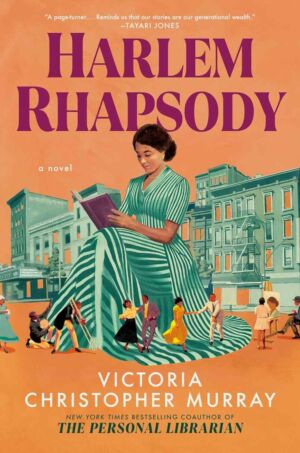
- Harlem Rhapsody by Victoria Christopher Murray. The same streets fifty years earlier, being invented rather than dismantled.
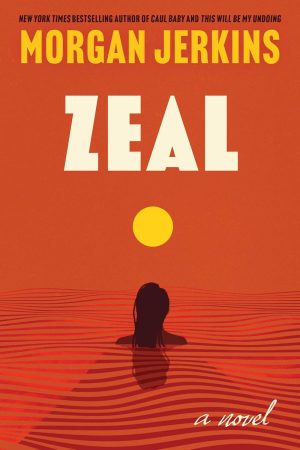
- Zeal by Morgan Jerkins. Black American history carried across generations through one family.
- The Nickel Boys by Colson Whitehead. For readers who want to see what this author does with no jokes at all.
The Last Word on Crook Manifesto by Colson Whitehead
It is a better-written book than the first and a less satisfying one, which is an honest trade. The prose is looser and funnier, Pepper is a gift, and the anger underneath the seventies nostalgia is real and specific rather than general.
What it gives up is its centre. Carney spends three hundred pages being driven, ambushed, lectured and burned out, and ends where the first book started, standing in an empty room planning the next expansion. He calls himself Manhattan schist and says it does not break easy. The city has spent the whole novel testing that claim, and will keep testing it in book three.