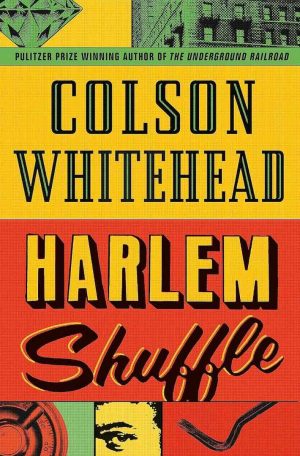
 1
1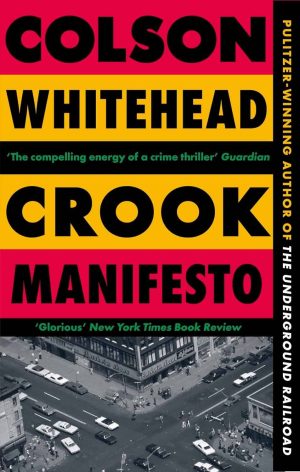 2
2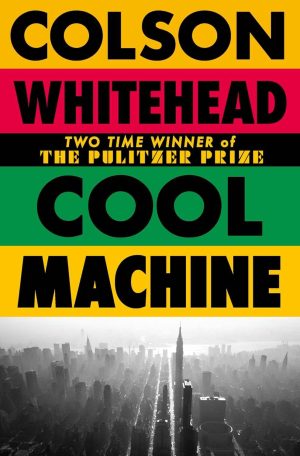 3
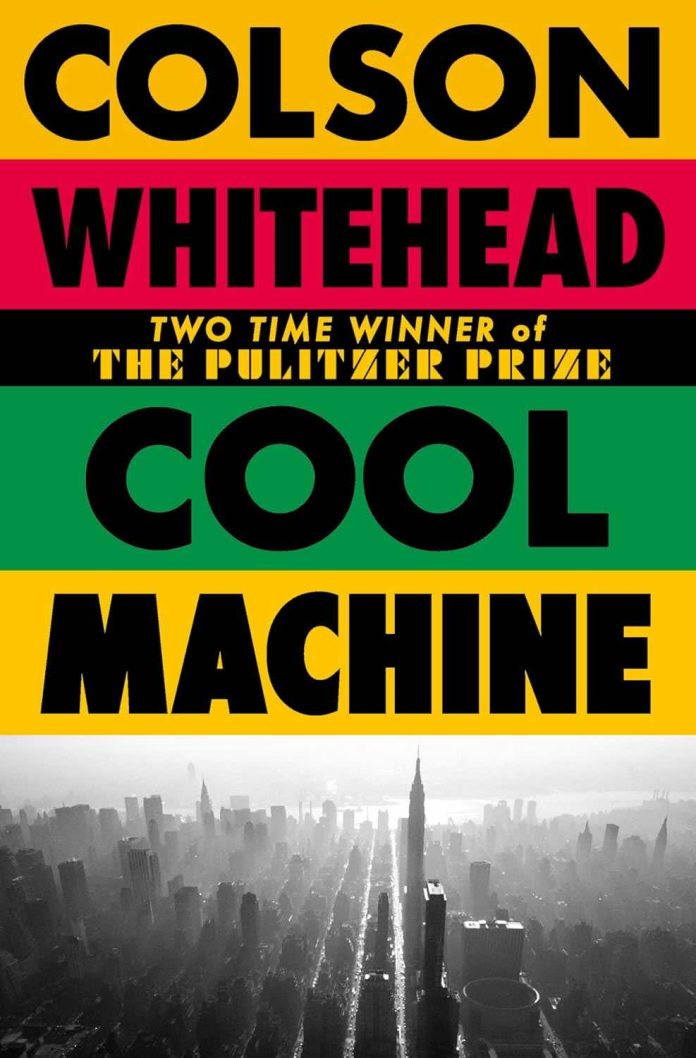
3In 1981 Ray Carney has a framed magazine profile on his office wall naming him Sterling Furniture’s Northeast Regional Dealer of the Month, and a wife who cannot persuade a single bank in New York City to lend her the money for a storefront. Elizabeth has run her travel agency out of a spare room for years and now wants her name on a door. The loan officers, white and Black alike, all discover reasons. So the furniture dealer quietly reopens the sideline he swore off, and Cool Machine by Colson Whitehead has its engine.
The question that organises the whole book arrives soon after, put to Carney by a thief in a hideout on Ninety-Ninth Street: what do you value, and what is actually worth stealing? Everybody here has an answer. Almost nobody is comfortable with theirs.
Three Crimes, Six Years, One Grid
The architecture is the one the trilogy has used twice already: three long novellas, this time set in 1981, 1983 and 1986, each borrowing a different genre and each running on its own engine.
The first belongs to a legend. A man Harlem has believed dead since the 1950s turns out to be alive, working under another name, and looking for a partner. His creature is neither the tortoise nor the hare but the muskrat from the Lenape creation story, the one who dives to the bottom and comes back with the mud everything else gets built on. He proposes six scores in six months, alternating money jobs with personal ones. The money job involves a New Jersey warehouse and a national shortage that has made coaxial cable worth more per foot than most jewellery. The personal one involves a gold medal won at the 1936 Berlin Olympics, coming up quietly at a private auction, which he wants for no financial reason at all.
The second section hands the book to Pepper. The third is set during the summer a real municipal corruption scandal swallowed New York, and it puts Carney’s nephew in serious danger.
Where Cool Machine by Colson Whitehead Sits in the Trilogy
This is the closing volume, and it is the one that most rewards having read the others. Running order:
- Harlem Shuffle (Book 1, 1959 to 1964)
- Crook Manifesto (Book 2, 1971 to 1976)
- Cool Machine (Book 3, 1981 to 1986)
Debts from all three decades come due here. A newcomer will follow the plot without difficulty and miss roughly half of what the ending is doing.
The Best Heist Writing in the Whole Trilogy
The 1981 section is the finest sustained caper Whitehead has written. It runs on a real piece of New York arcana, a disused private railway platform beneath a famous hotel, and it takes its time with the walkthrough, the crew, the arithmetic of an auction room, and a population of squatters living in the train shed under a self-appointed mayor.
What lifts it above the mechanics is the reason for the job. The target has no resale value worth the risk. It is being stolen, in the planner’s words, to undo an injustice, and Cool Machine by Colson Whitehead spends the rest of its length testing whether an object can carry that much freight. Part two asks the same question of a carved Fang mask out of Gabon. The two halves argue with each other about whether history can be repaired one item at a time, and the novel is honest enough not to settle it.
What Works
- Pepper again, and better. He is past sixty, on a macrobiotic diet, working through a Word-a-Day calendar, and vomiting blood in nightclub bathrooms. Giving an ageing enforcer a partner, a diagnosis and a back that goes out at the worst possible moment is the most affecting thing in the trilogy.
- A superb new point of view. A retired Mafia killer who reads AARP articles about staying active, keeps a brokerage account, and thinks about his pension while doing exactly the sort of work that keeps him from enjoying it.
- The period is reported, not decorated. The Parking Violations Bureau scandal, the Commission trial, the Lower East Side emptied building by building under a tax abatement programme.
- One perfect running joke. The handwritten NO RADIO signs on dashboards across the city, read by every character as an act of surrender, and eventually answered.
Where It Stumbles
- The final section explains itself. Carney receives three ghostly visitations from his dead cousin, explicitly labelled past, present and future. The Dickens scaffolding is the most schematic thing in the trilogy, and each visit states a theme the book had already dramatised better.
- The best character vanishes at the one third mark. The 1981 mastermind is the most charismatic invention in all three novels and never appears again.
- The corruption is delivered over lunch. Two long restaurant conversations with a well-connected lawyer carry most of the political exposition, and the second is very close to a briefing.
- Elizabeth is sidelined for a third book. Her loan refusal starts the plot, her business is the only enterprise in the novel that is entirely honest, and she gets perhaps fifteen pages.
The Envelope Is a Sacred Contract
Underneath the capers, Cool Machine by Colson Whitehead treats bribery as a form of covenant. A bribe, one character argues late on, is a promise between the shopkeeper and the policeman, the contractor and the politician, and the whole city rests on it being honoured. Nothing here goes wrong because someone took money. Everything goes wrong because someone took money and then failed to deliver.
That idea lets Whitehead run the salesman’s vocabulary of warranties and satisfied customers straight through the criminal economy until the two are indistinguishable. It also feeds the trilogy’s oldest obsession, the churn, which by 1986 has reached the point where a property empire’s mainframes can identify a corner of 125th Street as a sound purchase for a New York that will not exist for twenty more years.
Who Cool Machine by Colson Whitehead Is For
Reach for it if you have read the first two and want the trilogy closed properly, if you like heist writing with a walkthrough and a floor plan, or if Pepper is the reason you have stayed.
Skip it if you need your protagonist central and active, since Carney loses the middle section for a third book running, or if you resent novels that stop for forty pages to explain a creation myth or the economics of cable television.
Read These Next
- Harlem Shuffle by Colson Whitehead. Start of the trilogy, and the book this one argues with from its first page.
- All Them Dogs by Djamel White. A career enforcer written with the same mix of violence and unexpected tenderness that makes Pepper work.
- Homegoing by Yaa Gyasi. For the long inheritance underneath, carried through generations rather than decades.
- The Friends of Eddie Coyle by George V. Higgins. The ancestor of all criminal shop talk, almost entirely voice and procedure.
- The Nickel Boys by Colson Whitehead. The same author with every joke removed.
The Last Word on Cool Machine by Colson Whitehead
It closes the trilogy with more feeling than the middle book and more craft than the first, then spoils a little of that by insisting on being understood. The 1981 section is the best thing in the three novels. The 1986 section keeps stopping to underline itself.
What survives is the argument the last page makes. Offered every route out of New York that money can buy, Carney treats the idea that there is anywhere else to go as the one confidence trick he has never fallen for. Cool Machine by Colson Whitehead ends with a man declining to be rescued from the city that has been robbing him his whole life, on the grounds that he would not know himself anywhere quieter.