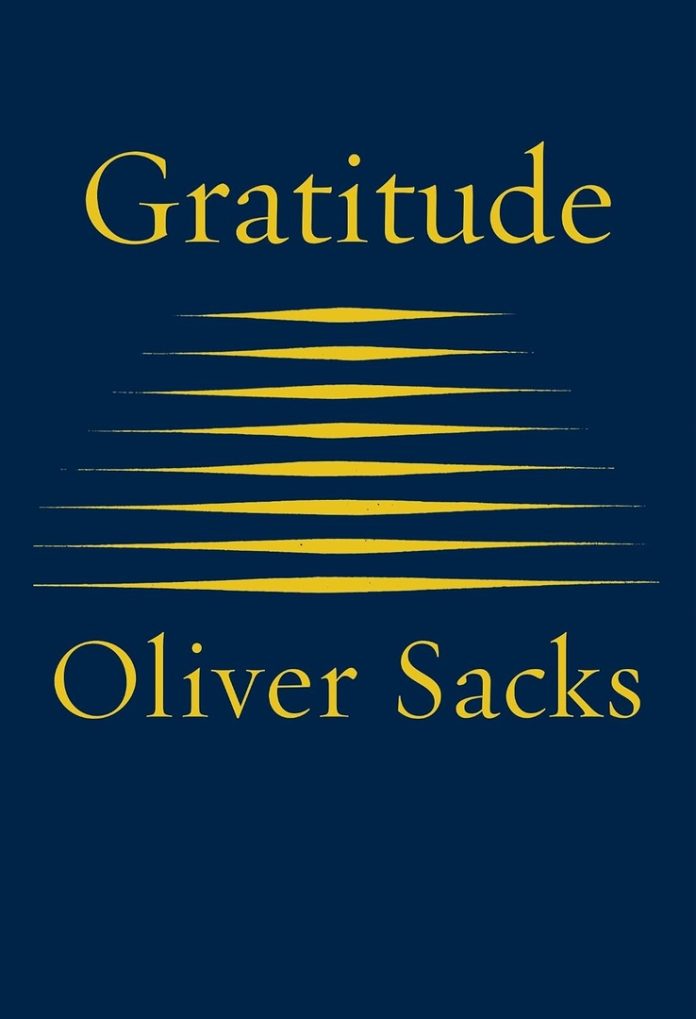


In December 2014 Oliver Sacks gave his publisher the finished manuscript of On the Move, the long memoir in which he wrote openly about his sexuality for the first time. Within days he learned that the ocular melanoma treated nine years earlier had spread to his liver. Gratitude by Oliver Sacks is what came out of the months that followed: four essays first printed in The New York Times, framed by a two-page foreword from his longtime collaborator Kate Edgar and his partner, the writer Bill Hayes, whose photographs appear in the edition.
Knopf published it on 24 November 2015, two days before Thanksgiving and less than three months after his death. There is no holiday table in these pages and no turkey. What the book offers the week of the feast is its title word, tested by a man with every reason for bitterness who kept choosing something else. At sixty-four small pages, you can finish it before the pie comes out of the oven.
Where Gratitude Sits on the Oliver Sacks Shelf
Most of Sacks’s books are case histories: Awakenings, The Man Who Mistook His Wife for a Hat, Musicophilia, Hallucinations. A handful turn the lens on himself, and this one closes that thread. Read in order, his writing about his own life runs like this:
- Uncle Tungsten (2001): the wartime boyhood and the chemistry obsession that the later essays keep returning to.
- On the Move (2015): the whole life, motorcycles and Muscle Beach included, finished before the diagnosis.
- Gratitude (2015): the four farewells.
- Everything in Its Place (2019): a posthumous gathering of first loves and late pieces.
The four essays were not written as a book. Their newspaper titles and dates were “The Joy of Old Age” (July 2013, renamed “Mercury” here), “My Own Life” (February 2015), “My Periodic Table” (July 2015) and “Sabbath” (August 2015). Readers who followed them in print will find nothing new in the text of Gratitude by Oliver Sacks itself.
What the Four Essays Add Up To
Placed side by side, they make an arc the newspaper could not. The first is a man looking forward to his eighties. The second is the same man told he will not see many of them. The third is written through nausea and night sweats, looking back on a spring of borrowed energy he calls not a remission but an intermission. The last goes back to his Orthodox Jewish childhood in north-west London and ends on the idea of rest.
The best device in Gratitude by Oliver Sacks is a private game he had played since boyhood: matching each birthday to the element with the same atomic number. At seventy-nine he was gold; at eighty, mercury. By the third essay the game has turned serious. His writing table holds thallium for eighty-one, lead for eighty-two, and a heap of bismuth for an eighty-third birthday he doubts he will see. He admits a soft spot for bismuth precisely because it is a dull grey metal nobody notices, and links that to his feeling, as a doctor, for the overlooked patient. Polonium, at eighty-four, he would not want in the house anyway.
The second essay borrows its title from David Hume, who wrote a short autobiography in a single day in 1776 after learning he was dying. Sacks quotes Hume’s self-portrait as a mild, even-tempered man and then cheerfully refuses it, calling himself instead “a man of vehement disposition, with violent enthusiasms”. That small act of disagreement is the most alive moment in the book.
What works
- The plainness. Sacks the neurologist knew exactly what ocular melanoma does once it reaches the liver, and he says so without hedging or self-pity.
- The jokes. A friend once asked Samuel Beckett whether a perfect spring morning made him glad to be alive, and Beckett said he would not go that far. Sacks tells the story to set his own gladness against it.
- The curiosity that outlasts the prognosis. Before starting immunotherapy he flies to North Carolina to watch lemurs at Duke, because he likes the thought of a small tree-climbing ancestor fifty million years back.
- The ending. The final paragraph of the last essay is the right last paragraph for a whole career.
Where It Gives Ground
- It is very slight. The four pieces come to roughly six thousand words. All of them were free to read in a newspaper first, and the hardback of Gratitude by Oliver Sacks asks a lot for an hour.
- Names and phrases repeat. Hume, Auden and Francis Crick each turn up more than once, and a Hawthorne phrase about an intercourse with the world appears in two essays. Fine across eighteen months of a newspaper column; noticeable in a book you read at one sitting.
- The first essay is the weakest. “Mercury” is warm and charming, but it is a birthday piece, and some of its wisdom about the long view of age stays general.
- The foreword adds little. It is useful chronology and nothing more.
Do You Need to Read Oliver Sacks First?
No. Gratitude by Oliver Sacks stands on its own, and plenty of readers have come to it knowing only his name. Having read On the Move does deepen the last essay, because the openness about his private life that he mentions there is the subject of that whole memoir.
Read These Next
If Gratitude by Oliver Sacks leaves you wanting more company of this kind, start here.
- The Strange Case of Jane O. by Karen Thompson Walker, a novel of memory and missing time that owes an open debt to Sacks’s case histories.
- The Serviceberry by Robin Wall Kimmerer, for gratitude treated as a way of living with others rather than a feeling.
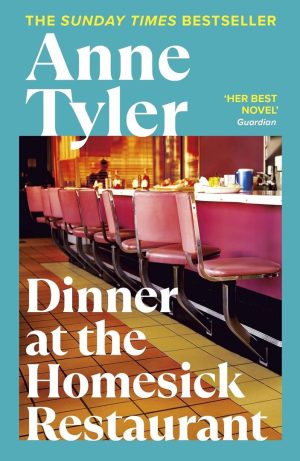
- Dinner at the Homesick Restaurant by Anne Tyler, if Thanksgiving week has you thinking about family meals that never quite get finished.
- When Breath Becomes Air by Paul Kalanithi, another doctor’s account of facing his own death, written much younger.
- Uncle Tungsten by Oliver Sacks, for the boy behind the periodic-table desk.
About Oliver Sacks, Neurologist and Storyteller
Oliver Sacks (1933 to 2015) was born in London to two doctors, trained at Oxford, and left for North America in 1960. He spent most of his working life as a neurologist in New York, writing case histories that read like short stories and made him one of the best-known physicians in the world. We have not yet reviewed his other books, so Gratitude by Oliver Sacks is our first.
- His mother, Muriel Elsie Landau, was one of the first female surgeons in England.
- Awakenings, his 1973 account of patients frozen by sleeping sickness, became the 1990 film with Robin Williams and Robert De Niro.
- Michael Nyman turned The Man Who Mistook His Wife for a Hat into an opera in 1986.
- He had prosopagnosia, or face blindness, and sometimes failed to recognise his own reflection.
- During his UCLA years he set a California squat record at Muscle Beach.
The Verdict
Gratitude by Oliver Sacks is a pamphlet in a hardback’s coat, and it repeats itself in places, but it earns its title. Few writers have described the last stretch of a life with this much curiosity left in the tank. Read it this November in one sitting, then hand it to whoever is sitting next to you.
He ends by thinking about the seventh day, when the work is done. It is hard to imagine a better place to stop.