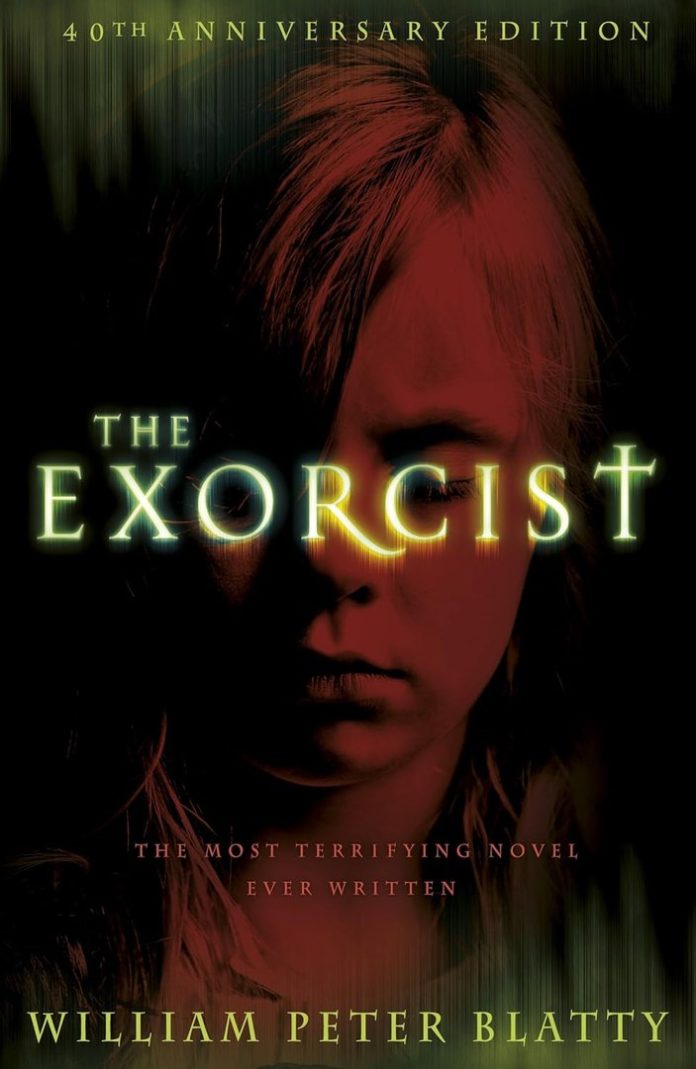



It starts on the first of April, so the mother assumes it is a prank. Chris MacNeil, a film star renting a house in Georgetown while she finishes a picture, hears a muffled rapping from her daughter’s bedroom just after midnight. It stops when she walks in. The room is icy, though the radiator is hot and the window is shut. Next morning she sends the housekeeper out for rat traps, and when he insists the attic is spotless she plants a stuffed toy in one of them to tease him. The Exorcist by William Peter Blatty begins as a domestic comedy about noises in an old house, and it takes its time letting the joke curdle.
How It Works
The novel is laid out in four parts and an epilogue, running from early April to June. The first part, The Beginning, is all small disturbances: furniture moved, a dress gone missing, a Ouija board and an invisible friend called Captain Howdy. The second, The Edge, is the long medical investigation. The third and fourth belong to the priests.
The rule Blatty sets himself is simple and strict: nothing supernatural is allowed until everything natural has been tried. Regan, who is twelve, sees an internist, then a neurologist, then a team of psychiatrists at a clinic in Ohio. She is given Ritalin, then Librium, then Thorazine. She has X-rays, an EEG and a spinal tap. Each result comes back clean, and each doctor offers a more elaborate diagnosis. For roughly a third of The Exorcist by William Peter Blatty, the enemy is a lab report that says nothing is wrong. Meanwhile a homicide lieutenant is circling the house for reasons of his own, and a Jesuit psychiatrist who has quietly lost his faith is the last person anyone wants to call. This is the 2011 revised text, which Blatty polished line by line for the fortieth anniversary.
What William Peter Blatty Built
The thesis of the novel is that disbelief is the scariest position to read it from. Chris is an atheist. The doctors are rationalists. Damien Karras, the priest at the centre of the second half, is trained in psychiatry and doubts by reflex. When he is finally asked to see the girl, he spends a night with case studies of historical possessions and comes back with a natural explanation for every sign: telepathy as a hidden human faculty, suggestion, hysteria, the subconscious. In The Exorcist by William Peter Blatty the sceptics are not fools, and their arguments are given in full. That is precisely what makes the moments they cannot explain land so hard.
It also gives the book a strange double rhythm. Each chapter is a test, a flicker of hope, then a reading that sends everyone back to the start. The horror lives in the gap between what the reader can see and what the professionals will let themselves conclude.
What works
- The dinner party. Chris throws a curry buffet for a senator, an astronaut, two Jesuits and a psychic, and Blatty plays it as smart social comedy right up to the moment Regan comes downstairs in her nightgown. It is one of the great tonal handbrake turns in horror.
- The medicine. The procedural detail is precise and period-exact. Watching a calm internist run out of tests is more unsettling than any special effect.
- Kinderman. The asthmatic homicide detective, forever quoting films and recasting them with the wrong stars, looks like comic relief and misses nothing. His scenes with Karras are the book’s best dialogue.
- The arrival. When the old exorcist finally steps out of a taxi in the rain, the novel shifts into one long, unbroken night of ritual, and the pages stop turning and start racing.
Where It Gives Ground
The faults of The Exorcist by William Peter Blatty are real, though none of them breaks the spell.
- The middle loops. The cycle of test, hope and natural explanation runs perhaps half a dozen times. The point that Karras cannot let himself believe is made by the third round, and a later recap of the detective’s evidence repeats what we already know.
- The senior priest comes late. Father Merrin carries the book’s moral authority, yet he enters very near the end, and his earlier encounter with this evil is hinted at rather than shown.
- The obscenity numbs. The demon’s sexual taunts, delivered through a twelve-year-old, are designed to repel, and at first they do. By the hundredth they have become noise.
- The prose overreaches. Blatty loves a metaphor and sometimes stacks three where one would do, so a café table or a priest’s hands can turn suddenly purple.
Read These Next
For more Halloween classics, our Halloween reading guide has a shelf of them. These pair best with The Exorcist by William Peter Blatty:
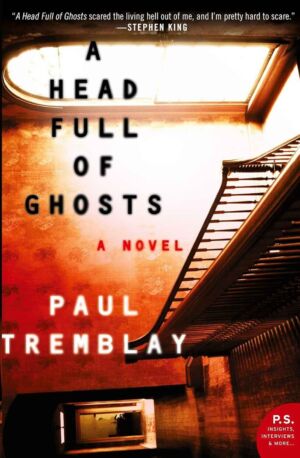
- A Head Full of Ghosts by Paul Tremblay, a teenage possession filmed for reality television, which knows this book by heart.
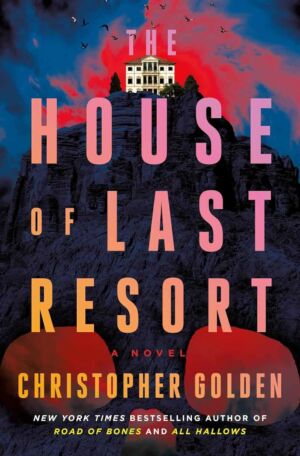
- The House of Last Resort by Christopher Golden, for an Italian house built for exorcisms and the couple who move into it.
- The Haunting of Hill House by Shirley Jackson, for the same refusal to say what is real until it is too late.
- Rosemary’s Baby by Ira Levin, the novel whose film adaptation pushed Blatty to write his own.
- Legion by William Peter Blatty, the 1983 sequel, which follows the detective into a new string of murders.
About William Peter Blatty and Some Exorcist Trivia
William Peter Blatty (1928 to 2017) was born in New York to Lebanese immigrant parents and won a scholarship to Georgetown University, the campus where he would set this novel. He spent the 1960s as a comic novelist and screenwriter, and nobody expected a horror novel from him. The Exorcist by William Peter Blatty changed his career completely. His later fiction includes The Ninth Configuration (1978), which he filmed himself, and the late novels Elsewhere, Dimiter and Crazy.
- The seed was a 1949 case: a Maryland boy whose reported possession and exorcism Blatty heard about as a Georgetown undergraduate.
- He finally committed to it after seeing the 1968 film of Rosemary’s Baby, feeling he could give the devil a more serious ending.
- He wrote the book in roughly ten months, working sixteen-hour days.
- It spent 57 weeks on the New York Times bestseller list, 17 of them at number one, and sold more than 13 million copies in the United States.
- The 2011 fortieth-anniversary edition was his long-postponed second draft, adding one new character in a new scene. He called it the version he wanted to be remembered for.
- He directed The Exorcist III (1990) himself, adapted from Legion.
The Last Word
The novel’s real subject is not the demon. Underneath the green vomit and the levitating bed is a long argument about whether a modern mind can afford to believe anything, conducted in the language of the Roman Ritual, the psychiatric journal and the police report. The Exorcist by William Peter Blatty wins that argument by refusing to rig it. Its middle drags and its shocks wear thin, but its doubters are honest, its comedy is warm, and its final pages carry a grief and a grace most horror never reaches for.
The rapping started on April Fool’s Day. By June, no one in that house is laughing at the noises in the walls.