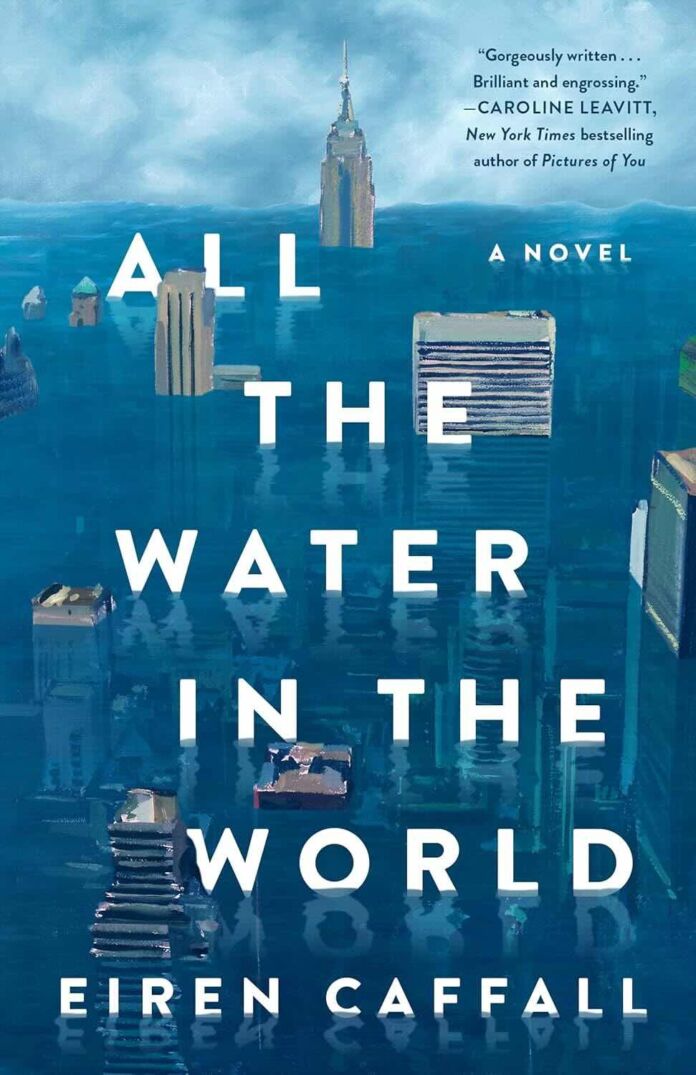
Eiren Caffall’s debut novel “All the Water in the World” emerges as a distinctive voice in climate fiction, offering a unique perspective on survival in a world transformed by rising seas and societal collapse. Through the eyes of young Nonie, a girl with an innate connection to water and weather, we experience a post-apocalyptic New York that feels both familiar and frighteningly possible.
The novel begins at AMNH (affectionately called “Amen” by its inhabitants), where a small community of museum workers and their families have created a sanctuary on the roof of the American Museum of Natural History. Their mission: to preserve humanity’s knowledge while surviving in a city largely abandoned to floods and chaos. When a hypercane destroys their home, Nonie and her remaining family must navigate treacherous waters—both literal and metaphorical—in search of safety.
Literary Merit & Storytelling
Caffall’s prose shines brightest in her descriptions of water in all its forms. The language flows like the element itself, sometimes gentle and contemplative, other times powerful and devastating. The author’s background as a musician is evident in the rhythmic quality of her writing, particularly in passages describing storms and river journeys.
The story is structured in five parts, each named for different types of water phenomena, creating a framework that mirrors Nonie’s own categorization of her experiences in her “Water Logbook.” This organizational choice effectively reinforces the novel’s themes while providing natural progression to the narrative.
Character Development & Relationships
The strength of the novel lies in its carefully crafted relationships:
- Nonie and Bix – The sisterly bond between them evolves beautifully throughout the story, from Bix’s initial fear of water to their mutual support in survival
- The parental figures – Mother and Father are portrayed with depth and complexity, their love for their children balanced against the harsh realities of their world
- The museum community – Secondary characters like Keller, Jess, and Angel feel fully realized, each contributing to the tapestry of their makeshift family
Themes & Symbolism
Several powerful themes weave through the narrative:
- Preservation vs. Adaptation
- The weight of knowledge and responsibility
- The dual nature of water as both life-giver and destroyer
- The importance of community in survival
- Hope as a form of resistance
The museum itself serves as a powerful metaphor for humanity’s attempt to preserve what matters while adapting to inevitable change.
Critical Analysis
While “All the Water in the World” succeeds on many levels, there are some areas where it could be stronger:
- The pacing occasionally slows, particularly during the middle sections of the river journey
- Some readers may find the scientific terminology and museum references challenging to follow
- The resolution of certain plot threads feels slightly rushed in comparison to the careful build-up
However, these minor issues don’t significantly detract from the overall impact of the story.
Scientific & Historical Context
Caffall demonstrates impressive research in multiple areas:
- Museum conservation practices
- Climate science and weather patterns
- Natural history
- Survival techniques
The parallel drawn to museum curators in wartime Leningrad adds historical depth and resonance to the contemporary narrative.
Writing Style & Technical Execution
The author employs several effective technical choices:
- First-person present tense narration that creates immediacy
- Seamless integration of scientific knowledge into the narrative
- Effective use of flashbacks to build world history
- Strong sensory details that bring scenes to life
Impact & Relevance
In our current climate crisis, “All the Water in the World” feels particularly timely. However, it avoids becoming merely a cautionary tale by focusing on hope and human resilience. The novel suggests that preservation of knowledge and culture is as crucial to survival as physical necessities.
Target Audience & Recommendations
This novel will appeal to readers who enjoy:
- Literary science fiction
- Climate fiction (cli-fi)
- Coming-of-age stories
- Museum settings
- Complex family dynamics
Fans of Emily St. John Mandel’s “Station Eleven,” Octavia Butler’s “Parable of the Sower,” and Kim Stanley Robinson’s climate fiction will find much to appreciate here.
Final Verdict
“All the Water in the World” is an impressive debut that successfully combines climate fiction with deeply human storytelling. Despite some minor pacing issues, the novel’s strong character work, unique perspective, and beautiful prose make it a valuable addition to contemporary speculative fiction.
The book’s greatest achievement is perhaps its ability to tackle overwhelming themes – climate catastrophe, loss, preservation of knowledge – while maintaining focus on the intimate human relationships that give meaning to survival. It reminds us that even in the most desperate circumstances, there is value in saving what matters most: knowledge, culture, and connections to others.
Similar Works & Further Reading
For readers who enjoyed this book, consider:
- “Station Eleven” by Emily St. John Mandel
- “Parable of the Sower” by Octavia Butler
- “American War” by Omar El Akkad
- “The Ministry for the Future” by Kim Stanley Robinson
- “Gold Fame Citrus” by Claire Vaye Watkins
We have reviewed Splinter by D.K. Thorne too, if another science fiction is what you are after.
In Conclusion
Eiren Caffall’s debut novel, All the Water in the World, stands as a thoughtful addition to climate fiction, offering hope without denying the gravity of our environmental crisis. Through Nonie’s eyes, we see both the devastation of loss and the possibility of renewal, reminding us that even in a drowned world, humanity’s spirit can stay afloat.
The book leaves readers with important questions about what we choose to save and why, suggesting that the answers might help us not just survive, but build something worth preserving for future generations.







