




 1
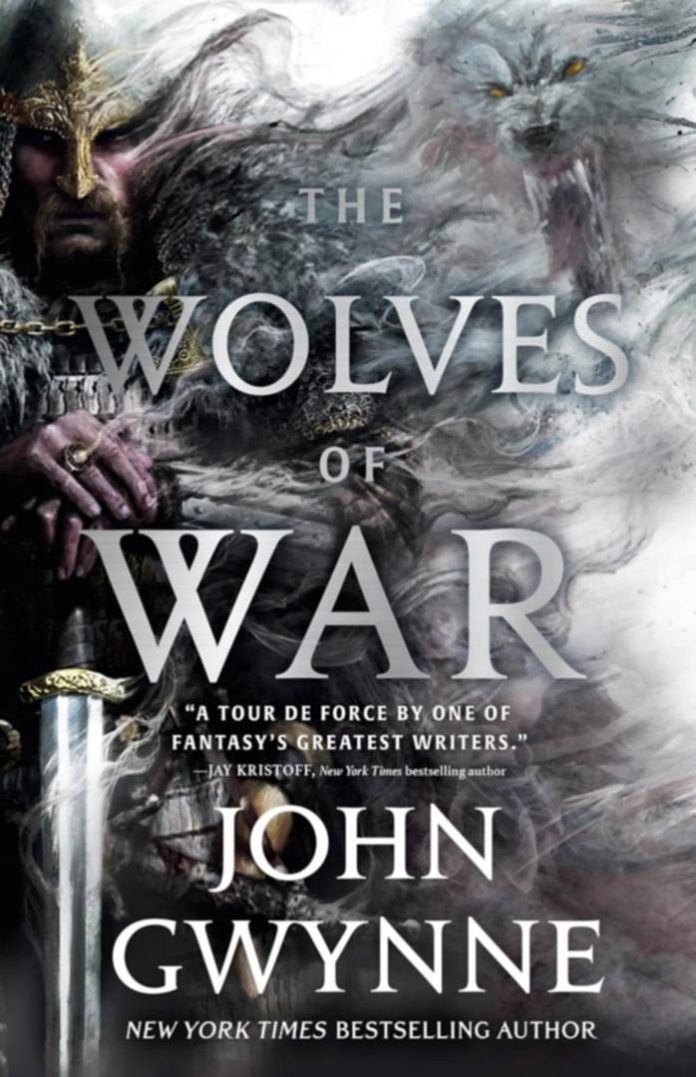
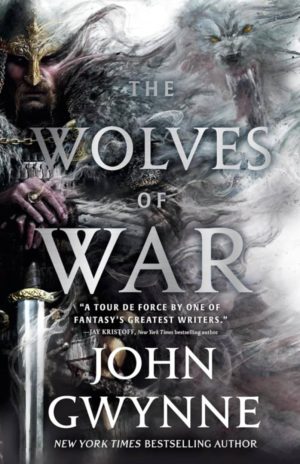
A prince puts his shoulder to the stone slab of his father’s barrow in the dark before dawn, cousin at his side, torch spitting. He has come to take the family sword from the grave, and the dead man inside does not stay dead. That is the first page of The Wolves of War by John Gwynne, and it tells longtime readers what has changed. The Bloodsworn’s Vigrið is gone. This is Kyiv in 942, the prince is Ingvar Ruriksson, and the ghost’s warning is that a wolf prowls at the door.
Gwynne has always written about oaths, beasts and the families that hold under pressure. Here he grafts those habits onto Slavic folklore and the real Rus, and the result is the most tender book he has written, and one of the most brutal.
The Wolves of War Plot Summary
Two years later, in the forests beyond Kyiv, thirteen-year-old Halia cannot walk far or speak in words, but in her sleep she runs with a wolf pack. When Drevlyan raiders break an old custom and carry off her brother, her father Ivan, a former scout, follows them into woods where leeches gather into a blood-drinker and antlered leshen hunt in packs. In Kyiv, Ingvar returns rich from war with Tsargrad to find his tribute collector maimed and a forest prince, Mal, refusing to pay. And in The Wolves of War by John Gwynne there is a third thread: on a hired longship, a hard-drinking Northman called Dagmar guards his two grown foster-children on a secret errand for Ingvar’s wife, Helga, to the tomb of a dead god.
Where This Sits on John Gwynne’s Shelf
This is book one of the Wolfheart Chronicles, which the author’s acknowledgements describe as a duology, and it is a fresh start. It shares no world, map or characters with his earlier series, so it is the easiest Gwynne to begin with since Malice. His backlist, for context:
- The Faithful and the Fallen: Malice, Valour, Ruin, Wrath (2012 to 2016)
- Of Blood and Bone: A Time of Dread, A Time of Blood, A Time of Courage (2018 to 2020)
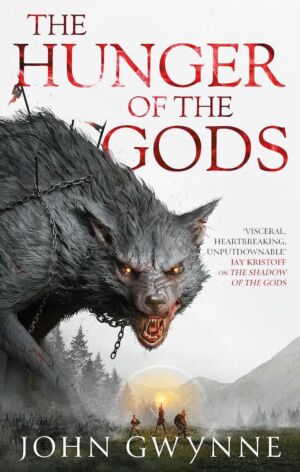
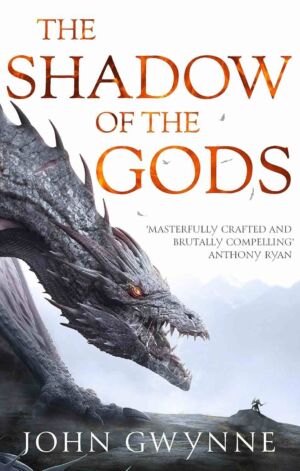
- The Bloodsworn Saga: The Shadow of the Gods (2021), The Hunger of the Gods (2022), The Fury of the Gods (2024)
- The Wolfheart Chronicles: The Wolves of War (2026), with a second book to come
What The Wolves of War Adds
History, first. Ingvar is Gwynne’s version of Igor of Kiev, Helga is Olga, the toddler shouting his war cry is Sviatoslav, and Mal of the Drevlyans comes straight from the chronicles. Readers who know how Igor’s story ended will feel the floor tilt long before the characters do. Gwynne says plainly that this is not a history book, but the real politics give his fantasy a weight that invented kingdoms rarely carry.
Then the folklore. The Wolves of War by John Gwynne gives each creature rules you can fight by. Fire breaks an upir. Gold binds a rusalka. A domovoi lives with a family by choice. Gwynne makes that last idea the warmest thing in the novel.
What works
- Halia is the best character Gwynne has written. She is disabled, non-verbal and fiercely clever inside, and her power never cures her body. The book is full of small acts of care, her father chopping her food fine and lifting her into a saddle her mother built, and none of it reads as pity.
- Root steals every scene. A knee-high domovoi with a tool belt of kitchen implements, a wooden spoon she wields like a dagger and breath that can warm feet or freeze a torch.
- The threads lock together cleverly. Something done in one storyline makes Iaga, the iron-toothed witch, vanish mid-battle in another, and you only see the connection a chapter later.
- Helga is the sharpest mind in the book. A bath-house ambush, fought naked with her husband’s seax, is the set piece everyone will talk about.
Where It Gives Ground
- It is half a story. The Wolves of War by John Gwynne ends at the start of a quest, with major threads unresolved and two characters missing outright. It earns its cliffhanger, but readers who want an arc closed will not get one.
- The villains are thin. Yakun, the village bigot, says the same things in three separate confrontations, and one betrayal is explained afterwards in a single speech rather than built on the page.
- Kyiv is slower than the forest. Ingvar’s early chapters are homecomings, feasts and council talk, and the Northmen’s crew is largely there to be killed in a monster-filled tomb.
- Verbal tics. Long, timeless moments, warriors grunting and characters agreeing that something is a truth recur often enough to notice.
Do You Need the Earlier Books?
No. Nothing from the Bloodsworn or the Banished Lands carries over, and The Wolves of War by John Gwynne explains every god, tribe and creature as it arrives. A pronunciation guide at the front helps with the names. Fans of the Bloodsworn will recognise the oath-bound warriors and the found family, and that is all.
The Wolves of War Ending Explained (Spoilers)
Stop here if you have not finished The Wolves of War by John Gwynne. Halia, travelling in spirit, confronts Iaga in the forest to keep her away from her family, and the witch kills her; the wounds appear on her sleeping body. Root carries the news that the red feather of Perun’s fire-eagle can judge a soul and return a worthy one to life. At a river ford, Iaga walks through Greek fire laughing, and Mal kills Ingvar, as the chronicles say the Drevlyans killed Igor. The final chapter turns grief into a quest: Dagmar, who has been inside Perun’s Chamber, swears to guide Halia’s family there, while his own foster-children are still missing.
Read These Next
- The Shadow of the Gods by John Gwynne, for his Norse saga of oath-bound mercenaries and a girl hiding what she is.
- The Witcher series by Andrzej Sapkowski, for Slavic monsters, strigas included, and the people who hunt them.
- The Devils by Joe Abercrombie, for a crew of monsters on a bloody errand with jokes in the dark.
- Spinning Silver by Naomi Novik, for Eastern European folklore, cold forests and fierce daughters.
- The Bear and the Nightingale by Katherine Arden, for household spirits and old gods in medieval Rus.
About John Gwynne
A British writer born in 1968, Gwynne broke through with Malice and has spent more than a decade on oath-bound warriors and monster-haunted wilds. With The Wolves of War by John Gwynne he turns east, writing the girl at its heart in honour of his late daughter.
- Malice won the David Gemmell Morningstar Award for best debut in 2013.
- He is a Viking reenactor, which is why his shield walls and axe work feel handled rather than imagined.
- The Fury of the Gods reached number five on the New York Times trade paperback list in November 2024.
- A Serbian friend helped with the Slavic detail and the pronunciation guide, his acknowledgements say.
The Verdict
The Wolves of War by John Gwynne, out now since 3 November 2026, has flat villains, a slow court and an ending that is really an intermission. None of that matters as much as Halia, Root and a family who would walk into the land of the dead for each other. Gwynne has written bigger battles. He has never written a better reason to fight one, and the second book cannot come soon enough.
Content notes tap to reveal
Where to read The Wolves of War
Amazon lists the current Kindle, print and audiobook editions, and shows whether the ebook is in Kindle Unlimited right now.
To borrow it free, try your library: Libby and OverDrive lend ebooks and audiobooks with a library card, and WorldCat finds print copies near you.
We don’t link to “free PDF” sites. Those copies are pirated and pay the author nothing.