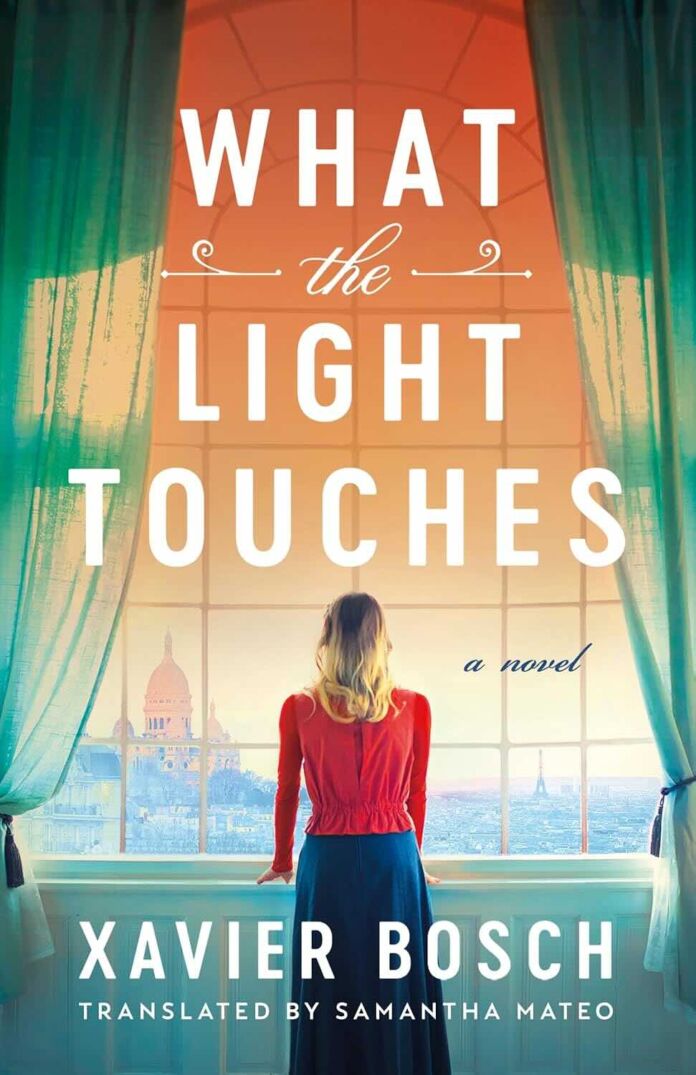
What the Light Touches is Xavier Bosch’s masterful exploration of how the past reaches through time to shape our present. Through interconnected narratives set in Nazi-occupied Paris and contemporary France, Bosch weaves a tapestry of love, loss, and the weight of secrets kept across generations.
The Dance of Two Timelines
The novel moves gracefully between 1940s Paris and 2008, centering on Margaux Dutronc and her granddaughter Barbara. In the historical timeline, we follow seventeen-year-old Margaux as she navigates life under German occupation, falls in love with a gifted oboist named Damien, and grapples with the consequences of appearing in a Nazi propaganda photograph. In 2008, we meet Barbara, a forty-one-year-old woman working in publishing who has fled a failed marriage to live in her grandmother’s old apartment.
The parallel narratives intertwine when Roger, a mysterious photographer, arrives to stay in Barbara’s spare room just as Paris is hit by a historic snowstorm. His discovery of an old photograph leads to revelations about Margaux’s wartime past that will change everything.
Strengths: A Symphony of Detail and Emotion
Bosch displays remarkable talent in bringing both time periods vividly to life. His portrayal of occupied Paris is particularly striking—from the atmosphere of fear and suspicion to small details like the sound of German boots on cobblestones or the way resistance members communicate through coded messages. The author has clearly done extensive research while avoiding the trap of letting historical detail overwhelm the human story at the heart of the novel.
The contemporary sections are equally well-rendered, capturing the claustrophobic intimacy of being snowbound with a stranger and the way isolation can strip away pretenses. The development of Barbara and Roger’s relationship feels organic and earned, with their initial wariness giving way to attraction and understanding.
Some of the novel’s most powerful moments come through Bosch’s evocation of music. Damien’s oboe performances serve as both plot device and metaphor, expressing what characters cannot say aloud. The author demonstrates deep knowledge of classical music while making its emotional resonance accessible to readers unfamiliar with the technical aspects.
Notable Elements
- Rich characterization, particularly of the women at the center of the story
- Skilled integration of historical detail without overwhelming the narrative
- Effective use of parallel structure between timelines
- Beautiful prose that captures both the terror of occupation and the tenderness of new love
- Thoughtful exploration of how trauma echoes through generations
Areas for Improvement
While the “What the Light Touches” is largely successful, there are some elements that could be stronger. The pacing occasionally lags in the middle sections, particularly during extended passages about Barbara’s publishing work. A few plot points rely perhaps too heavily on coincidence, though this is somewhat mitigated by the overall quality of the storytelling.
The resolution of certain storylines feels slightly rushed compared to their careful setup. In particular, the fate of some secondary characters could have been more fully explored. These are minor criticisms of what is otherwise a compelling and well-crafted novel.
Historical Context and Theme
Bosch demonstrates remarkable sensitivity in his handling of the Holocaust and French collaboration. Rather than focusing on the largest horrors, he shows how ordinary people navigated impossible choices under occupation. Through Margaux’s story, we see how a single photograph could doom a family, while through Barbara we explore how such wounds persist across generations.
The novel asks profound questions about survival, loyalty, and the stories we tell ourselves about the past. It examines how people maintain their humanity under inhuman circumstances and how love can flourish even in the darkest times.
Style and Structure
The author employs a sophisticated narrative structure that mirrors the themes of memory and revelation. Chapters alternate between timelines but are carefully constructed to resonate with each other thematically. Bosch’s prose style varies appropriately between the sections—more immediate and sensory in the historical chapters, more reflective in the contemporary ones.
Impact and Significance
What the Light Touches makes an important contribution to the literature of World War II by examining the occupation through an intimate, personal lens. Rather than focusing on major historical figures or events, it shows how ordinary people’s lives were shaped by forces beyond their control.
The novel’s exploration of intergenerational trauma and the way historical events echo through families feels particularly relevant to contemporary discussions about collective memory and responsibility.
Comparable Works
Readers who enjoyed this novel might also appreciate:
- Suite Française by Irène Némirovsky
- All the Light We Cannot See by Anthony Doerr
- The Nightingale by Kristin Hannah
Final Assessment
Despite minor flaws, What the Light Touches is a deeply moving exploration of love, survival, and the weight of history. Bosch has created a work that is both historically illuminating and emotionally resonant. The novel succeeds as both a compelling narrative and a meditation on how the past shapes our present.
Strengths
- Masterful interweaving of timelines
- Rich historical detail
- Complex, believable characters
- Beautiful prose
- Thoughtful exploration of serious themes
Areas for Improvement
- Some pacing issues
- Occasional overreliance on coincidence
- A few underdeveloped secondary characters
Recommended For
- Readers of historical fiction
- Those interested in WWII stories
- Fans of dual-timeline narratives
- Anyone who appreciates literary fiction with strong character development
“What the Light Touches” will particularly appeal to readers who enjoy stories that examine how historical events impact ordinary lives and those interested in exploring how family secrets shape subsequent generations. While dealing with serious themes, it ultimately offers hope in human resilience and the possibility of love even in dark times.







