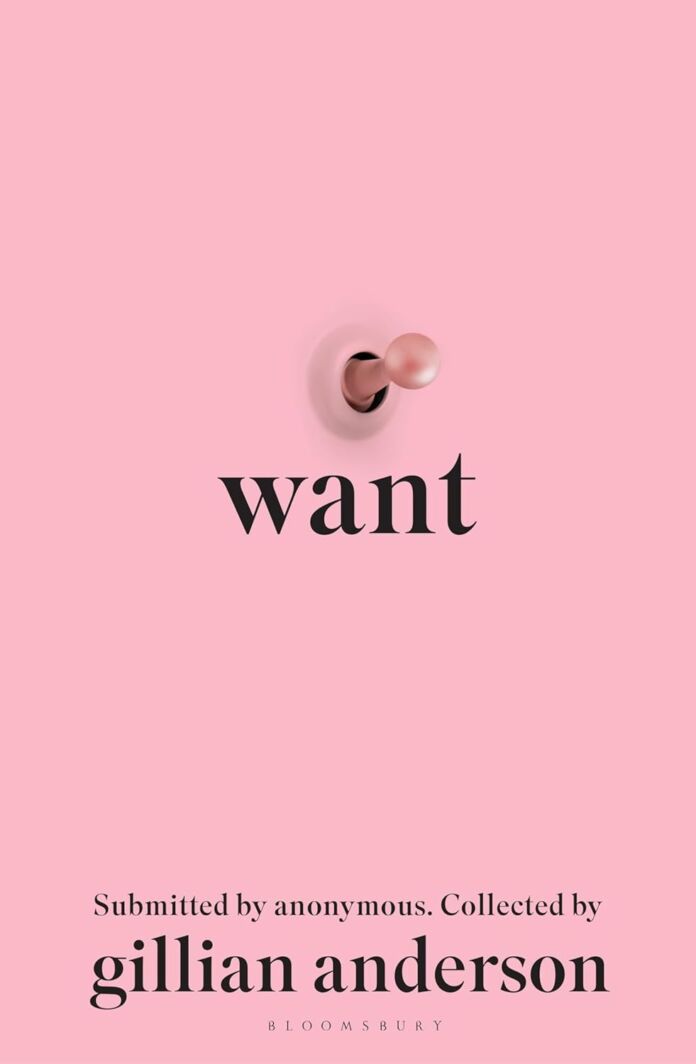
In Want, Gillian Anderson takes on the ambitious role of curator, gathering hundreds of anonymous letters from women worldwide sharing their most intimate fantasies. This collection, inspired by Nancy Friday’s landmark 1973 work My Secret Garden, offers a contemporary window into women’s inner lives fifty years later. While the premise is intriguing and many contributions are deeply moving, the execution sometimes falls short of its revolutionary aspirations.
The Curator’s Voice
Anderson brings her characteristic thoughtfulness to the project, writing introductions to each chapter that frame the letters within broader social contexts. Her candor about her own journey with sexuality and her experiences playing complex female characters like Dana Scully and Jean Milburn adds valuable perspective. However, some readers may find her commentary occasionally repetitive or overly cautious.
Structure and Organization
The book is divided into thematic chapters including:
- On Fantasies
- Rough and Ready
- To Be Worshipped
- Off Limits
- The Captive
- Power and Submission
- Exploration
- More, More, More
- The Watchers and the Watched
- I Always Have a Thing For…
- Gently, Gently
This organization helps create narrative coherence, though some categories feel arbitrary or overlapping. The progression from raw confessions to tender reflections demonstrates careful editorial consideration.
Strengths
The collection’s greatest achievement lies in its diversity of voices:
- Geographic representation spanning multiple continents
- Various age groups from young adults to seniors
- Different relationship statuses and orientations
- Diverse cultural and religious backgrounds
- Range of writing styles from literary to conversational
Many letters are remarkably well-crafted, offering vivid imagery and emotional depth. The anonymous format allows for stark honesty about desires that might otherwise remain unexpressed.
Critical Analysis
What Works
- Authenticity: The raw authenticity of many contributions creates powerful moments of recognition and connection.
- Cultural Context: Anderson’s introductions thoughtfully situate the letters within broader discussions of feminism, power, and sexuality.
- Representation: The inclusion of voices from different backgrounds helps challenge narrow cultural narratives about desire.
- Literary Merit: Several letters display genuine literary talent, elevating the collection beyond mere confession.
Areas for Improvement
- Uneven Quality: The writing quality varies significantly, with some entries feeling repetitive or underdeveloped.
- Editorial Balance: The decision to maintain anonymity sometimes results in missing context that could enrich understanding.
- Theoretical Framework: The book could benefit from more rigorous engagement with feminist theory and sexuality studies.
- Organization: Some thematic categories feel forced, potentially limiting alternative interpretations.
Contemporary Relevance
Want by Gillian Anderson arrives at a crucial moment in discussions about gender, power, and sexuality. The collection reflects both progress made since Friday’s My Secret Garden and persistent challenges:
- Impact of social media on intimate expression
- Evolving conversations about consent and power
- Intersection of personal desire and political reality
- Technology’s influence on fantasy and connection
Writing Style and Tone
Anderson maintains a delicate balance between academic distance and personal engagement. Her introductions are accessible without being reductive, though occasionally they lean toward overexplanation. The decision to preserve contributors’ original voices – including grammatical quirks and cultural idioms – adds authenticity but sometimes impacts readability.
Comparative Context
While Want invites comparison with My Secret Garden, it also relates to contemporary works like:
- Three Women by Lisa Taddeo
- Bad Feminist by Roxane Gay
- Tomorrow Sex Will Be Good Again by Katherine Angel
However, its unique format and focus set it apart from these works.
Impact and Significance
The book’s significance lies in its potential to:
- Foster more open discussions about desire
- Challenge shame around fantasy
- Document contemporary women’s experiences
- Bridge generational conversations about sexuality
Reader Experience
Reading Want by Gillian Anderson can be both enlightening and challenging. The letters’ intimate nature creates an unusual reading experience – part voyeuristic, part philosophical, part political. Some readers may find certain entries triggering or uncomfortable, while others will appreciate the unflinching honesty.
Literary Merit
As a literary work, Want occupies an interesting space between:
- Personal essay collection
- Sociological document
- Feminist manifesto
- Artistic expression
Its success in each category varies, but the overall effect is compelling if uneven.
Final Assessment
Want by Gillian Anderson represents an important contribution to contemporary discussions about women’s experiences and desires. While it doesn’t fully achieve all its ambitious goals, it offers valuable insights and creates space for necessary conversations.
Strengths
- Diverse perspectives
- Historical context
- Cultural significance
- Personal resonance
Limitations
- Uneven quality
- Limited theoretical framework
- Sometimes repetitive
- Occasional lack of context
Recommendation
Want by Gillian Anderson is recommended for:
- Readers interested in contemporary feminism
- Those seeking diverse perspectives on sexuality
- Students of gender studies
- Anyone interested in human psychology
However, approach with awareness of its limitations and uneven execution.
Conclusion
While Want by Gillian Anderson makes a valuable contribution to contemporary discussions about women’s experiences, its impact is somewhat diminished by structural issues and uneven quality. Nevertheless, it remains an important document of our time, offering insights into the complex landscape of human desire and expression.
About the Author
Gillian Anderson is an award-winning actor known for roles in The X-Files, Sex Education, and The Crown. She previously co-authored We: A Manifesto for Women Everywhere with Jennifer Nadel. Her work consistently engages with questions of gender, power, and identity.







