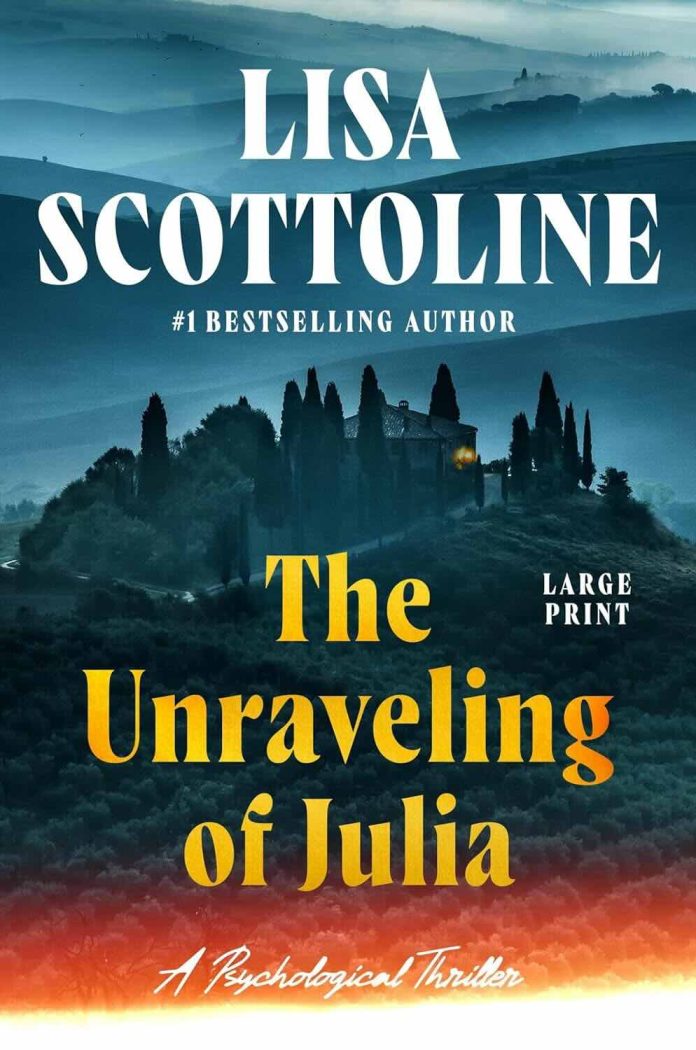
Lisa Scottoline ventures boldly into gothic psychological thriller territory with The Unraveling of Julia, delivering a mesmerizing tale that weaves together contemporary mystery with Renaissance intrigue. This latest offering from the bestselling author marks a departure from her legal thriller roots, embracing the atmospheric darkness of Gothic literature while maintaining the page-turning momentum readers expect from her work.
The novel follows Julia Pritzker, a widow haunted by her husband’s brutal murder in Philadelphia, who receives an unexpected inheritance: a crumbling Tuscan villa from a mysterious benefactor named Emilia Rossi. What begins as a search for identity transforms into a psychological labyrinth where past and present collide with devastating consequences.
A Masterfully Constructed Gothic Atmosphere
Scottoline demonstrates remarkable skill in crafting an authentically gothic atmosphere that permeates every page. The decrepit Tuscan villa, with its peeling frescoes and hidden underground chambers, becomes a character unto itself—simultaneously beautiful and menacing. The author’s meticulous research into Tuscan culture and Renaissance history creates an immersive setting that feels both exotic and eerily familiar.
The atmospheric tension reaches its peak in the underground cell discovery, a scene that showcases Scottoline’s ability to blend historical mystery with contemporary horror. The revelation of the caged child’s existence, told through watercolor paintings and physical evidence, creates one of the most genuinely disturbing moments in recent psychological thriller fiction. This discovery anchors the novel’s central mystery while establishing the villa as a place where secrets refuse to stay buried.
Complex Character Development and Psychological Depth
Julia Pritzker emerges as a compelling protagonist whose grief and vulnerability make her both relatable and frustrating. Scottoline skillfully portrays trauma’s lingering effects, showing how Julia’s husband’s murder has left her questioning fate, destiny, and her own agency. The character’s obsession with astrology serves as both a coping mechanism and a narrative device that connects her to the Renaissance duchess Caterina Sforza.
The supporting cast, particularly the enigmatic Gianluca and loyal friend Courtney, provides necessary grounding for Julia’s increasingly unstable world. Gianluca’s role as both romantic interest and historical guide creates an interesting dynamic, though his character occasionally feels too convenient for the plot’s needs.
However, the novel’s greatest character achievement lies in its posthumous revelation of Emilia Rossi. Through flashbacks, photographs, and discovered documents, Scottoline creates a fully realized character whose motivations and actions drive the entire narrative, despite her death before the story begins.
The Renaissance Connection: Historical Integration
One of the novel’s most ambitious elements is its integration of Renaissance history through the figure of Caterina Sforza, the legendary “virago” duchess of Forlì. Scottoline’s research into this historical figure pays dividends, creating genuine parallels between Caterina’s struggles and Julia’s modern predicament. The shared experiences of loss, persecution, and the fight for survival across centuries add depth to what could have been a simple inheritance mystery.
The astrological elements, while sometimes feeling heavy-handed, serve as an effective bridge between eras. Scottoline’s knowledge of Renaissance astrology and its political importance adds authenticity to both historical and contemporary plotlines. The zodiac fresco in the villa’s entrance becomes a recurring symbol that successfully ties together the novel’s themes of fate versus free will.
Narrative Structure and Pacing
The novel’s structure follows a deliberate slow-burn approach that builds tension through accumulated revelations rather than action sequences. This pacing works well for the gothic atmosphere but occasionally stalls when exposition overwhelms momentum. Scottoline’s legal thriller background shows in her methodical approach to unveiling clues, though some readers may find the investigative passages less compelling than the supernatural elements.
The integration of Julia’s visions and supernatural experiences creates narrative tension between rational and mystical explanations. While these elements add to the gothic atmosphere, they sometimes strain credibility, particularly when supernatural guidance becomes too convenient for plot advancement.
Thematic Richness and Cultural Commentary
Beneath the surface mystery, The Unraveling of Julia explores themes of identity, family secrets, and the cyclical nature of trauma. The revelation that Rossi was protecting her daughter from an abusive relationship, rather than being an abuser herself, provides a powerful commentary on how trauma can be misinterpreted across generations. This twist reframes the entire narrative, transforming what appeared to be a story about evil into one about survival and protection.
The novel also addresses contemporary issues through its historical lens. The trafficking conspiracy subplot, while somewhat underdeveloped, touches on modern exploitation while connecting to historical patterns of powerlessness and abuse. Scottoline’s portrayal of Tuscan village life balances romantic tourism imagery with darker economic realities.
Technical Craft and Literary Merit
Scottoline’s prose demonstrates noticeable growth from her earlier legal thrillers. The descriptive passages of Tuscan landscape and architecture show genuine literary ambition, creating vivid sensory experiences for readers. Her dialogue remains sharp and authentic, particularly in the interactions between Julia and Courtney, which provide necessary comic relief amid the gothic atmosphere.
The novel’s research foundation is impressive, evident in details about Renaissance history, Italian culture, and astrological traditions. Scottoline’s acknowledgments reveal extensive travel and consultation with experts, lending authenticity to both historical and contemporary elements.
Critical Observations and Minor Shortcomings
While The Unraveling of Julia succeeds as atmospheric gothic fiction, certain elements feel underdeveloped. The trafficking conspiracy, while providing external threat, never fully integrates with the family mystery at the novel’s heart. Some plot conveniences, particularly regarding Julia’s supernatural guidance, occasionally undermine the story’s credibility.
The romance subplot with Gianluca, while providing emotional grounding, follows predictable patterns that dilute some of the novel’s more original elements. Additionally, certain supporting characters, particularly the Italian locals, sometimes feel more like plot devices than fully realized individuals.
The novel’s resolution, while emotionally satisfying, arrives somewhat abruptly after the careful buildup. Some readers may find the shift from gothic mystery to family reunion jarring, though the epilogue provides satisfying closure to character arcs.
Literary Context and Comparison
The Unraveling of Julia positions itself alongside recent gothic psychological thrillers like The Silent Companion by Laura Purcell and Mexican Gothic by Silvia Moreno-Garcia. Like these works, Scottoline uses historical elements to enhance contemporary psychological drama. However, her approach is more grounded in realistic historical research rather than supernatural horror.
Within Scottoline’s own bibliography, this novel represents a significant stylistic departure from her Rosato & Associates legal thrillers. Readers familiar with works like Moment of Truth or Legal Tender will find a more atmospheric, character-driven approach here. The change demonstrates Scottoline’s willingness to challenge herself creatively while maintaining her skill for compelling storytelling.
Verdict: A Successful Gothic Reinvention
The Unraveling of Julia succeeds as both gothic thriller and historical mystery, offering readers a richly atmospheric experience that lingers long after the final page. While not without minor flaws, the novel demonstrates Scottoline’s evolution as a storyteller and her ability to master new genres while maintaining her signature readability.
The book will particularly appeal to readers who enjoyed The Invisible Bridge by Julie Orringer or The Birth of Venus by Sarah Dunant—works that similarly blend historical research with contemporary sensibilities. Mystery lovers seeking atmospheric rather than action-driven plots will find much to appreciate in Julia’s journey from grief to self-discovery.
Recommended Similar Reads
For readers captivated by The Unraveling of Julia, consider these complementary titles:
- The Thirteenth Tale by Diane Setterfield – Gothic atmosphere with family secrets
- The Heiress by Rachel Hawkins – Contemporary thriller with Italian setting
- The Invisible Bridge by Julie Orringer – Historical family saga with Italian connections
- The Bewitching by Silvia Moreno-Garcia – Atmospheric horror with inheritance mystery
- The Silent Companion by Laura Purcell – Victorian gothic with psychological elements
- The Birth of Venus by Sarah Dunant – Renaissance Italy with mystery elements
The Unraveling of Julia establishes Lisa Scottoline as a formidable voice in gothic psychological fiction, proving that even established authors can successfully reinvent their craft while honoring their storytelling roots.







