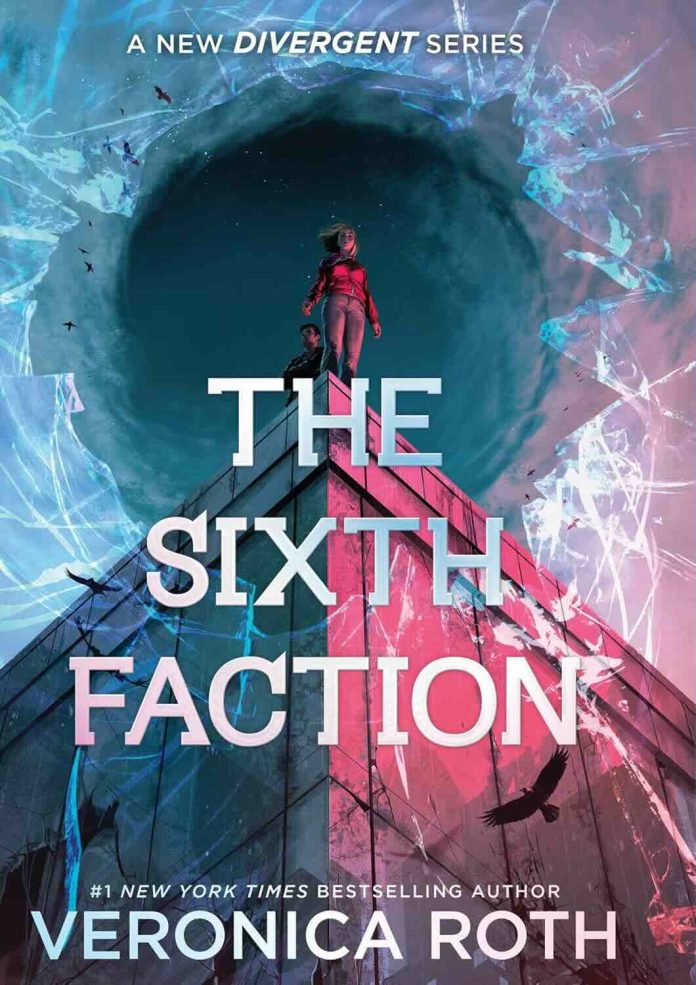
Some writers return to a beloved world the way you return to an old house, careful and a little reverent, half hoping it still feels like yours. Veronica Roth has done something braver. She has stepped back inside Chicago’s faction system more than a decade after Divergent first hit shelves, and instead of polishing the furniture, she has rearranged every wall. The Sixth Faction by Veronica Roth is not a sequel and not a prequel. It is a confident, slightly anxious, occasionally dazzling alternate-universe reimagining that asks one of the riskiest questions a writer can ask of her own work: what if the most famous choice in young adult dystopia had never been a choice at all?
A New Crack in a Familiar World
Beatrice Prior is still sixteen, still small, still pulled apart by a quiet dread of disappointing her Abnegation parents. The aptitude test still hums in Tori’s tattoo parlor. The five symbols still hang from the Hall of Factions. But before Tris can drop her blood onto burning coals, before Caleb can sprint toward water, glass rains down from the ceiling and a green banner unfurls. Robert Black, the boy from next door, falls. Evelyn Eaton, who was supposed to have died years ago, raises a gun.
That single moment is the spine of the book, and Roth knows it. The Choosing Ceremony attack reshapes Beatrice’s path, and what follows is not a faction selection at all. It is a stumble into the city’s underground, into a guild of organized factionless who call themselves the Foxes and live in a crumbling glass tower they have renamed the Rookery.
The Sixth Faction, Hiding in Plain Sight
The premise of the title is doing serious work here. The Foxes have three rules: don’t get caught, make yourself useful, no factions. The last one is the philosophical bone of the novel. Roth has long been interested in the way ideology hardens around us, and the Foxes let her interrogate her own creation, gently, from the inside. Tris notices the irony almost immediately. A faction whose virtue is “no factions” is still a faction. That small, sharp observation is the kind of thing that lifts The Sixth Faction by Veronica Roth above standard retelling territory.
The new cast is one of the genuine joys of the novel:
- The Mender, a tall, plum-suited tailor with rings on every finger, raising his little sister Mae in a building the Dauntless want emptied
- Rory, a quick-witted Fox who teaches Tris the guild rules and feels like the friend Christina was always going to be
- Sly and Boots, leaders of the Foxes, sketched with just enough menace to keep the underground from feeling cozy
- Colin, steady and surgical, the kind of boy who can dig a needle out of someone’s chest without flinching
These characters earn their pages, though a few of them, the Mender and Mae especially, fade more than they should once the plot tightens.
Two Voices, One Older Soul
The point-of-view structure is the boldest craft decision in The Sixth Faction by Veronica Roth. Tris remains the spine. Four, written here in first person with a tenderness he rarely got in the original trilogy, is the heart. Caleb gets the third chair, and his Erudite-laboratory chapters are where the book takes its biggest risk.
Four’s chapters are the standout. His interior life, his careful distance from people, his ache around Hana (Uriah and Zeke’s mother, no longer just a background figure), and the bone-deep cost of growing up under Marcus Eaton all read as essential rather than ornamental. When Four describes the simulation room as a place to be intimate without being vulnerable, the sentence lands like a small confession. Roth has clearly grown more comfortable with him over the years.
Caleb’s perspective is harder to defend. His arc through Erudite initiation is interesting in flashes, particularly the labyrinth riddle and his first private audience with Jeanine Matthews, but his chapters slow the middle third. Readers who have always wanted more Caleb will be thrilled. Others may find themselves flipping ahead.
Where the Pacing Stumbles
The novel runs long, and you feel it. Between the Choosing Ceremony attack and the late-stage simulation crisis, the Rookery sections sprawl. Tris learning to braid her hair, sort guild duties, and weather Gretchen’s refusal to teach her self-defense creates lovely texture and slows the engine at the same time. The prose is tighter at the sentence level than in Allegiant, but the structural question of what this book is really about takes too long to crystallize.
A few other honest critiques:
- Marcus is foregrounded as a villain so early that the political mystery loses some bite
- The Foxes’ philosophy is fascinating but underexplored in the back half
- Certain action set pieces, including a fire in Candor headquarters, lean on beats close readers of Divergent will recognize
- The ending choices, while emotionally devastating, will divide fans of the original trilogy
None of this sinks the book. It does keep it from being the unqualified triumph some readers will want it to be.
What Roth Gets Exactly Right
The voice. The first-person present tense that defined Divergent has matured. Tris is sharper, more politically aware, more interested in why a system exists rather than simply where she fits inside it. There is a scene where Natalie Prior shows her daughter how to use a compass hidden inside a locket, and the quiet weight of that moment, the things a mother teaches her child to survive a world she helped build, is the kind of writing that justifies the entire project.
Roth also gets the costume design of identity right. The Mender’s racks of jackets in every faction color are not a set piece. They are a thesis. The Sixth Faction by Veronica Roth is, at heart, a book about what we wear when nobody else is choosing the cloth.
From the Author’s Shelf
If this is your first Roth, the doors that open from here are wide:
- Divergent, Insurgent, Allegiant, the original trilogy this book lives in conversation with
- Four: A Divergent Collection, Tobias short fiction, useful context for fans of the new Four point of view
- Carve the Mark and The Fates Divide, her space-opera duology, more lyrical and more brutal
- The End and Other Beginnings, short fiction with a quiet philosophical edge
If You Liked the Foxes, Try Next
For readers who close the back cover and want more of the same atmosphere:
- Red Rising by Pierce Brown, for class-coded society and a hero who infiltrates it
- An Ember in the Ashes by Sabaa Tahir, for dual point of view and a regime that watches everyone
- Legend by Marie Lu, for surveillance, science, and young people pushed to pick sides
- Six of Crows by Leigh Bardugo, for ensemble crime, layered identities, and impossible heists
- Shatter Me by Tahereh Mafi, for first-person interiority and slow-burn romance
- The Hunger Games by Suzanne Collins, the obvious comparison and still the gold standard
For a dystopia that gives its governing intelligence a voice and a conscience of its own, try Thunderhead by Neal Shusterman.
Worth the Choice
The Sixth Faction by Veronica Roth is uneven, ambitious, sometimes repetitive, and frequently beautiful. It will not replace Divergent for the readers who loved it first, and it does not seem to want to. What it offers instead is the rare pleasure of watching a writer revisit her most famous work with adult eyes, fix what she could not fix at twenty-two, and trust her readers enough to ask harder questions. That alone makes it worth standing in front of the bowl one more time.







