





 1
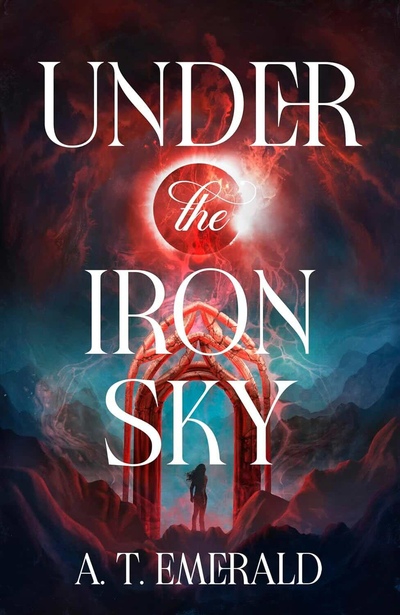
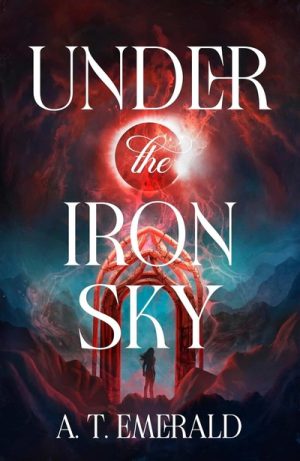
1The play is supposed to last an hour. An eleven-year-old girl in a pearl-sewn gown stands in a glass throne room to recite the founding myth of her empire, in front of the ancient queen whose machines have kept her alive for one hundred and seventy-five years. She gets through four words. The queen coughs, then cannot stop, then sees the blood in her hand and starts apologising to the cameras. When she dies the ground splits open, the great glass flower on the palace roof comes down, and things out of every nursery story pour up through the cracks. By nightfall black towers have pierced the city and smothered all three suns. Under the Iron Sky by A.T. Emerald spends its opening chapters burning the old world down, and then jumps fifteen years to show us who survived it.
How Life Under the Iron Sky Works
Vordell ran on Light, sunlight harvested through glass “Sunflowers” and fed into everything from monorails to rifles to the metal animal companions every household kept. The invaders, the magic-wielding Dar’rak and the creatures that came with them, had been imprisoned underground for nearly two centuries by a wish the queen made on a magical Arch, and the spell lasted only as long as she lived. Now their towers hold a ceiling of cloud over the planet, hard as steel. Twice a year the towers have to be restrung, the cloud thins for thirty minutes, and the humans fly up to steal as much sunlight as their battered ships can carry.
Soraya Tollmere is the rebellion’s weapons engineer and its most frightening soldier. The spiked knuckle-dusters welded to the backs of her hands tell you most of what you need to know, and the enemy has a name for her that translates as God Killer. Her mother, Noreen, runs the base and treats her daughter as a weapon to be maintained, commander first and mother never. Soraya’s one advantage is a masked Dar’rak informant who meets her once a week.
Then a sunlight run goes wrong, and the rider of the enemy’s biggest dragon takes her prisoner. His master, Ramapheal, binds her life to her captor’s with a blood ritual, so killing him would kill her too, and hands her over to be searched from the inside.
A Siege Fought Inside One Mind
The structure is the smartest thing about the book. Ikarus, the horned general the humans call the Demon, is a memory walker, and Soraya discovers that she can lock her memories away from him. In Under the Iron Sky by A.T. Emerald that defence takes the form of a palace corridor in her own head, lined with identical gold-and-steel doors, and he has to break them down one at a time. Every door he opens shows us a piece of her past that the present-day plot has kept back, and shows him something he was not expecting to see. It is an interrogation, a backstory delivery system and a slow courtship all at once, and it gives the captivity plot a ticking clock that most enemies-to-lovers books do without.
The point of view alternates by chapter, mostly between Soraya and Ikarus, with chapters from the base she left behind. That split lets Emerald run dramatic irony hard: we know things about the war above ground that the captive does not, and things about the captor’s household that the rebels cannot guess. By the last hundred pages, Under the Iron Sky by A.T. Emerald is running three or four plot lines at once and cutting between them with real confidence.
What works
- The engineering is the worldbuilding. In Under the Iron Sky by A.T. Emerald, Soraya repairs rifles with a blowtorch, builds braces for injured friends out of scrapped weapons, and thinks about every problem as a machine to be rebuilt. The rust that has crept over everything gold since the suns went out is the book’s best recurring image.
- The captor has a household. Ikarus lives in a black-stone castle with a small, odd found family, and the novel takes them seriously. One of them fights bare-chested in an underground arena called the Pitt, a set piece of pure showmanship.
- The action is easy to follow. A dogfight against a shielded dragon, an escape through a field of wrecked war machines and a booby-trapped temple are all staged with a clear sense of who is where.
- The moral ground shifts. The book keeps complicating who did what to whom two hundred years ago, and it does so through plot rather than lectures, at least until the final stretch.
Where Under the Iron Sky Gives Ground
- The prose has tics. Jaw muscles tick, tongues roll inside cheeks, nostrils flare and a gold fleck in one character’s eye pulses, all on a loop. Profanity does a lot of the emotional heavy lifting in the narration.
- The middle sags. At well over four hundred pages, Under the Iron Sky by A.T. Emerald can afford a breather, but once the pair settle into a shared routine, a stretch of domestic chapters about meals, showers and bickering slows a book that had been moving very fast.
- The register wobbles. Characters in a world of sun gods and dragons talk like modern Britons, and some of the jokier slang lands badly next to scenes of mass slaughter.
- Convenience creeps in. More than once the plot needs a guard to forget a basic precaution, or a useful stockpile to sit conveniently close to where Soraya happens to be.
The author’s own content warning at the front of the book covers most of this.
Read These Next
A.T. Emerald lives in Nottinghamshire and began writing in 2020; she built her readership on TikTok and Instagram before this book found a publisher. Under the Iron Sky by A.T. Emerald is the first of The Iron Sky Trilogy, and the second and third books have not yet been titled. While you wait:
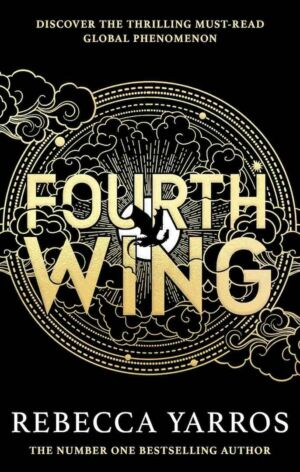
- Fourth Wing by Rebecca Yarros, for dragons, a war college and a rider who might kill the heroine.
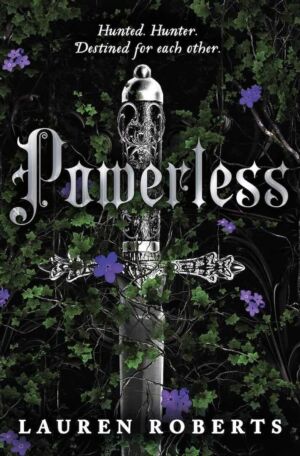
- Powerless by Lauren Roberts, for an ordinary human hiding in a world built by the gifted.
- Quicksilver by Callie Hart, for a bad-tempered heroine stuck with a fae warrior she cannot stand.
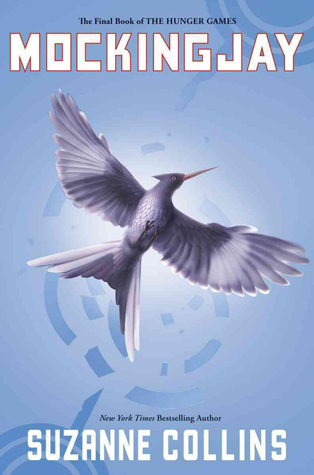
- Mockingjay by Suzanne Collins, for a reluctant rebel turned into a weapon by her own side.
- Red Rising by Pierce Brown, for a buried underclass, a rigged hierarchy and a long war over who gets the light.
Worth Your Shelf
The structure carries it. Under the Iron Sky by A.T. Emerald is long, loud and occasionally clumsy at the sentence level, but the locked-door device keeps the captivity plot moving, the world has a real mechanical logic, and the final chapters turn the table over in ways that make the next book feel necessary. It needs a firmer edit on its repetitions and a lighter hand with the slang. It does not need a stronger heroine.
Bring a torch for the first book. The sky is not coming down just yet.