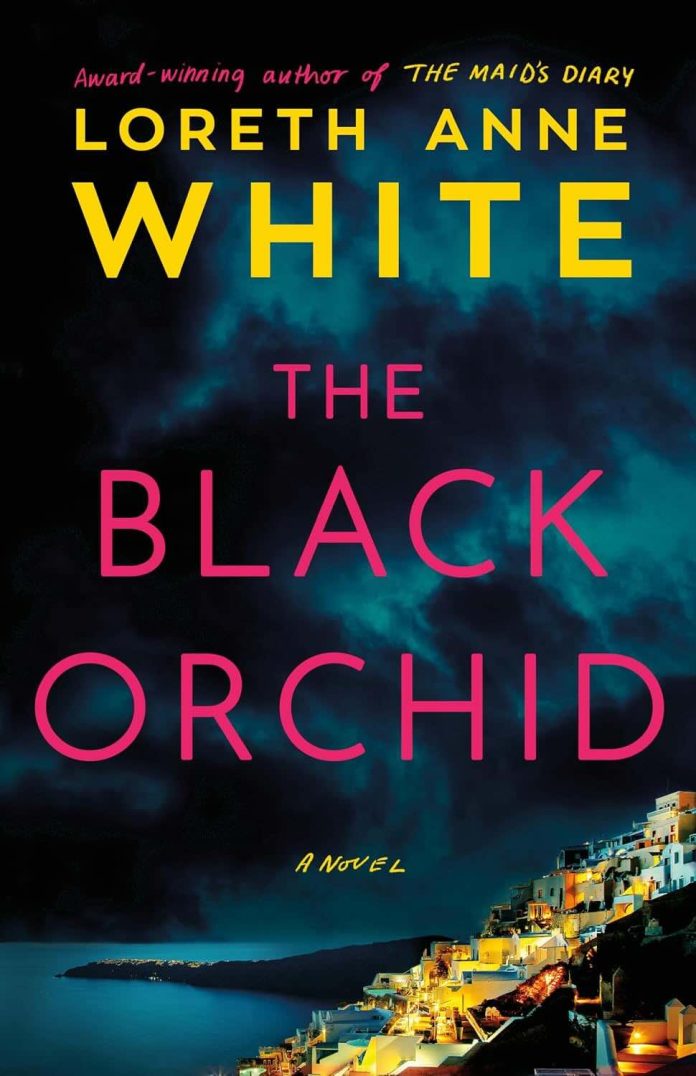
An old fisherman takes his boat into the caldera at first light and finds the water full of masks. Silver, gold and bronze, floating face up, catching the sunrise. He leaves the bodies where they are. He takes the small yellow backpack. Six years later a dive team drops through the hull of the wreck to work out what put it there. The Black Orchid by Loreth Anne White opens on the aftermath, confirms within thirty pages that a new liner went down in the Santorini caldera with fifty-seven dead and five never recovered, and then counts toward it.
The Countdown Loreth Anne White Starts on Page One
That decision is the whole book.
Chapters carry headers instead of numbers. THREE DAYS, FOUR HOURS TO IMPACT. TWO DAYS, TWELVE HOURS. SEVEN HOURS. Then ZERO HOUR. Nothing else about the sinking is explained until it arrives, and the effect is hard to shake. You stop reading for suspense and start reading arithmetic. A woman orders a second martini and you think, she has fifty-one hours. A child sneaks out of a cabin at night and you count.
It also solves the oldest problem in closed-circle fiction, which is that the first two hundred pages tend to be people being unpleasant over dinner while the reader waits. Here the dinners have a clock above them. The Black Orchid by Loreth Anne White is unhurried in a way that would sink a weaker structure, and the countdown is why it gets away with it.
Four Voices, One Clock
The narration rotates through four close third-person perspectives, all present tense, in chapters that rarely run past six pages.
Poppy Buchanan is a fifty-something assistant to a dying media widow: plain, badly dressed, socially graceless, carrying a canvas bag of paperbacks everywhere because fictional characters are the only relationships that have ever stayed put. She is the best thing in The Black Orchid by Loreth Anne White by a distance, and White gives her a liar’s habit of embroidering her own past mid-conversation, then makes you understand exactly why.
Carter J. Frost is eight, keeps a List of Suspicious Happenings, and travels with his mother and his grandfather, a retired FBI profiler with a lecture slot on the entertainment bill. Roshaan DaSousa is the concierge for the elite deck, in love with a man who wants a favour. Arrabella Fairfax is engaged to the widow’s stepson and has hired somebody to dig. Three of the four are hiding something serious, and that is the engine.
The Documentary Inside the Novel
Cut into the countdown are sections formatted as a screenplay for a true crime series called It’s Criminal, made in 2025 by a crew filming the salvage dive.
These are the most technically interesting pages in The Black Orchid by Loreth Anne White. Underwater sequences pan across a bar turned on its side and an eel guarding a shelf of bottles. Evidence logs reproduce recovered voicemails. Survivors sit in tidy living rooms six years on and describe a room tilting. The best is an interview with the officer of the watch, walking through what a bridge crew actually does when the man-overboard alarm sounds and there is weather, and it holds you the way procedure sometimes does. Anyone who remembers the Costa Concordia will recognise the shape of that night.
What Loreth Anne White Gets Right
Beyond the architecture, the strengths are small and specific.
- Poppy’s interiority. A middle-aged woman who has been the butt of every room she enters, written without condescension and without asking to be pitied.
- The boy. Carter could easily have been unbearable. He is not. He is eight the way eight-year-olds are eight, which includes being terrified in a dark cave and telling nobody.
- The evacuation. A lifeboat jammed against a listing hull, four passengers with oars shoving it clear a metre at a time while a hundred and fifty people chant.
- A costume party with teeth. Guests pick Greek personas from a tray of masks and a stage mentalist strips them one by one. Every choice made at that table pays off later.
The Mythology Loreth Anne White Builds Into the Ship
The liner is decorated with murals from the Greek canon and named accordingly, and none of it is window dressing.
A painting of Aeolus handing over the bag of winds hangs in the theatre foyer, and the narration says plainly what it is doing there: a crew opens a bag out of mistrust, and what comes out cannot be put back. That is the plot. Elsewhere Nemesis watches Narcissus starve at his own reflection, and the three Fates measure a thread. The ship moors against an islet called Scylla with a void on the other side. It is a lot, and once or twice The Black Orchid by Loreth Anne White explains an image you had already taken. The masks are the cleverest part: each character picks the face they want the world to see, and the final act proves every one of them wrong.
Where The Black Orchid Gives Ground
Three things keep this off the top shelf.
- It stops twice to explain itself. A midnight lecture on the psychology of women who partner with killers runs close to ten pages of near-verbatim interview. The material is fascinating and it is also an information delivery system in a bow tie.
- The eight-year-old is very well placed. Carter overhears the conversation that matters, photographs the file that matters, and stands in the right shadow at the right minute. Each instance is written plausibly. The accumulation is not.
- The documentary voice sometimes narrates what you just watched. Delivering history or procedure, the interludes are excellent. Summarising a scene you finished four pages ago, they deflate it.
None of that is fatal, and The Black Orchid by Loreth Anne White recovers each time, but a leaner draft was available.
Do You Need to Read Loreth Anne White First?
No. This is a standalone with no link to her earlier work. Readers who came through The Swimmer will find the same interest in a closed community and the same taste for a narrator lying to herself, though this is a bigger machine with more moving parts.
Content Notes for The Black Orchid
The list is long. The Black Orchid by Loreth Anne White contains a mass-casualty maritime disaster with drownings and crush injuries in detail, including a child’s death offstage. There is sustained domestic violence recounted by a survivor, a fatal poisoning, coercive control, blackmail, extortion, strangulation, murder, terminal illness, a dementia diagnosis, planned death, child abandonment, historic serial murder discussed at length, gambling addiction, and a child held over a ship’s railing.
Read it if / Skip it if
Read it if you want a thriller that gives away its ending and grows tenser for it; if a sinking rendered with real procedural care sounds like an evening; if you would like to meet the most fully imagined unglamorous woman in this year’s crime fiction.
Skip it if you need a lean four hundred pages; if long expository interviews inside a novel irritate you; if a resourceful child forever within earshot will break the spell.
Read these next
Five for readers who finish The Black Orchid by Loreth Anne White and want the same water:
- The Swimmer by Loreth Anne White. Her closest cousin to this one.
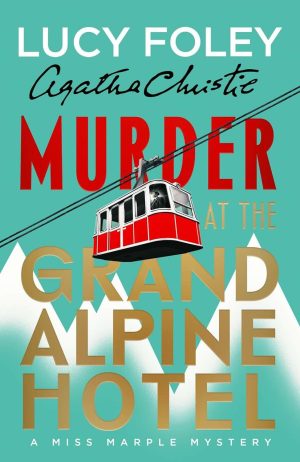
- Murder at the Grand Alpine Hotel by Lucy Foley. Wealthy strangers, one sealed location, everybody lying.
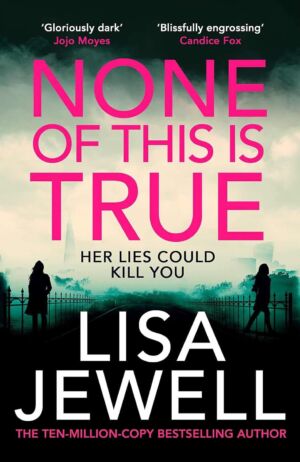
- None of This Is True by Lisa Jewell. The documentary framing done with a colder hand.
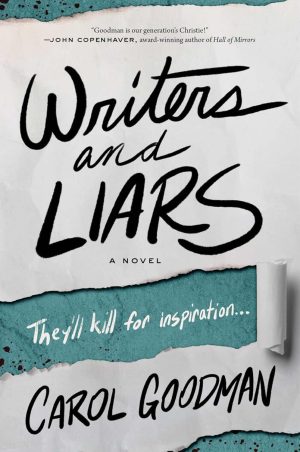
- Writers and Liars by Carol Goodman. Greek islands, invented pasts, a group that cannot leave.
- Psychological thriller books that will play with your head, our wider guide if the unreliable narration was the draw.
The Verdict
Late on, a character asks what becomes of someone who knows the water is heating and stays in it. The answer she gets is that there is a line, and once you knowingly let others suffer you have crossed from victim to villain, so choose your hard. The novel hands that question to four people and lets each answer differently, which is braver than solving a murder.
The Black Orchid by Loreth Anne White is not a tidy book. It is overstuffed, it lectures, and it leans on a small boy more than it should. It is also the rare thriller where the disaster works as a measuring stick rather than a climax, and where the last stretch keeps asking who you would have been in that stairwell. Read it for Poppy. Stay for the arithmetic.