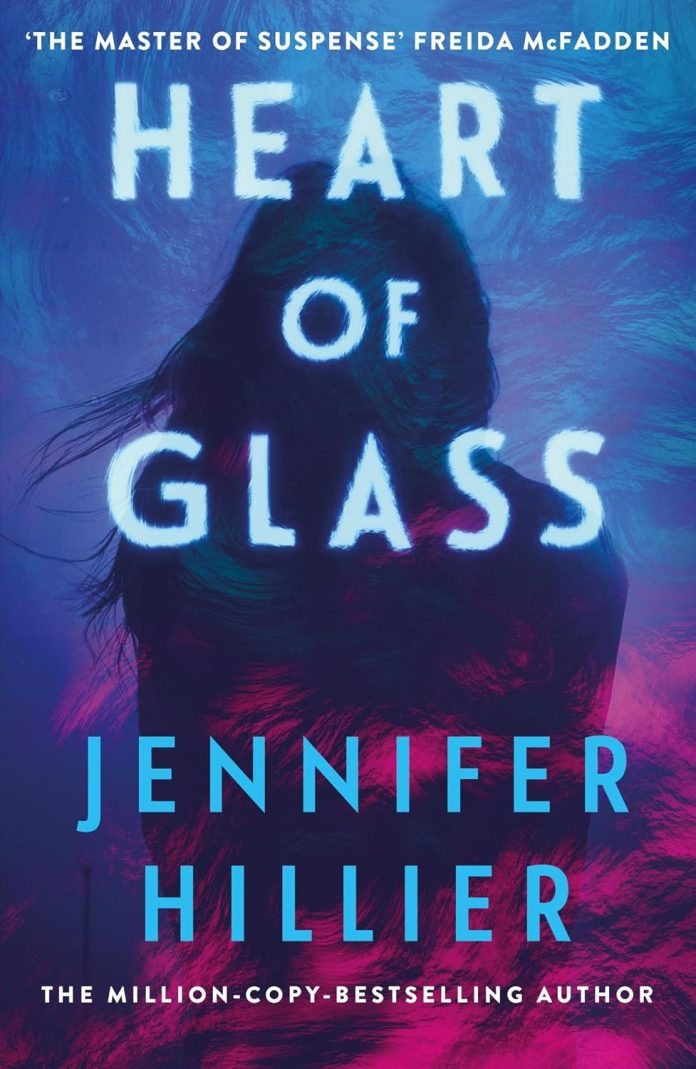
The old man in the prison scrubs looks straight into the camera and introduces himself pleasantly enough. Then he tells the producer he murdered four women in the summer of 2001. She corrects him: five. He is serving five life sentences. He says he knows exactly what he is serving, and that he killed four. Heart of Glass by Jennifer Hillier opens on that correction and never really lets go of it.
Three hundred miles away, in a town that has spent twenty-five years being grateful this case was closed, a woman watching the trailer on her laptop in a diner cannot make her hands move. The fifth victim was her best friend. The last people to see her alive were the two girls standing next to her.
How Heart of Glass Works
Heart of Glass by Jennifer Hillier runs five strands at once, and the fact that all five earn their place is the first thing worth saying about it.
The spine is Barb Bonifacio, thirty-nine, still living in her dead mother’s house in Seaside, Washington, freelancing for a newspaper nobody reads. Braided against her is Cole Lennox, the highest-paid reality star on a streaming service, who used to be Nicolette Montes of Seaside and would like the world to keep believing she is from Seattle. Then there are flashbacks to the summer of 2001, ending at a drive-in bathroom. Then transcript interludes from the docuseries, in which the killer answers a young producer’s questions with the unhurried cruelty of a man with a terminal diagnosis and nothing left to trade.
And then there is the fifth strand, headed The Cabin in the Woods, narrated by a missing woman who has been chained to a support beam for six years and counting, in a voice that begins every chapter the way she used to begin her videos. Attention, ladies and gentlemen.
The Story Jennifer Hillier Is Actually Telling
Beneath the machinery, the subject is ownership. Who gets to tell a dead girl’s story, and what they are paid for it.
A streaming producer wants Lorelei Glass because she is a good fourth act. A town wants her case to stay shut because an amusement park has just reopened and the season matters. A gossip site wants the reality star’s marriage in pieces because that is what the traffic rewards. And Barb, who loved Lorelei, cannot get an agent interested in the true story, because a book that centres the victim is considered a downer.
The move that makes Heart of Glass by Jennifer Hillier better than its premise is that it refuses to let its heroine stand outside this. Barb’s second income comes from writing anonymous, genuinely vicious recaps of a reality show, and one of the women she eviscerates weekly is her own former best friend. The novel’s finest scene is not a chase. It is a phone call in which a missing woman’s mother, not knowing who she is speaking to, explains exactly what people like Barb do to her daughter, and Barb has to keep listening.
What Works
- Kylie’s chapters. The hashtags should be a gimmick. Instead they are the sound of a personality refusing to be deleted, and the passage where she walks a new arrival through the stages of grief in captivity is genuinely difficult to read.
- The dying man’s transcripts. Funny, self-pitying, monstrous, useful. He blames a fifteen-year-old for her own murder in one breath and delivers the plot in the next.
- The teacher. Every adult in town remembers him as their favourite. Two decades of predation have hidden behind a reputation for caring a little too much about his students, and the book is unblinking about how that reputation was built and who kept paying for it.
- The economics. The most frightening institution here is not the killer. It is a town council that needs a good summer.
- The 2001 sections. Three girls, one hot afternoon, an ice cream cone and a man across the midway. Heart of Glass by Jennifer Hillier writes teenage cruelty and teenage loyalty as the same substance, which is the only honest way to write them.
Where Heart of Glass Gives Ground
- The modern villain is a blank. He is never identified, never explained, and the accomplice’s motive arrives in a single paragraph and a phrase about invisible string theory. That is a defensible choice about the banality of predators. It is also a hole where the third act’s engine should be.
- Coincidence carries too much load. A police source turns out to be exactly the wrong person. A reality star’s father happens to have shared a cell with the right convict. A journal contains a full written confession at the precise moment one is needed.
- Two plots, joined by theme rather than cause. The 2001 cover-up and the abductions overlap mostly by geography. Each is strong; the join is visible.
- The middle slackens. A long stretch of phone calls, file-reading and interviews where the book is gathering rather than moving.
- The ending lets everyone off. A collective decision to lie is enormously satisfying and quietly cancels the moral bill Heart of Glass by Jennifer Hillier has spent three hundred pages running up.
Read It If
- You want a thriller genuinely angry about the true-crime industry rather than merely set inside it, which is what Heart of Glass by Jennifer Hillier delivers.
- You like a large cast of women who are allowed to be petty, complicit and brave in the same chapter.
- The captivity narrative in a distinctive voice is the thing you will remember, and you want that done properly.
Skip It If
- You need your antagonists explained.
- Extended sexual violence against a captive woman, described plainly, is not something you can read right now.
- You want a tight two-hander. This is a wide book with five entrances.
Read These Next
- High Season by Katie Bishop, for the same reckoning with what older men did to teenage girls and everyone agreed to call a romance.
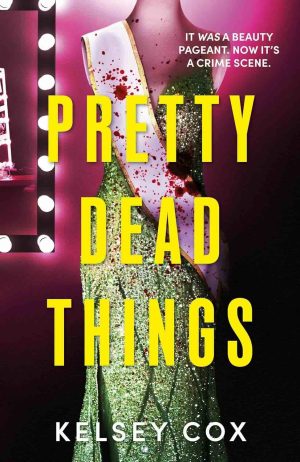
- Pretty Dead Things by Kelsey Cox, if the moral queasiness of profiting from a murder is the thread you want pulled.
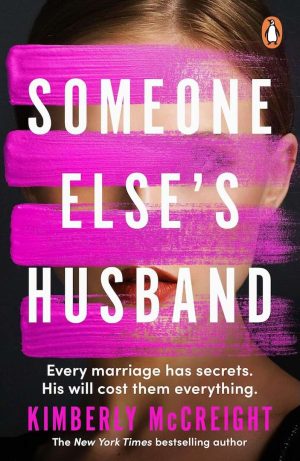
- Someone Else’s Husband by Kimberly McCreight, for a marriage dismantled in public with the same cold precision.
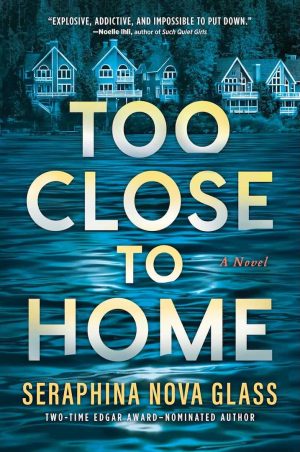
- Too Close to Home by Seraphina Nova Glass, for small-town suspicion aimed at exactly the wrong neighbour.
- Jar of Hearts and Things We Do in the Dark by Jennifer Hillier, the two books of hers this most resembles. Wonderland is set in the same town and explains the scandal everyone here keeps not naming.
The Verdict
The title comes from the Blondie song, which was Barb’s mother’s favourite record, and which she finds again in a box in the attic while looking for something else entirely. It is the best small moment in the book: a woman kneeling on a dusty floor, dropping a needle, and being ambushed by her mother in three different decades at once.
That is what Heart of Glass by Jennifer Hillier is really about, underneath the axe and the cabin and the docuseries. Twenty-five years on, everybody in Seaside can name the man who was convicted. Nobody but one person remembers that Lorelei’s favourite film was Dirty Dancing, or that she once stole a box of hair dye and came out salmon pink. The murder is public property. The girl is not.
It is not a flawless thriller. The back half asks you to accept a great deal of luck, and its monster is a hole in the shape of a man. But Heart of Glass by Jennifer Hillier is the rare book of its kind that understands the machine it is part of, and the last thing it does is hand the record back to the person who was actually there.