Thinking About Thinking in the Age of Overthinking
Have you ever found yourself spiraling down an internet rabbit hole at 2 AM, convinced that your mild headache is actually a rare tropical disease? Or obsessively analyzing a text message from your crush, certain that the placement of that emoji holds the key to your romantic future? If so, welcome to the club of magical overthinkers – population: pretty much all of us.
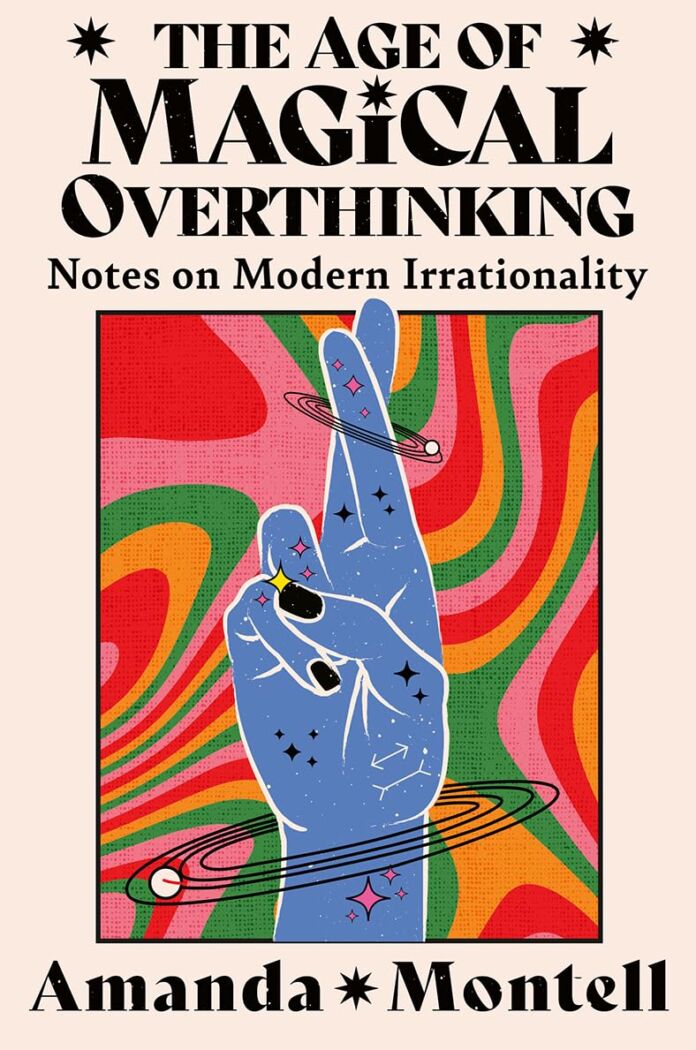
In her sharp and witty new book “The Age of Magical Overthinking,” linguist and cultural critic Amanda Montell dives headfirst into the twisty corridors of the human mind to explore why we’re all so prone to these flights of irrational fancy. Building on themes from her previous bestsellers “Wordslut” and “Cultish,” Montell turns her keen analytical eye inward to examine the cognitive biases and logical fallacies that shape our perception of reality – often in ways we don’t even realize.
A Tour Through the Funhouse Mirror of the Mind
Across eleven snappy chapters, Montell unpacks a smorgasbord of psychological phenomena that cause us to misinterpret the world around us. From the halo effect that leads us to worship (or vilify) celebrities, to the sunk cost fallacy that keeps us in bad relationships, to the proportionality bias that makes us see grand conspiracies where there are none – it’s all laid out with a blend of scientific rigor and self-deprecating humor.
Montell has a gift for explaining complex concepts in accessible, entertaining ways. She seamlessly weaves together academic research, pop culture references, and personal anecdotes to illustrate how these cognitive quirks manifest in everyday life. One moment she’s breaking down a psychological study, the next she’s recounting her own embarrassing spiral over an unanswered text. It’s like sitting down for coffee with your smartest, funniest friend who also happens to have a PhD in how brains work.
The Good, the Bad, and the Overthinking
What sets this book apart is Montell’s nuanced take on magical thinking. She doesn’t just dismiss it as foolish irrationality to be overcome. Instead, she explores how these mental shortcuts evolved to help us navigate an uncertain world, and the ways they can still serve us even in our hyper-rational age.
Take the “IKEA effect,” our tendency to place higher value on things we helped create ourselves. Sure, it might lead us to proudly display some janky homemade pottery. But it also motivates us to invest time and effort into worthwhile projects. Or consider how a dash of “proportionality bias” – the belief that big events must have equally big causes – can fuel creative problem-solving and meaning-making.
At the same time, Montell doesn’t shy away from examining the darker side of magical overthinking. She deftly connects the dots between individual cognitive biases and larger societal issues like conspiracy theories, political polarization, and toxic social media dynamics. It’s sobering stuff, but Montell’s wit and warmth keep it from feeling too heavy.
A Voice for Our Overthinking Times
What really makes this book sing is Montell’s distinctive voice. She writes with the precision of an academic and the conversational flair of your cleverest group chat buddy. One minute she’s dropping gems like “The human mind is wired for doomsday” or “Nostalgia is a timeless feeling, though it certainly has its collective spikes.” The next she’s riffing on the horrors of IKEA furniture assembly or confessing to her own internet spiral over rare diseases.
This blend of erudition and relatability is Montell’s secret sauce. She invites us to laugh at the absurdity of our overthinking brains while also extending compassion to our very human foibles. It’s a tricky balance, but she nails it.
Breaking Down the Breakdown
Strengths:
- Accessible explanations of complex psychological concepts
- Engaging mix of research, cultural commentary, and personal anecdotes
- Nuanced exploration of both benefits and pitfalls of magical thinking
- Distinctive authorial voice that’s both smart and relatable
- Timely analysis of how cognitive biases play out in our current cultural moment
Potential Drawbacks:
- Some readers may find the pop culture references and millennial humor a bit much
- Those looking for a more traditional self-help approach may be disappointed
- The rapid-fire format occasionally feels scattered, jumping quickly between topics
The Verdict: A Must-Read for Fellow Overthinkers
“The Age of Magical Overthinking” is a delightful romp through the funhouse mirror of the human mind. It’s the rare book that manages to be both intellectually stimulating and genuinely fun to read. Montell has crafted an insightful guide to navigating our irrational impulses without taking ourselves too seriously in the process.
While it may not offer simple solutions or step-by-step guides to conquering overthinking, the book provides something arguably more valuable: a framework for understanding why our brains work the way they do, and tools for thinking more critically about our own thought processes.
Fans of Montell’s previous work will find much to love here, as will readers of pop psychology hits like “Thinking, Fast and Slow” by Daniel Kahneman or “Predictably Irrational” by Dan Ariely. It’s also a natural fit for anyone who enjoys the cognitive science explorations of podcasts like “Hidden Brain” or “Invisibilia.”
Ultimately, “The Age of Magical Overthinking” is a timely reminder that in a world that often feels chaotic and overwhelming, a little self-awareness and a lot of self-compassion can go a long way. It won’t cure your tendency to overthink, but it might just help you appreciate the weird and wonderful workings of your overactive mind.
In the Context of Montell’s Work
“The Age of Magical Overthinking” feels like a natural evolution of Montell’s previous books. Where “Wordslut” explored the intersection of language and gender, and “Cultish” examined the linguistic tactics of extreme groups, this new work turns that analytical lens inward to examine the language we use in our own minds.
Readers familiar with Montell’s style will recognize her signature blend of academic rigor and millennial wit. She continues to excel at making complex subjects accessible and entertaining, while never shying away from tackling thorny issues.
Final Thoughts
In an age where information overload and algorithm-driven echo chambers threaten to fracture our shared sense of reality, “The Age of Magical Overthinking” feels particularly urgent. Montell offers us a map for navigating the treacherous terrain of our own minds, helping us recognize the cognitive pitfalls that can lead us astray.
But more than that, she reminds us of the awe-inspiring complexity of human cognition. For all our irrational quirks and logical fallacies, our capacity for abstract thought and meaning-making is nothing short of miraculous. In embracing both the brilliance and the absurdity of our overthinking brains, we might just find a path to greater self-understanding and compassion.
So the next time you find yourself lost in an overthinking spiral, remember: you’re not alone. We’re all just trying to make sense of this crazy world with our wonderfully imperfect brains. And as Montell so eloquently puts it, sometimes the truest rebellion is to “embrace our ordinariness” and find peace in the not-knowing.







