 1
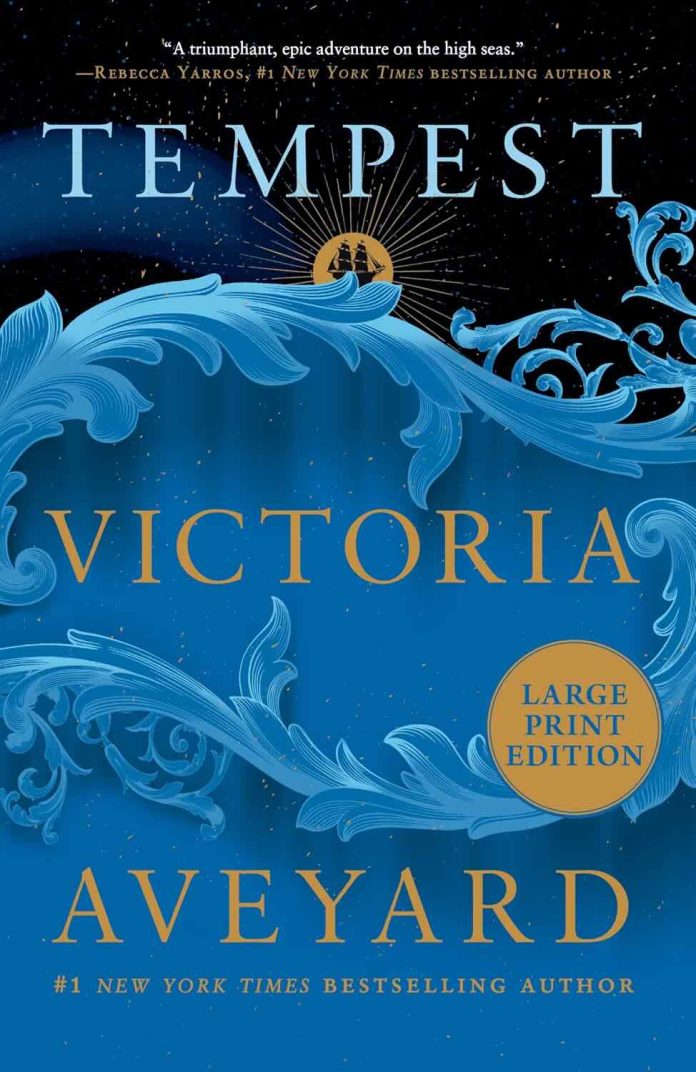
1The bodies hang from the stone arch in the harbour, five of them, and the sharks circle underneath waiting for more. In the square outside the tavern, the last pirate lord of the Lyrian Sea has been torn apart by horses, sewn roughly back together and nailed to a post, with a boy on a stool paid to keep the crows off him. Catrine Rose walks past all of it every morning on her way to work, and looks up every time, because she thinks she has earned the looking. Tempest by Victoria Aveyard opens on the wreckage of a lost war and spends five hundred pages explaining who lost it, and how.
Where Tempest Sits in Victoria Aveyard’s Career
This is the important context, and it changes what you should expect.
Aveyard has eight books behind her, all young adult: the Red Queen quartet and the Realm Breaker trilogy, both built on a fast clip, a teenage narrator and a magic system doing most of the heavy lifting. Tempest by Victoria Aveyard is her first adult novel, and it moves like one. The protagonist is thirty. She has been widowed, ruined, rebuilt and compromised. The prose has slowed down. The chapters are longer. Nothing explodes for a hundred pages.
Readers arriving from Red Queen expecting the same engine should recalibrate. Readers who found that engine tiring will find this a considerable step up.
The other shelf it belongs on is the pirate one, and Aveyard names her sources: Black Sails, Pirates of the Caribbean, Colin Woodard’s history of the Bahamian pirate republic. She is writing in a crowded tradition and knows it.
What Tempest by Victoria Aveyard Builds Its World From
The Lyrian Sea is the Caribbean with the serial numbers filed off, and the filing is done with care.
The Meridian Empire is Britain, complete with a lion on the flag, press-ganged orphans in the navy and a boy king three thousand miles away. Esperin is Spain, Itzima is a mainland kingdom to the south, and the trade routes run sugar, rum, silver and indentured servants along exactly the lines you would expect. Between them sits Arcayo, the last island nation nobody has conquered, whose people worship the sea and whose priests sing in towers.
The pirate republic at the centre of it is a genuine historical idea rather than a costume. Aveyard’s pirates elect their captains, can vote them out, take defectors from every navy in the region and hold to a code that has nothing to do with honour and everything to do with not being anyone’s property. It is the most convincing part of the world, and the novel loses something every time it leaves.
Two Timelines, and Why the Split Works
The chapters of Tempest by Victoria Aveyard alternate strictly, headed Before and After, with no other markers.
Before is ten years ago: a nineteen-year-old bride dragged across an ocean by a bankrupt lord, a raid, a shipwreck, a pirate captain with eyes the colour of a storm. After is the present, six months into the imperial reclamation, with the republic dead and Cat working for the man who hanged it.
The gap between the two women is the whole book. In the Before chapters she is a lady who cannot mend a shirt. In the After chapters she is a tavern keeper with coins sewn into her hems, a pistol in her pocket and a habit of counting cards while people talk. Watching the second grow out of the first is more satisfying than any single scene in either strand, and the parallel scenes are placed with real precision. A card game answers a card game. A cabin door answers a cabin door.
What works
- Cat herself. Self-interested, unsentimental, an excellent liar, and never once asked to apologise for it. The novel’s whole argument rests on her, and she carries it.
- The card games. Red River is invented and completely legible, and Aveyard uses it the way other writers use duels.
- The secondary crew. Ana the one-armed Arcayan first mate, Garedo, Brimley the defector, Moseley the maid who came with the house. All of them earn their pages.
- Jasper Fell. The naval officer who is neither villain nor love interest, an orphan clawing at a ladder, is the most interesting man in the book and it is not close.
Where Victoria Aveyard Gives Ground
Four things keep Tempest by Victoria Aveyard from being flawless.
- It is a first half. This is book one of a duology, and the ending is a cliffhanger delivered in an epilogue that switches point of view. Nothing resolves.
- The middle drifts. Two long stretches, one per timeline, are essentially travel and reconnaissance with the tension idling.
- The romance is all fuse. Ten years of history are established, but the on-page relationship stays at the level of held wrists and interrupted kisses. Readers arriving for romantasy heat should know it is coming later.
- The villain is a portrait. Governor Osprin is chilling in his first two scenes and unchanged by his last.
How Much Fantasy Is in Tempest by Victoria Aveyard
Very little, and this needs saying plainly.
For roughly four hundred pages this is a historical adventure with an invented map. No magic system, no creatures, nothing anyone can do that a person could not do in 1720. The Arcayan faith, the song towers and one strange gold artefact hover at the edges as belief rather than power, and the novel is genuinely better for the restraint.
Then, very late, the fantasy arrives, and the closing chapters reframe what the sequel is going to be. Whether that lands as a masterstroke or a bait and switch will depend entirely on what you thought you were reading. Go in expecting a historical novel that turns.
Do You Need to Have Read Victoria Aveyard Before?
No. Tempest by Victoria Aveyard shares no world with Red Queen or Realm Breaker and assumes nothing. What it does assume is patience, and a willingness to wait for a second volume, Tyrant, before anything closes.
Content Notes for Tempest
Public executions described in detail, including a drawing-and-quartering and a mutilated corpse displayed for months. Mass hangings. Coerced sex within a marriage, referred to often and obliquely. Sustained emotional abuse and one man’s ownership of his wife treated as law. On-page shootings, throat-cutting and naval combat with heavy casualties. Torture by flaying, reported. Amputation. Indentured servitude, sex work, colonial violence and the erasure of an indigenous people. Alcohol used heavily throughout. One scene of solitary sexual content.
Read it if / Skip it if
Read it if you want a pirate novel that takes the politics as seriously as the swordplay; if a slow-burn told across two decades sounds like a feature; if you have wanted a romantasy heroine who is genuinely, unrepentantly out for herself.
Skip it if you need a complete story in one volume; if you came for magic and will resent waiting four hundred pages; if you want the romance consummated rather than deferred.
Read these next
Five for readers who finish Tempest by Victoria Aveyard and want more of the same water:
- Capitana by Cassandra James. Caribbean-inflected piracy with a captain who has something to prove.
- What Fury Brings by Tricia Levenseller. Faster, lighter, and very sure of its sea legs.
- Hunt on Dark Waters by Katee Robert. For readers who want the heat this book keeps deferring.
- Blood Over Bright Haven by M.L. Wang. What an empire is built on, discovered too late.
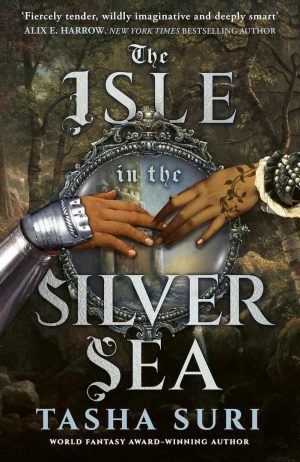
- The Isle in the Silver Sea by Tasha Suri. An island, a conquest, and a woman standing between them.
The Verdict
There is a moment on a beach where a pirate rolls up his sleeve and shows a woman a line of tattooed diamonds, then names them twice: once as they were called, once as they are called now. One of the names is the island she has been living on for six months and thought was empty.
That scene is what Tempest by Victoria Aveyard is actually about, and it is why the book earns its length. This is a pirate adventure with a colonial argument running under the deck plates, told through a woman who understands exactly what has been taken and takes anyway, because the alternative is being taken from. It is patient, occasionally slack, and unfinished by design. But when it turns, it turns hard, and the last line is a gauntlet thrown so squarely that Tyrant is going to have a great deal to answer for.