 1
1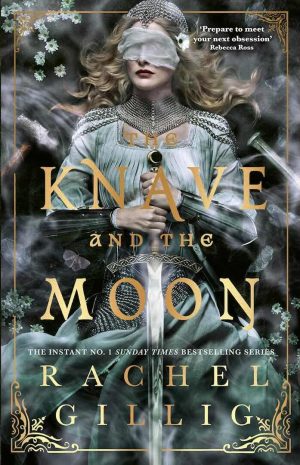 2
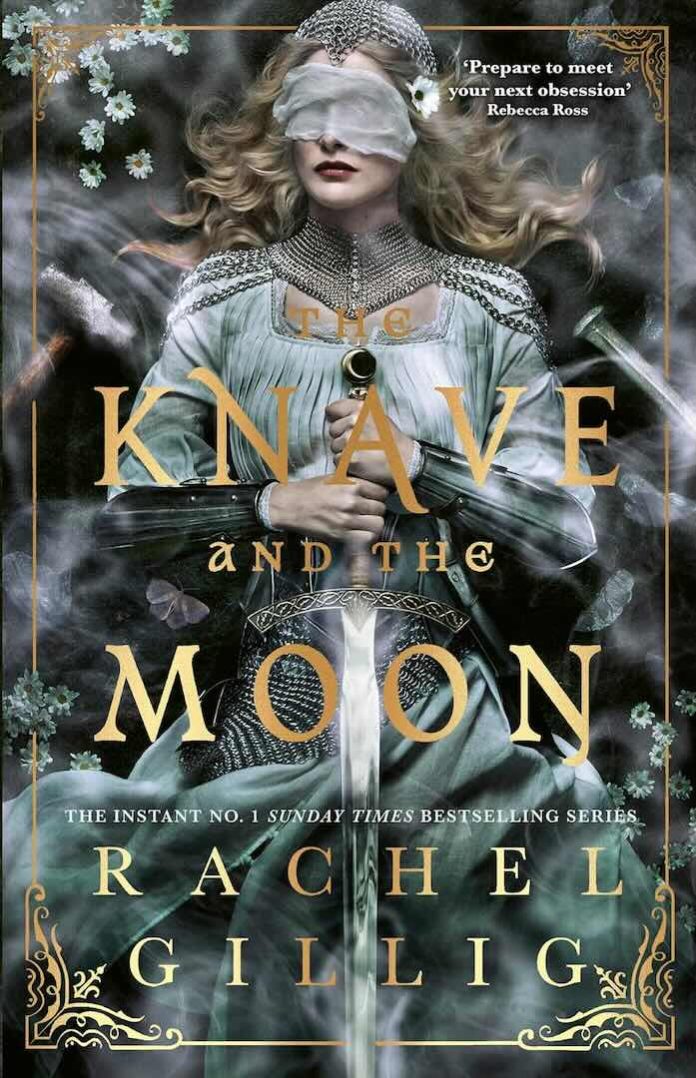
2Aisling Cathedral is rubble. The last Diviner is a queen nobody thought to ask, the man who fell at the close of the first book is upright again with no memory of his own name, and the king responsible for all of it is planning a party. The Knave and the Moon by Rachel Gillig opens on the far side of every catastrophe its predecessor spent four hundred pages building toward, and it does not pause to catch anyone up. Chapter one lands the night after; chapter two rewinds six hours; chapter five goes back five days. You are meant to be disoriented. You are meant to feel what she feels.
The second thing worth knowing is that this book finishes the job. Its predecessor read like the opening of a long series. This one reads like the back half of a duology, with an epilogue set a hundred years on and no door left obviously ajar.
Where The Knave and the Moon Sits
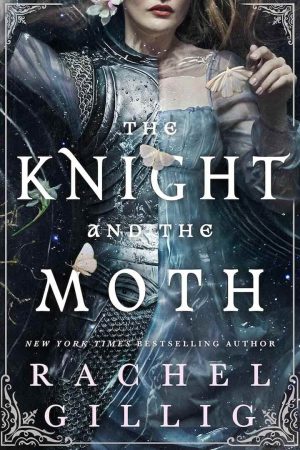
Reading order is short: The Knight and the Moth first, then this. The first book left a cathedral in ashes, five stolen relics in the hands of five knights, a forced marriage, and a body. The Knave and the Moon by Rachel Gillig picks all of it up in the same breath and starts running.
The engine here is a tournament. Benedict Castor III, having taken a kingdom by arson and blamed it on the sprites nobody likes anyway, decides the cleanest way to make the nobility kneel is to invite them to fund a spectacle he intends to win. Five events, five hamlets, five relics on the line. Sybil Delling enters to smash all five. She counts herself as the sixth, which tells you exactly how she plans to finish.
What Rachel Gillig Does With a Tournament
The conceit is the smartest thing The Knave and the Moon by Rachel Gillig has, and Gillig knows precisely what she is holding. A tournament is a market and a sermon at once: the objects are sacred because the king says they are scarce, and the crowd pays for the privilege of watching him prove it. Benji says as much out loud, cheerfully, in the tone of a man who cannot imagine being contradicted. The book then spends five parts letting the arithmetic play out in front of the people footing the bill.
The travelling minstrel is the quiet triumph. He opens with the same verse in every hamlet, tuning the flattery to the local trade: coin for the merchants, ink for the scribes, oars, chimes, looms. By the last stop, after the fires and the shaking ground, he has written a verse of his own that has no king in it at all. Gillig never once points at this. She just lets the song change while you are watching something else.
What works
The strengths of The Knave and the Moon by Rachel Gillig are mostly small and specific rather than structural, which is usually a good sign.
- The hamlets are genuinely distinct. Each is built around one craft, and the economy, manners and grudges follow from it. The Seacht’s scribes and the Cliffs’ weavers do not feel like the same village with different scenery.
- Bartholomew. The gargoyle in the pink robe and the two-horned hennin, who calls everyone by the same name and mangles every proverb he touches, is both the funniest thing here and the book’s conscience. He is also the one who works out what the tor actually is.
- The stranger romance. Rory gets his memory back early and cannot say so, which turns the courtship into a man asking his own wife for a kiss as payment. It should be a gimmick. It carries real charge instead.
- Blood as intimacy. Sybil is slowly turning to stone and needs the spring water that runs in Rory’s veins. He opens his own lip for her. The book is uncomfortable about this on purpose, and she keeps saying she refuses to become the thing she is describing.
- The suicidal plan is taken seriously. Nobody in the book finds Sybil’s arithmetic romantic. The gargoyle refuses it flatly, Rory refuses it, and the counter-argument the novel eventually makes is that she believed a lie about the shape of the world.
Where it gives ground
Four things keep The Knave and the Moon by Rachel Gillig from being the flawless close its best chapters promise.
- The five-hamlet rhythm is a loop. Arrive, feast, make a noble kneel, run the event, lose a knight, move on. Five times. The repetition is thematically deliberate, since the whole book is about history rehearsing itself, but the middle two stops read as the same chapter twice.
- Sybil spends much of the centre incapacitated. Drugged, locked in rooms, carried, kept out of her own armour. Apt for a woman being turned into a symbol, and still a long stretch in which the protagonist of a book about refusing objecthood is an object.
- Benji shrinks. He is genuinely frightening in the opening hundred pages and a shouting boy by the end, and the scene that removes him meets almost no resistance.
- One grief gets refunded. A death late on is undone within pages, memory intact, in a novel that had earned the right to keep its losses. Another death, harder and permanent, sits a few chapters away and shows exactly what the softer one cost.
Do you need the earlier books?
Yes. Not partly, not with a synopsis: yes. The Knave and the Moon by Rachel Gillig opens mid-catastrophe with no recap, assumes you know who is dead and why the relics matter, and spends its first act on a reversal that only means anything if you watched the first one happen. Read them back to back if you can. The duology is stronger read as one long book than as two.
Content notes for The Knave and the Moon
Planned suicide and sustained suicidal ideation, handled without romance but present throughout. Ritual drowning of children, referenced repeatedly. Starvation used deliberately against a child. Graphic violence, including a man burned alive and a body halved. Forced marriage, forced sedation and physical restraint. Sexual coercion, and one coerced kiss. Two explicit scenes, roughly three chillies out of five: warm, specific, not the point of the book. Animal and creature death throughout.
Read these next
For readers who finish The Knave and the Moon by Rachel Gillig and want the same weather:
- The Knight and the Moth by Rachel Gillig. The prerequisite, and the only real homework.
- One Dark Window and Two Twisted Crowns by Rachel Gillig. Her Shepherd King duology, for readers who want more of the same cards-and-curses register.
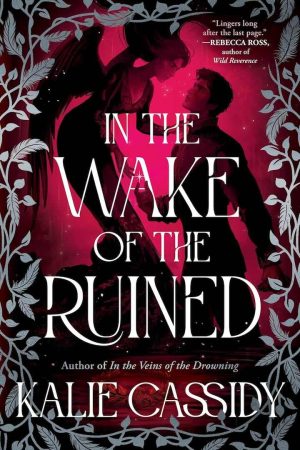
- In the Wake of the Ruined by Kalie Cassidy. Cassidy is thanked in the acknowledgments here, and the kinship shows in the bleak coastal atmosphere.
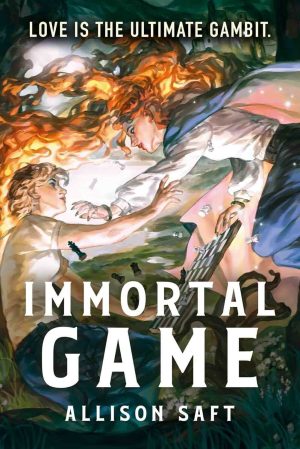
- Immortal Game by Allison Saft. A contest run as court theatre, with the same interest in who profits from the rules.
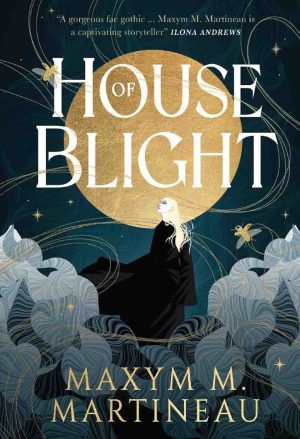
- House of Blight by Maxym M. Martineau. Gothic decay, an old estate with a secret in its foundations, and a heroine bargaining with both.
The Verdict
The Knave and the Moon by Rachel Gillig is a closing book that knows what it is for. It takes a premise that could have coasted on relic-hunting and turns it into an argument about who decides what is sacred and who pays admission, then trusts a crumbling stone comedian to say the truest thing in it. The repetition is real and so is the sag in the middle, and the last act blinks once when it should have held. What survives is a heroine who arrives planning to be a martyr and leaves having been talked out of it, which is a harder ending to write than the one where she dies beautifully. The tournament was never about the relics. It was about who was willing to stand up when the music stopped.