 1
1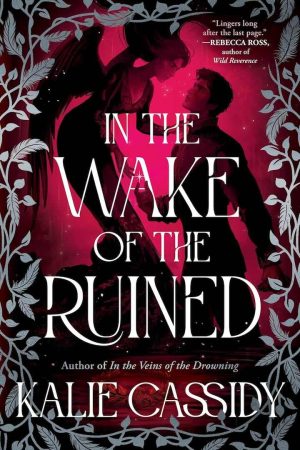 2
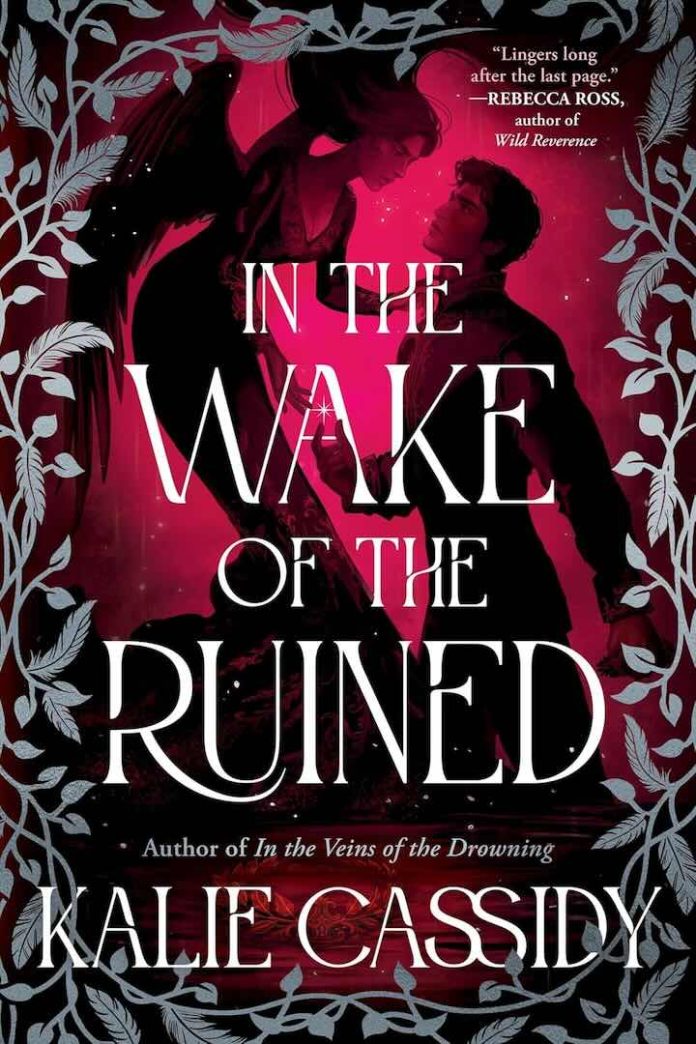
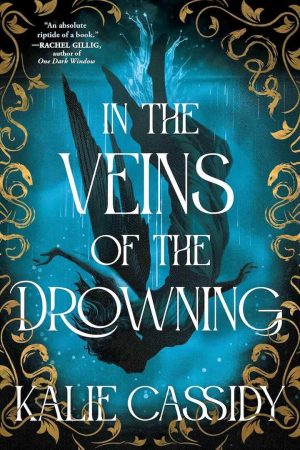
2Kalie Cassidy’s debut, In the Veins of the Drowning, ended with Imogen Nel bleeding on a beach with a dead king’s crown looped around her arm like a shackle. “In the Wake of the Ruined” opens exactly there, in the sand, with her crawling. That image is the whole book in miniature: a woman who has finally won something and can barely carry it.
In the Wake of the Ruined by Kalie Cassidy is the closing half of The Siren Mage duet, and it arrives with the specific pressures of a finale. It has to pay off a corrupted god-bond, a stalled romance, a stolen friend, a hostile council, and a wedding nobody in the book actually wants. It manages most of that with real force. And it also sags in the middle in ways worth naming honestly.
Who this book is for
- Readers who want their fantasy romance to hurt before it heals
- Anyone who likes magic systems with a literal price list attached
- Fans of morally grey heroines who are genuinely frightening, not just described as such
- Readers comfortable with open-door intimacy, on-page gore, and body horror
The Premise, Kept Clean
Imogen has claimed her father’s throne by killing him. She returns to Varya wearing a spell-sealed wound in her stomach and a bond to Eusia, an ancient, cannibal deity who now has a hand inside her power like a puppeteer’s fist. Varya’s council has condemned her. Theodore, King of Varya, is on a ship, sailing toward a political marriage he has quietly gutted from the inside.
So Imogen stows away.
That is the engine. A woman who cannot use her magic without inviting a monster to borrow it, trapped on a warship with the one man whose blood that monster wants most. The forced proximity is not a genre convenience here. It is a loaded weapon, because Eusia’s hunger and Imogen’s love have become chemically indistinguishable. Cassidy writes that confusion with unsettling precision. Imogen looks at Theodore and cannot tell whether she wants to kiss him or eat him, and neither can we.
What Cassidy Gets Right
The magic has a receipt
This is the strongest structural choice in “In the Wake of the Ruined”. Magic in Leucosia is transactional and grotesque. Blood replaces blood. Flesh replaces flesh. Spellcasters go white-eyed, lose their hair, watch their bodies begin consuming themselves. Every act of power in this novel costs somebody a piece of their body, and Cassidy never once lets a character cheat that rule for narrative convenience. The result is a story where a single spell carries the dread of a surgery performed without anesthesia.
The villain who says “it is love”
The book’s finest scene arrives early, in Theodore’s stateroom, and it belongs to Chancellor Eftan. He is not a dark lord. He is the man who raised Theodore, and he explains his atrocities as devotion. It is not power that I wield. It is love. Cassidy has written something far more disturbing than a tyrant. She has written a groomer with a filing cabinet, a man who built a king the way you might build a ship, and who genuinely believes the wood should be grateful. Every scene he is in vibrates.
Halla, who refuses to be the other woman
The rival fiancée is the trope this book most easily could have fumbled. Instead Halla becomes the most interesting question in the cast. She is devout, cunning, cruel, seasick, and desperate for one thing: to matter. Cassidy hands her a late confession that recontextualizes nearly everything she has done, and it lands like a slap. Whether you forgive her is your business. The book declines to decide for you.
The prose actually sounds like something
Cassidy spent a decade as a stage actor and it shows in the dialogue, which is playable, and in the staging, which is physical. Bodies push against rails. Rope burns palms. A wound is described as sealed kelp fused into a char-black seam. She writes the sea as a mood and a nervous system at once. There is a chapter where Imogen guides a warship through a blighted lagoon while a god’s voice chants home, home, home through her own throat, and it is genuinely great fantasy writing.
Where It Struggles
“In the Wake of the Ruined” is a very good book with visible seams. These are the seams.
- The middle third circles. Part Two settles into a repeating loop: Imogen resolves to stay away from Theodore, fails, hates herself, resolves again. The push and pull is thematically justified. It is also, around the twelfth iteration, tiring. There is a sequence of failed spellwork attempts, night after night, that is clearly designed to convey grinding futility. It succeeds a little too well.
- Imogen’s guilt becomes a tic. She blames herself, and then a supporting character tells her to stop. This happens repeatedly, almost verbatim. Agatha eventually snaps that she has no energy for it. Neither, by then, does the reader. A flaw a novel has to keep correcting starts to read as an authorial nervous habit rather than a character arc.
- The marked page problem. Theodore has stolen a stack of forbidden books, and the spell the plot requires is reliably waiting on a page he happens to have flagged. It is efficient. It is also convenient enough that you notice.
- Markis Gabros never becomes a person. He is an oily voice at the table, a function in a nice coat. In a cast this psychologically detailed, he stands out as furniture.
- The endgame arrives at a sprint after all that lingering. The final act is superb, but the pacing curve of the book is a long shallow climb followed by a cliff.
The Romance, Assessed Coldly
Theodore is the rare fantasy-romance king who is written as genuinely constrained rather than performatively burdened. His power is enormous and almost useless to him, because everything he wants is prohibited by the office he holds. Cassidy understands that duty is only tragic if it is real, so she makes his obligations real, and she makes him pay for every inch he moves.
What elevates the relationship is that it is not sustained by misunderstanding. These two understand each other immediately and completely. They are separated by contracts, by law, and by the fact that one of them is currently a delivery mechanism for a god’s appetite. That is a far more interesting obstacle than a miscommunication, and it means the yearning has architecture underneath it.
The intimacy, when it arrives, is explicit and heavily concerned with consent and choice, which fits a book whose flagship warship is named for the right of self-determination. Some readers will find the eventual central scene overlong. It is also, structurally, the argument the whole novel is making.
Read-Alikes and Where to Go Next
If you finish In the Wake of the Ruined by Kalie Cassidy with the specific ache of an ending, here is where to go:
| If you loved | Try |
|---|---|
| The corrupting bargain living inside the heroine | One Dark Window, Rachel Gillig |
| Sirens, the sea, and a prince who should know better | To Kill a Kingdom, Alexandra Christo |
| A god-bond with a body count | For the Wolf, Hannah Whitten |
| Hunger written as romance | The Serpent and the Wings of Night, Carissa Broadbent |
| Devotion that curdles into horror | Kingdom of the Wicked, Kerri Maniscalco |
And of course, do not start here. Read In the Veins of the Drowning first. This sequel assumes you remember who severed what from whom, and it does not stop to remind you.
The Verdict
What works
- A magic system with genuine, unflinching cost
- Eftan, one of the year’s best antagonists
- Halla, who earns her complication
- Prose with muscle and salt in it
What does not
- A middle section that repeats its own beats
- Guilt written as loop instead of arc
- Convenient research, thin secondary villains
In the Wake of the Ruined by Kalie Cassidy is a hungry, bruising, occasionally repetitive book that knows exactly what it wants to say about power: that everyone who holds it is being fed on by someone, and that the only real freedom is the willingness to put it down. Cassidy sticks the landing with a conviction her debut only promised. She is a serious talent working in a crowded lane, and this duet closes as one of the strongest fantasy-romance finales of the year, seams and all.
Content notes: graphic violence, body horror, mutilation, drug use, references to sexual coercion, explicit sexual content.