

The first feast in this book is a trap. In 1614 an English captain named Thomas Hunt lands at Patuxet, says he is a friend of John Smith’s, and invites the villagers aboard to eat. More than twenty accept. He sails away with them and sells them as slaves in Málaga. Squanto’s Journey by Joseph Bruchac opens with that betrayal and closes, seven years later, at a very different table, and the distance between those two meals is the whole argument of the book.
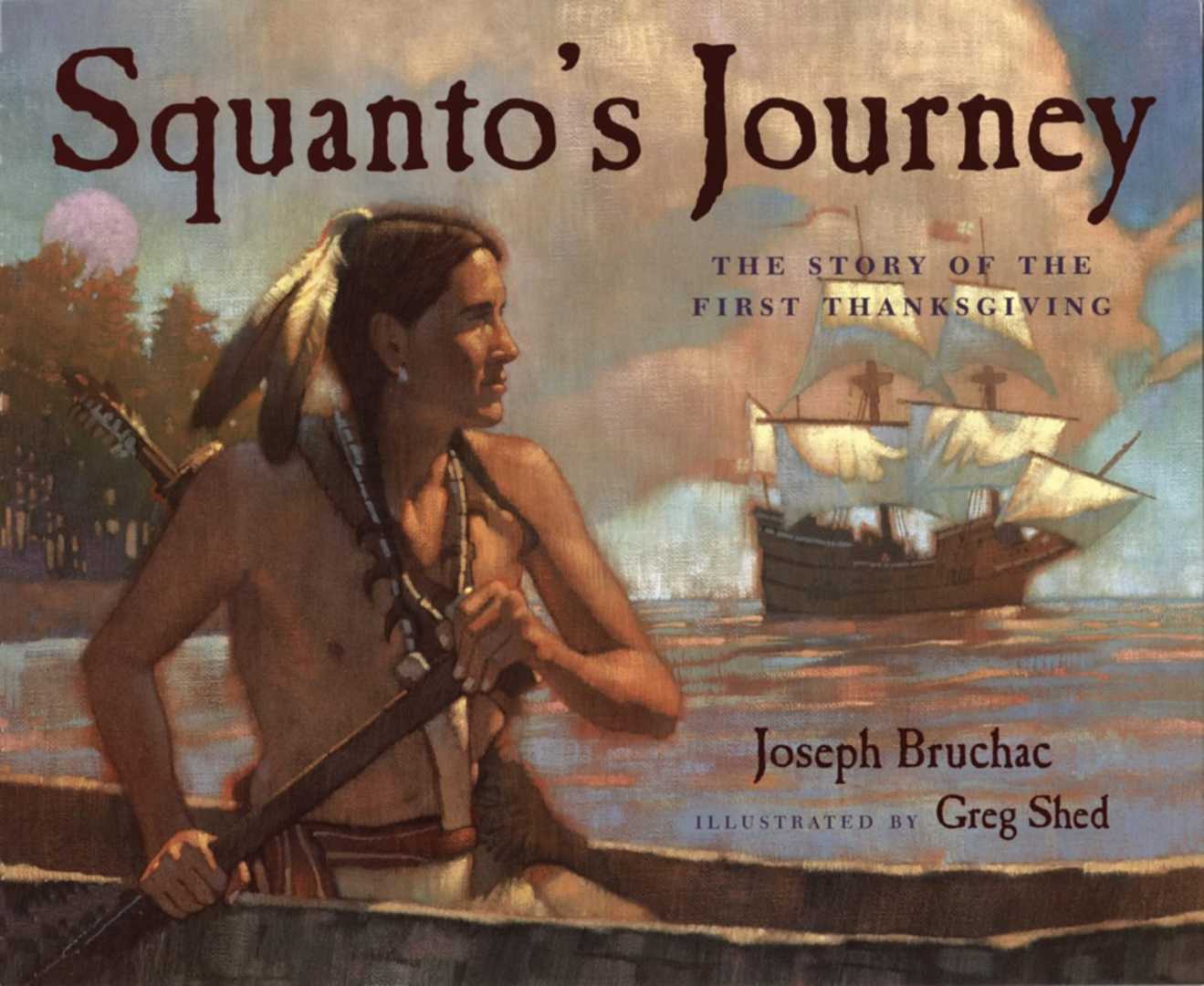
Published by Harcourt in 2000, Squanto’s Journey by Joseph Bruchac is a 32-page picture book for roughly six- to nine-year-olds, narrated in the first person by the man the Pilgrims called Squanto. Historians mostly prefer Tisquantum, the name Edward Winslow used; Bruchac’s author’s note uses both. The opening line sets the tone: “My story is both strange and true.”
A Patuxet Voice, Not a Pilgrim One
The great strength here is the narrator. Most Thanksgiving picture books are told from the Mayflower’s deck, with the Wampanoag arriving on cue in the second half. In Squanto’s Journey by Joseph Bruchac the English are the visitors throughout. Squanto explains his people’s name, the People of the Falls. He calls himself pniese, a man trained for courage and counsel, and he measures time by moons as well as years.
The voice is formal and unhurried, which suits reading aloud. Sentences are short without being babyish, and Bruchac trusts children with hard facts. Slavery is stated, not softened. So is the epidemic that emptied Patuxet before the Pilgrims arrived, and the book is clear about why the fields were bare when they landed. The settlers did not find an empty land. They found a land that disease brought by traders had just emptied.
The planting section is the heart of Squanto’s Journey by Joseph Bruchac for younger listeners. Squanto shows the newcomers how to bury small fish to feed the corn, and how to set corn, beans and squash together in hills. By harvest he is watching bean vines climb the cornstalks and thinking of two peoples entwined, an image a seven-year-old can hold onto.
How the Pictures Carry Squanto’s Journey
Greg Shed painted the book in gouache, and the layout never varies: a page of type on a pale ground faces a full-page painting. The display lettering, set in Caslon Antique, gives the opening capital an old, hand-cut look.
Shed’s palette lives almost entirely in amber, rust and late-afternoon gold, so autumn seems to hang over even the spring scenes. The best paintings in Squanto’s Journey by Joseph Bruchac are the quiet ones. Squanto stands before a waterfall with a woman and a small girl, the family the text says he lost. Later, two still lifes of the feast table, bread, carrots, squash and a heap of turkey feathers, slow the book down just before its final pages. The Pilgrims are dressed with care, in plain coats and broad hats without the buckles the author’s note mocks.
The back matter is genuinely useful. A glossary explains pniese, sachem and small water, the weak drink the settlers served. The note credits Wampanoag scholars Nanepashemet, Linda Coombs, and Russell and John Peters as sources for the telling, which matters for a book written about another nation’s history.
Where It Gives Ground
- The hope arrives too early. The story ends at the autumn 1621 feast with Squanto praying for many more shared harvests. He died of a fever in November 1622 on a trading voyage, months after Massasoit had demanded that Plymouth hand him over for scheming. None of that is hinted at, even in the note.
- Invention is not flagged. The opening insists the story is true, but almost nothing is known of Squanto’s early life. The birth year and the wife and children in the text are imaginative reconstruction, and the book never says so. Its own catalogue entry calls it fiction.
- The paintings can feel posed. Figures in Squanto’s Journey by Joseph Bruchac often stand in profile as if for a portrait, and the unchanging warm palette makes many spreads look alike.
- Politics get one line. The pressure from the Narragansett, which pushed Massasoit toward an alliance, is mentioned and then dropped.
Read These Next
Pair Squanto’s Journey by Joseph Bruchac with a newer Wampanoag-led telling, then widen the table.
- Keepunumuk: Weeâchumun’s Thanksgiving Story by Danielle Greendeer, Anthony Perry and Alexis Bunten, the 2022 Wampanoag-centred retelling to pair with this one.
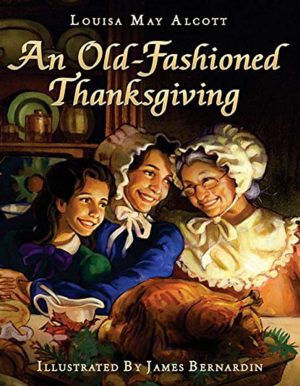
- An Old-Fashioned Thanksgiving by Louisa May Alcott, a short family read-aloud set at a New England holiday table two centuries later.
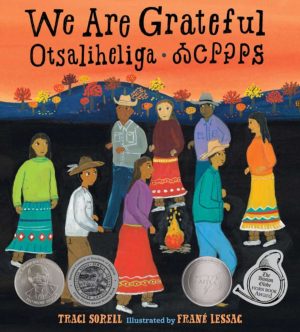
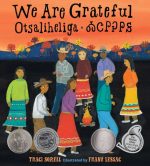
- We Are Grateful: Otsaliheliga by Traci Sorell, a Cherokee picture book about gratitude across a whole year.
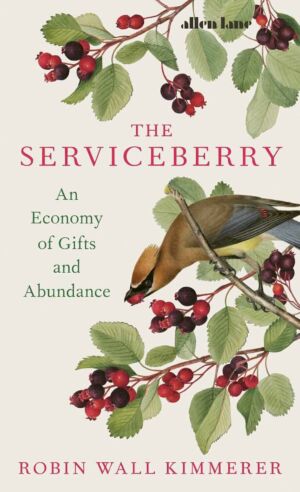
- The Serviceberry by Robin Wall Kimmerer, for the adult reader who wants to think harder about gifts, harvests and reciprocity.
- A Boy Called Slow by Joseph Bruchac, his earlier picture book about the childhood of Sitting Bull.
About Joseph Bruchac and Greg Shed
Joseph Bruchac, born in 1942 and raised in Saratoga Springs, New York, has published more than 120 books of poetry, fiction and retold stories, most of them rooted in the Northeast. The 1621 setting gives Squanto’s Journey by Joseph Bruchac an obvious place on a Thanksgiving shelf, though the author’s note frames it as a survival story first. Greg Shed is a picture-book painter whose sunlit historical scenes suit this kind of story.
- Bruchac co-wrote the Keepers of the Earth series with Michael J. Caduto.
- He received the Native Writers’ Circle of the Americas Lifetime Achievement Award in 1999.
- He identifies as Abenaki, but the Odanak First Nation contests that identity; a 2025 genealogical report it commissioned with Wôlinak questioned his descent, and the Vermont groups dispute its findings.
- Shed illustrated Eve Bunting’s prairie picture book Dandelions in 1995.
The Last Word
As a portrait of one man’s survival, Squanto’s Journey by Joseph Bruchac is serious, humane and beautifully illustrated, and it treats young readers as able to hear about slavery and plague. As a history of the 1621 harvest celebration it is incomplete, because it stops at the most hopeful moment. Read it during Thanksgiving week, then tell your listeners what happened the following year. The story only gets truer.