 1
1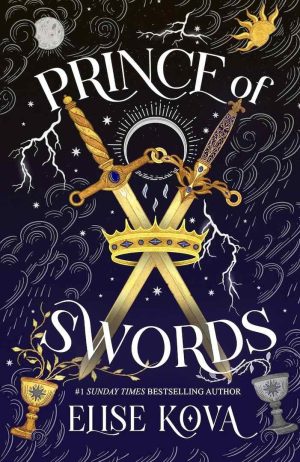 2
2Some sequels coast. This one bleeds.
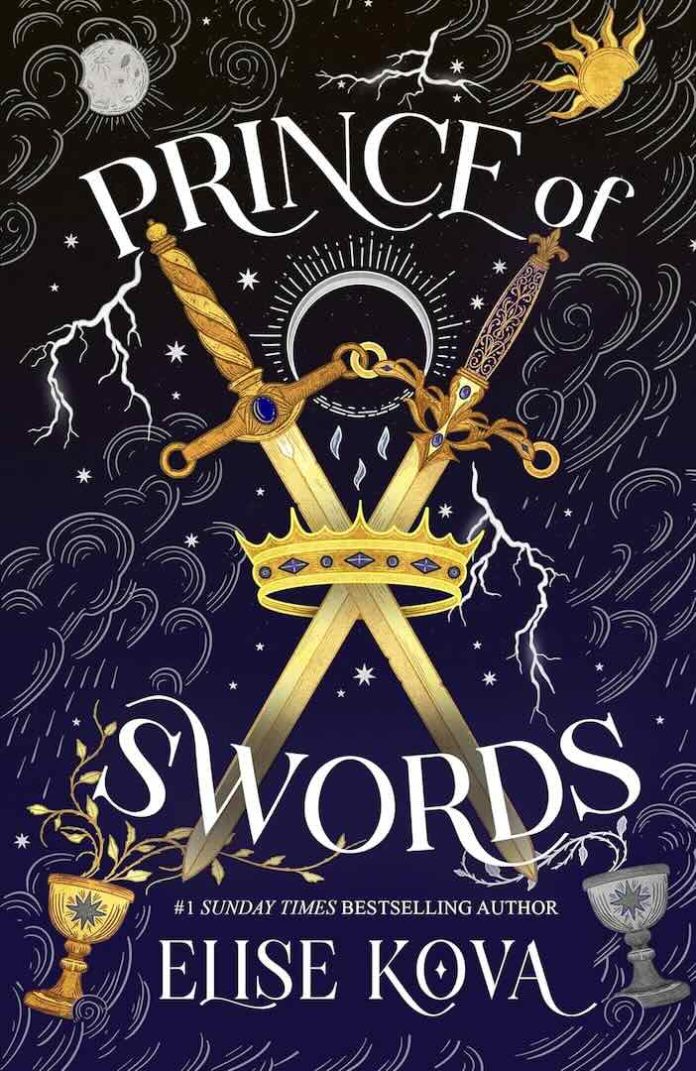
Picking up in the same breath where the first book dropped its knife, Prince of Swords by Elise Kova opens with Clara Graysword bound, beaten, and bargaining with nothing but spite. There is no gentle reintroduction, no summary chapter to ease returning readers back into Oricalis. Kova assumes you remember, and she is right to. Within forty pages the story has already burned down more of its own foundations than most second books manage across their full length.
The Spread So Far: Reading the Arcana Academy Series in Order
The trilogy is short, and the reading order matters enormously here.
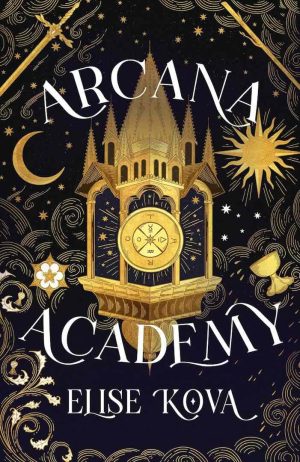
- Arcana Academy (Book One) introduces Clara, the tarot magic system, the Chalice, and the false engagement that pulls a street Arcanist into a prince’s orbit.
- Prince of Swords (Book Two) widens the map, brings in the Worldkeepers, and pushes the romance from denial into open devotion.
- Arcana Academy, Book Three (forthcoming) will close the story. The final page of this volume makes that wait feel almost cruel.
Skipping the first book is not an option. Too much of the emotional weight rests on relationships and losses established there.
Clara Graysword, Upright and Reversed
The strongest thing about Prince of Swords by Elise Kova is what it does to its narrator.
Book one gave us a clever thief with a chip on her shoulder. This one strips that away and asks a harder question: what is a person willing to surrender in order to survive, and at what point does the surrendering become the self? Clara spends this book shedding names, faces, allies, and certainties. Kova refuses to let those subtractions be painless. Every gain arrives with an invoice attached, and Clara pays in full, usually in front of us.
Her voice carries it. Written in first person present tense, the prose stays tight against her ribs, clipped and physical when she fights, looser and warmer when she is safe enough to be tender. That intimacy is the book’s greatest asset. It is also, occasionally, its cage. Because we never leave Clara’s head, entire political shifts happen offstage and reach us secondhand, reported rather than felt.
The Prince Behind the Title
Kaelis is the reason the series has a fandom, and Kova knows it.
What impresses is that she resists making him safe. The second prince of Oricalis remains genuinely frightening, and the book is honest about the fact that Clara loves him anyway, with clear eyes. Their scenes together carry a specific charge that comes from two people who have both done terrible things and refuse to flinch at each other. The banter is sharp without tipping into quip-for-quip fatigue. The vulnerability, when it arrives, arrives late and earns its place.
That said, the romance now sits at the center of gravity in a way it did not before. Readers who came for the academy politics and the puzzle-box magic will notice how much runway gets handed to the couple.
What the Deck Delivers
- A magic system with real rules. The Minor Arcana function as a tactical toolkit, and fight scenes read like duels between two people counting cards. The included glossary is genuinely useful rather than decorative.
- Consequence that sticks. Deaths land, injuries linger, and the cast that survives is measurably smaller and sadder by the end.
- Trauma written with patience. A recovery arc runs through the middle of the book and refuses easy fixes. One conversation about the ethics of removing another person’s pain is the smartest thing Kova has written in this series.
- Found family that is allowed to change shape. Not every friendship survives the plot, and not every survivor stays. That restraint feels honest.
- A closing sequence that reframes everything. The last three chapters are a genuine escalation, not a stall.
Where the Cards Fall Short
No sequel this ambitious escapes clean, and the criticisms are worth stating plainly.
- The middle sags. Between the opening escape and the final act, the book settles into a loop of research, tension, and postponement. Several chapters could be compressed without losing anything.
- The Worldkeepers stay thin. For an ancient order carrying the story’s central mythology, they never quite become people. Vaduin gets shading; most of the rest remain names attached to functions.
- Convenient allies. Clara acquires cooperative Majors with surprising ease. A power fantasy is fine, but a few of these alliances resolve before they have generated any real friction.
- Escalating exposition. Late revelations arrive in dense conversational blocks. The information is fascinating; the delivery is often two people explaining lore to each other in a quiet room.
- Spice pacing. The intimate scenes are well written and unapologetically explicit, though a couple of them interrupt momentum at exactly the wrong moment.
These are the complaints of a reader who cared, not one who was bored. The four-star consensus feels accurate rather than grudging.
Craft, Voice, and Atmosphere
Kova writes Oricalis with a grubby, tactile specificity that keeps the dark academia setting from turning into wallpaper. Rot Hollow smells of refuse and wet stone. The academy is cold in a way that gets into the joints. Ink, powder, and paper are treated as real materials with real scarcity, which grounds the magic in labor rather than in vibes.
She also has a gift for the small domestic beat placed directly beside horror. A cat on a settee. A recipe nobody can quite reproduce. Mulled wine poured for the dead. Those moments do more emotional work than any battle in the book.
Content and Reader Guidance
The author opens with a note naming the difficult material ahead, and readers should take it seriously. Prince of Swords by Elise Kova is markedly darker than its predecessor, with sustained depictions of captivity, torture, grief, and psychological aftermath, alongside frank sexual content. This is adult fantasy romance, not crossover YA.
Who This Book Is For
- Readers who want their romantasy with actual body count and actual stakes.
- Fans of morally compromised love interests who stay compromised.
- Anyone drawn to hard magic systems with published rules.
- Tarot enthusiasts curious about a fictional system that respects the source symbolism.
Less ideal for readers seeking a self-contained story, a light academic setting, or a gentle romance.
If You Finish This and Need Another Deck
- Ninth House by Leigh Bardugo, for occult secret societies and a heroine who bites back.
- The Bone Season by Samantha Shannon, for tarot-adjacent classification magic and a hunted narrator.
- The Atlas Six by Olivie Blake, for ambition, secrecy, and academic knives.
- The Foxglove King by Hannah Whitten, for court intrigue braided with forbidden power.
- Fourth Wing by Rebecca Yarros, for a magical school with lethal stakes.
Newcomers to the author should also look at her backlist. The Married to Magic standalones, beginning with A Deal with the Elf King, offer lighter romantic fantasy, while Air Awakens and the Loom Saga show the epic scaffolding she built her career on. Her Dragon Cursed series runs closer in tone to this one.
The Final Reading
Prince of Swords by Elise Kova is a middle book that behaves like a hinge rather than a holding pattern. It drags in places, and it leans harder on romance than the first installment did, but it also risks more, breaks more, and asks better questions about what a person becomes when they are handed the power to rewrite everything.
Read it for the ending. Then brace for the wait.