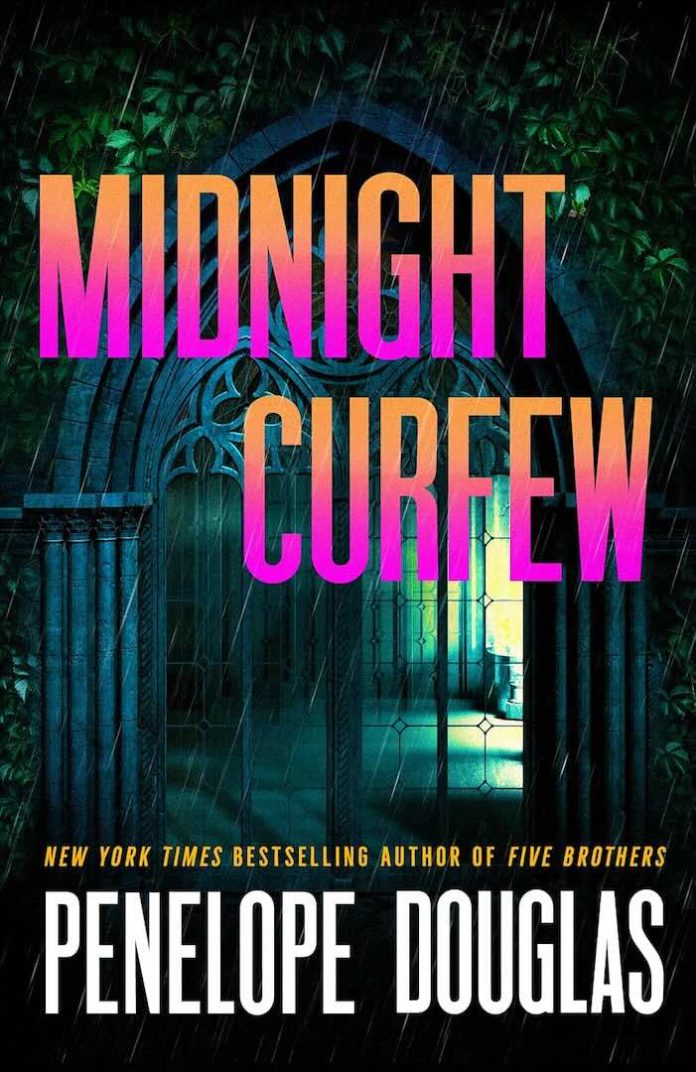
An emergency alert goes out to every phone on one side of a Florida town. Severe summer storms, high winds, curfew in effect from midnight until six, running through October. It reads like weather. It is not weather. Somebody with money has worked out that a community whose people clean hotel rooms at dawn and close bars at two cannot survive a rule that makes it illegal to be outside at night, and he has written that rule specifically to trap one man. Midnight Curfew by Penelope Douglas hangs an entire novel on that single piece of paperwork, and it is the most efficient thing she has built in years.
How Midnight Curfew Is Built
The architecture is worth describing, because it does most of the work.
Two narrators alternate, both in first person present tense. Dallas Jaeger is twenty-five, teaches philosophy at the private academy on the rich side of the tracks, and belongs to a family that has held its land for five hundred years by refusing to be moved. Callum Ames is twenty-two, has just come home from university, and belongs to the family trying to take it. They have five years of history that nobody else knows about.
Cut into that present are chapters headed Five Years Ago, and Douglas doses them with real discipline. Each flashback arrives at the exact moment the current scene has raised a question you want answered, and it answers only that question before withdrawing. By the time the last one lands, you understand a cruelty that read as ordinary spite two hundred pages earlier. It is the cleanest structural work in Midnight Curfew by Penelope Douglas, and it is why a very long book moves.
The Curfew as a Clock
The other load-bearing device is the deadline. Everything in Midnight Curfew by Penelope Douglas happens against a countdown: five years of a land agreement running out, a curfew that expires at midnight every night, a storm season closing in.
That gives even the quiet scenes tension, and it solves the problem dark romance usually has, which is that the couple could walk away at any point and the book has to invent reasons why they do not. Here they genuinely cannot. He controls the man’s employer. His family controls the man’s territory. Every private encounter costs one of them something public.
Underneath it runs the philosophy classroom, which I expected to be decoration and is not. Dallas teaches Seneca, keeps a small statue of the philosopher with his student Nero on the windowsill, and spends three separate class scenes arguing with teenagers about whether freedom means having no rules or having enough discipline to not need them. The novel’s whole thesis is in those scenes, and it is stated by seventeen-year-olds rather than by the narrator, which is a much better decision than it sounds.
What works
The strengths of Midnight Curfew by Penelope Douglas are mostly in the supporting structure.
- The family. Six Jaeger siblings, a sister-in-law, a fiancée and assorted children, all crammed into one restored house, all talking over each other. The breakfast scenes are the warmest writing here and the reason the stakes register.
- Two symbols that pay off. A pair of parentheses drawn on a bedroom wall, and a lullaby used to bring somebody down from a panic attack. Both are introduced without explanation and both land hard later.
- The town. Sanoa Bay is genuinely imagined: the paved roads that took a decade, the liquor moved by airboat through the swamp, the one restaurant that stops charging after a storm.
- A speech about two thirds through. The eldest brother tells Dallas he has exactly two jobs in life, and names them. It is the best page in the book.
- The comedy. A getaway staged in a stolen golf cart. A brother’s assigned career that arrives as a punchline in the final pages. Douglas has always been funnier than her reputation suggests.
Where Midnight Curfew Gives Ground
Three things hold this back.
- The middle repeats its beat. Confrontation, insult, sex, separation, repeat. It is well written every time and there is at least one cycle too many before the plot moves again.
- One character exists to be hated. A friend of Callum’s is given no interior life at all, only escalating cruelty, and the novel disposes of him offstage in a way that is convenient rather than earned.
- The last act resolves fast. A problem the book has spent four hundred pages establishing as unsolvable is solved in roughly two scenes, one of which turns on a security camera.
Do You Need to Read Five Brothers First?
No, and the author’s note says as much. This is a standalone in the world of Five Brothers and Tryst Six Venom, with a family tree in the back for anyone who wants it. Readers coming in cold will follow everything. Readers who know the earlier books will get more out of the eldest brother’s marriage and a great deal more out of the final chapter.
Content Notes for Midnight Curfew
Read these before you buy. The novel opens with the author’s own warning list, and it is not padding. Midnight Curfew by Penelope Douglas contains sustained sexual content that is graphic even by this author’s standards, including group scenes and voyeurism in a private club. It contains the grooming and sexual abuse of a minor by a stepparent, described in retrospect and referred to repeatedly, and the trafficking of that character at a party. There is coercion, dubious consent, and sex used openly as a bargaining chip. There is a parent’s suicide, recounted several times in detail by a child who was in the house. And there is a fatal fall, a murder, domestic violence, homophobia, racism, class violence, on-page beatings, a firearm pointed at children, and a young woman living with PTSD and age regression. Alcohol is used as an escape throughout and the book says so.
Read it if / Skip it if
Read Midnight Curfew by Penelope Douglas if you want a dark romance with an actual plot around it; if enemies-to-lovers with five years of real history is your thing; if you like a book that argues with itself about freedom in between the sex scenes.
Skip it if any item on that content list is a hard limit; if you need a hero who is likeable early; if explicit means explicit is more than you want. This is not a soft book and never pretends otherwise.
Read these next
Five for readers who finish Midnight Curfew by Penelope Douglas and want the same voltage:
- Five Brothers by Penelope Douglas. The same family, the same town, and the obvious next stop.
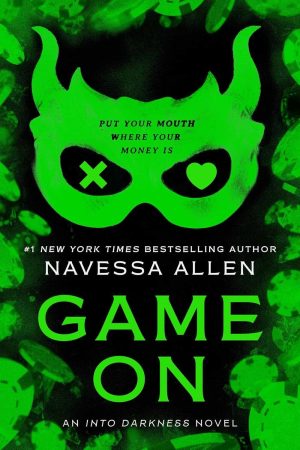
- Game On by Navessa Allen. Dark, funny and just as unembarrassed about what it is.
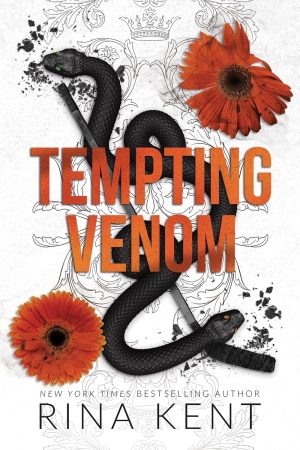
- Tempting Venom by Rina Kent. For readers who want the power imbalance turned up rather than down.
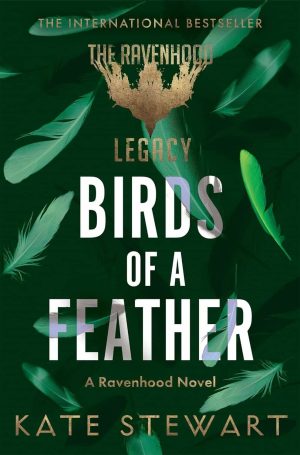
- Birds of a Feather by Kate Stewart. Slower, sadder, and similarly interested in what people do to each other over years.
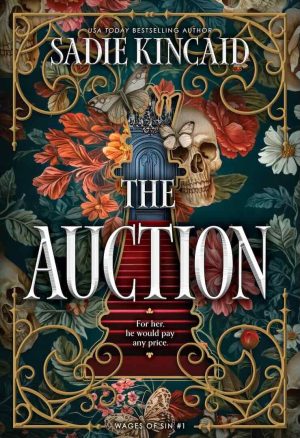
- The Auction by Sadie Kincaid. If the club chapters were the draw rather than the deterrent.
What Stays With You
The statue on the classroom windowsill shows an old philosopher trying to teach a boy who is not listening, and Dallas keeps it because it reminds him what happens when nurture loses to nature. Late on, he realises he had the casting wrong. He was never Seneca. The novel is smart enough to let him work that out himself rather than announcing it, and that single reversal is worth more than the entire final chase. Midnight Curfew by Penelope Douglas is a long, filthy, loud book that also happens to be about whether a person can stop being an escape artist, and the answer it gives is neither easy nor free. Whether you can reach that answer depends entirely on the content list above, which is why it sits where it does in this review.