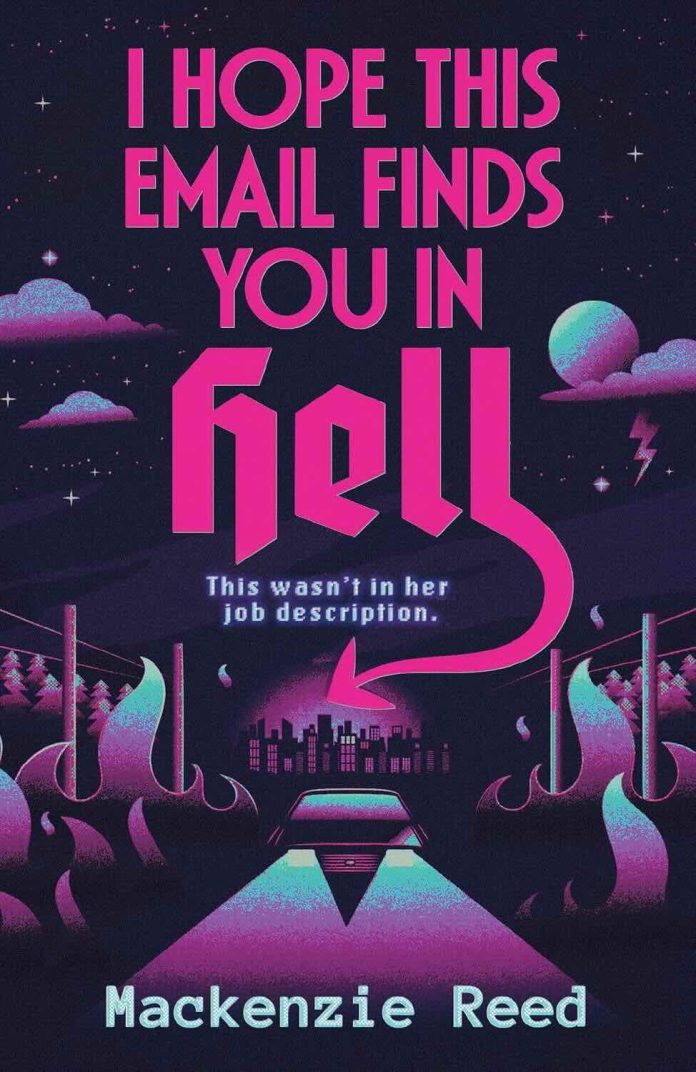
Hell has an org chart. That is the first thing worth knowing about I Hope This Email Finds You in Hell by Mackenzie Reed, and it is the reason to pick the book up. The fifty states map onto departments in a firm that has been running a very long time. Pennsylvania is Mining. New York is Marketing and Publicity. Iowa is Agriculture, Oklahoma is Customer Support, and California is Transportation, which is also where head office sits. Souls do the manual labour and also serve as the currency, which is the joke underneath the joke. You get in through a door at the 42nd Street subway station, past a ticket booth staffed by someone who would rather you had your paperwork ready.
Mackenzie Reed has written two young adult novels, The Rosewood Hunt and The Wilde Trials. This is her first book for adults, and the shift shows in both directions.
Where I Hope This Email Finds You in Hell Begins
Brie Benson is twenty-seven and answers phones at a life insurance company in Tarrentown, Pennsylvania. She dropped out of medical school in her third year, after a car accident on New Year’s Eve that killed her parents. She will not drive after dark. She has panic attacks. She takes her medication when she remembers to, which is not often, and she has arranged her life so there is almost nobody left in it to lose.
The exception is Krystal Santiago, who sits two desks over and calls her angel. When Krystal disappears, along with two other local women, Brie’s new boss tells her something no reasonable person would believe and then proves it in his office. What follows is a road trip: four days, coast to coast, through terrain that looks unnervingly like the interstate system with worse signage.
The Best Idea in I Hope This Email Finds You in Hell
The corporate framing is not a gag Reed uses once and drops. It is load-bearing, and she works it hard.
There is an executive floor. There are seven regional devils, an unseen chairman, and a constant sense that everyone below the top is managing upward. Sin is treated as a renewable energy source, which is why management encourages it. The two hell hounds pursuing our heroes across five states are, structurally speaking, employees with targets. When a demon lists the charges against a trespassing human, he includes the shipping delays.
The best version of it arrives quietly in an early chapter, in a running complaint about a fax machine nobody in the office can operate except Brie. Watch that. I Hope This Email Finds You in Hell by Mackenzie Reed sets it up as a throwaway and then makes it carry the ending, which is the most satisfying piece of construction here and the thing I would most like to describe and cannot.
What works
The pleasures of I Hope This Email Finds You in Hell by Mackenzie Reed are mostly texture rather than plot.
- The rules for staying human. Eat three meals whether or not you are hungry. Sleep. Lean into fear instead of shutting it out. People who stay too long stop feeling hunger first, and they never notice it happening.
- The Night Market. A time loop, a fiddler whose songs are warnings, a blind seller with two potions on offer, a snake dancer who matters later. The most inventive twenty pages in the novel.
- Krystal. A wife, two daughters, a dead sister, and a friendship written with enough specificity that the rescue has real stakes.
- The comic register. Brie deflects with jokes constantly, and the book knows this is a symptom rather than a personality. Her humour gets worse the more frightened she is.
- The bisexual lead, handled without ceremony. A former partner turns up mid-book, the fact is noted in a few lines of dialogue, and nobody makes a speech.
Where it gives ground
Five things stop I Hope This Email Finds You in Hell by Mackenzie Reed from being as good as its premise.
- The middle is episodic. A vampire motel, a ghost town, a market, a diner. Each set piece is fun and almost none of them compound.
- The book changes antagonists at the two-thirds mark, and the replacement gets roughly forty pages to establish himself before the climax needs him.
- A long chapter of two people tied to chairs explaining the backstory to each other. The information is good. The delivery is a deposition.
- The same argument three times. He tells her to go on without him. She refuses. Three locations, near-identical beats.
- The sex scene is in the wrong place. Reed thanks her editors in the acknowledgments for pushing her to raise the heat, and the scene is well written and genuinely tender. It also happens hours after a near-fatal injury, in a bathroom, with a global deadline running.
The romance, and the spice question
For readers deciding whether I Hope This Email Finds You in Hell by Mackenzie Reed is a romance with fantasy in it or the reverse: roughly even, with the balance shifting as it goes. The first third is a workplace slow burn conducted almost entirely through a weekly report. The middle is forced proximity in a van. The last third goes open door, twice, at a level closer to a Berkley contemporary than to most romantasy.
The relationship works because of one choice. Luke’s central deception is not the standard withheld secret used to detonate a third act. It is something he is ashamed of, and the novel treats the shame as the actual subject, which gives the reconciliation something to be about besides forgiveness.
Content notes for I Hope This Email Finds You in Hell
A fatal car accident revisited in fragments, with survivor guilt and intrusive flashbacks. Panic attacks on the page. Discontinued psychiatric medication. Parental death, and a sibling lost to overdose in backstory. Abduction and poisoning of women. A named character killed on the page and left behind. Graphic wounds, blood loss, amateur surgery. Body horror. Two explicit sex scenes and frequent profanity. Souls held as property and discussed in economic terms. Anyone who finds post-traumatic stress after a road collision hard to read about should know it is the emotional spine of I Hope This Email Finds You in Hell by Mackenzie Reed, not set dressing.
Read it if / Skip it if
Read it if the phrase “hell has a customer support department” made you sit up; if you want a paranormal romance whose underworld is genuinely funny rather than merely grim; if a road trip appeals more than a single location.
Skip it if you need a tightly plotted second act; if explicit content mid-crisis breaks your immersion; if you would rather the underworld were treated with reverence.
Read these next
Five for readers who finish I Hope This Email Finds You in Hell by Mackenzie Reed and want the same weather:
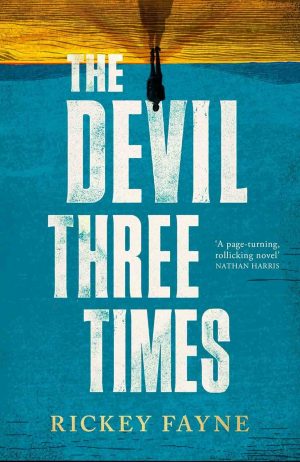
- The Devil Three Times by Rickey Fayne. The devil as a recurring presence across generations, played straight and beautifully.
- When Devils Sing by Xan Kaur. Southern gothic, a bargain, and a much colder hand on the wheel.
- A Tale of Dreams & Demons by Elizabeth Hernandez. Demon romance with a similar willingness to be silly.
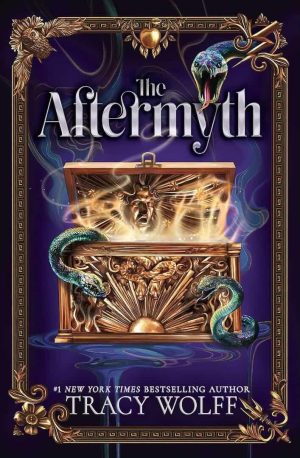
- The Aftermyth by Tracy Wolff. Another underworld run on rules, with a mortal learning them the hard way.
- Good Omens by Terry Pratchett and Neil Gaiman. The ancestor of the administrative-hell joke, and still its best version.
The Last Word
I Hope This Email Finds You in Hell by Mackenzie Reed is a first adult novel doing three things at once and doing two of them well. The world is a fresh piece of invention that keeps paying out rather than exhausting itself in fifty pages. The relationship is warmer and more particular than the premise promised. What sags is the plumbing between them: an episodic middle, and a late substitution of villains the last hundred pages never fully recover from. Even so, this is a book that understands its own heroine. Brie stops eating, stops sleeping and stops feeling afraid, and everyone around her treats that as the emergency it is. Reed built an entire underworld to make a point about a woman who has been quietly disappearing for a year, and got a road trip, a demon hunt and a decent romance out of it besides.