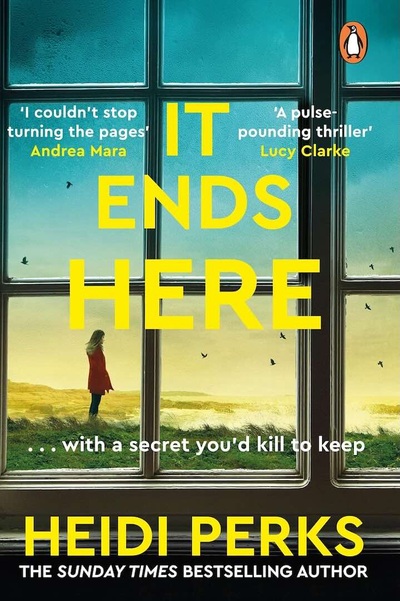
At 7.26 on a Monday morning in March, a boat owner sitting on deck with his tea and bacon sandwich hears a gunshot from The Boatyard, the café on Port Marina outside Newport on the Isle of Wight. Then a scream. Then nothing. When the police ring him back he can describe, in unsettling detail, the five people who walked in after opening: the waitress who unlocked at seven, a jogger in shiny multicoloured leggings, a man in a blazer from a black BMW, a woman in a calf-length puffa coat who came on foot, and a tall man he half recognises from television. It Ends Here by Heidi Perks makes that witness statement its first move, and every chapter after it is a game played with those five pieces.
How it works
The rules arrive cleanly within the first quarter. The café’s shutters are down, the landline rings out and three of the five phones are switched off. Detective Inspector Aaron Field, running the case from Southampton, makes the call to treat it as a hostage situation and catches the nine o’clock ferry from Lymington. Then the marina owners reveal cameras at the back that even the staff do not know about, and the footage settles it: nobody else came in or went out. Whoever fired the shot walked in with the others. That locked-room logic is the whole premise of It Ends Here by Heidi Perks, and Perks states it early so that you start profiling the five at the same moment the police do.
From there the book runs on three tracks:
- The siege clock. Field’s chapters are stamped in police time, 07.30 hours onwards, so you always know how long the room has been silent.
- The relatives. Ede, the waitress’s ailing grandmother; Rosa, wife of the crime novelist Daniel Williams; Liv, whose City husband Jacob told her he had a meeting “on the south coast”; and Gareth, married to an Instagram mother of two. Each gets a run of chapters, and each is asked the question nobody wants to hear.
- The voice inside. Short first-person sections, dated Monday morning and afternoon, come from the person holding the gun, addressed throughout to an unnamed “you” waiting somewhere outside.
Where Heidi Perks Hides the Gun
The cleverness of It Ends Here by Heidi Perks is that it hands you the gunholder’s thoughts on page one and still keeps the name back. The confessional voice is warm, frightened and full of love, which is exactly what makes it hard to place. It could belong to almost any of the five, and Perks writes the relatives so that each one could be the person it is speaking to. She also uses those sections as a pacing device: each arrives just after a relative’s chapter has built a case against someone, and each quietly nudges your suspicion somewhere else.
That is the real engine. The police ask every spouse the same thing: has your husband or wife ever suffered from depression? Each one says no, and then the book follows them home to watch the denial wear thin. The procedural is there to keep the clock honest. The suspense lives in the kitchens and car seats of people discovering how little they knew about a Monday-morning routine.
Field’s negotiator, Sarah Connelly, frames the puzzle with the textbook logic of crisis negotiation: hostage-takers act for political, criminal or psychological reasons, and silence rules out the first two. The longer nobody picks up, the more personal it looks. By the halfway mark It Ends Here by Heidi Perks has shifted from “who” to “why these five, and why this café”, and the second question is the better one.
What Heidi Perks gets right
- The fairness. The solution is seeded early and in plain sight. Readers who track the timestamps, the cars in the car park and who walked rather than drove will have a real chance, and the reveal reframes earlier chapters rather than contradicting them.
- Aaron Field. A refreshingly undramatic detective, twenty-six years in, managing a boss who wants certainty every hour and chewing on the fake cigarettes his wife made him carry after he quit. His decency gives the final chapters their weight.
- The witness. Franklin Henderson, ex-military and far too observant, is a superb piece of misdirection-in-plain-sight, a man whose helpfulness becomes its own question.
- The landing. The ending refuses to let anybody off cleanly, and a short coda set a month later lets the damage settle in a way most siege thrillers skip.
Where It Gives Ground
For all its control, It Ends Here by Heidi Perks has soft spots, and most of them sit in the middle hours.
- The middle circles. Between roughly the second and fourth hours, the relative chapters repeat one beat: a phone call, a lie discovered, the mental-health question, a flare of doubt. Each is well written; together they slow the clock.
- Some doors open on cue. A key witness sits on what he knows for hours, and a records search that cracks the case comes back in fifteen minutes. Both feel arranged.
- The backstory arrives as monologue. When the motive surfaces, much of it comes through long speeches in the café rather than scenes, and one of the people inside is drawn as little more than a sneer.
- Copy slips. Late on, the café is briefly called The Boathouse, and a remembered encounter is dated a year ago in one chapter and a couple of years in another.
Read it if / Skip it if
Read it if you:
- Like a closed-room puzzle where the suspects are also the victims.
- Enjoy multiple-viewpoint domestic suspense with a ticking clock.
- Want a thriller whose ending leaves you arguing about fault.
Skip it if you:
- Want tactical, guns-drawn siege action. This one stays outside the door.
- Lose patience with repeated scenes of characters doubting their partners.
- Need a single sympathetic hero to root for.
Read These Next, If It Ends Here Hooks You
This is Perks’s eighth novel. Her debut, Now You See Her, was a Richard and Judy Book Club pick, and Come Back for Me, Three Perfect Liars, The Whispers, The Other Guest, The Last Resort and Someone Is Lying followed. After It Ends Here by Heidi Perks, try:
- Now You See Her by Heidi Perks, for her missing-child breakthrough and the same interest in what friends hide.
- The Guest List by Lucy Foley, for rotating voices on an island and a wedding party in which everyone has a motive.
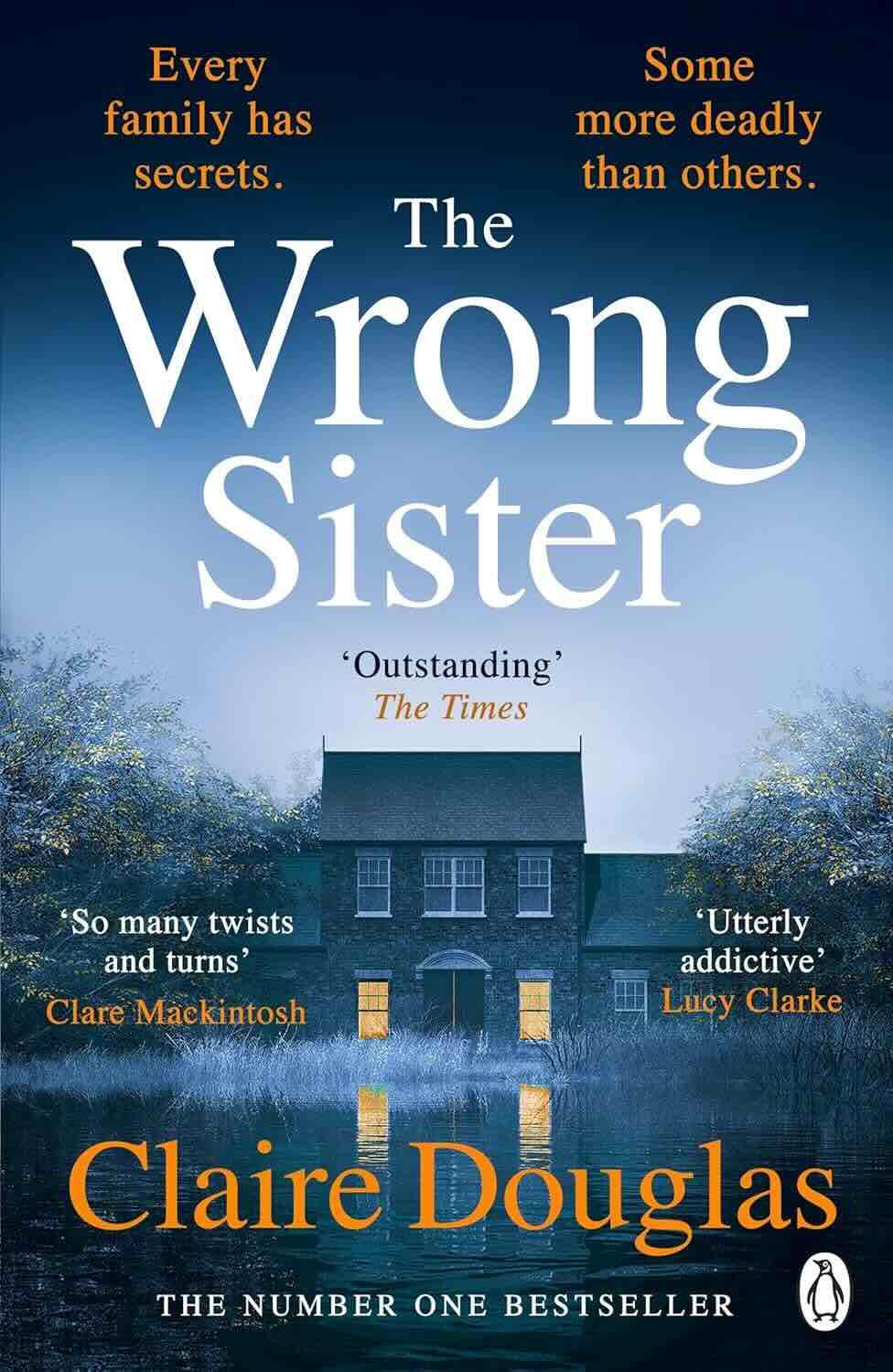
- The Wrong Sister by Claire Douglas, for British domestic suspense from a writer who has championed Perks.
- A Spark of Light by Jodi Picoult, for a hostage siege told across a single day from inside and outside the building.
- One of Us Is Lying by Karen M. McManus, for five people in a room and the certainty that one of them is responsible.
Worth Your Shelf
Perks writes plain, quick prose built for turning pages, and her chapters rarely run long enough to lose you. What lifts this above a routine siege thriller is its interest in the people standing at the barrier, each one auditing a marriage or a family in real time. The island setting earns its place too: one lane down to the water, a river the marine unit has to close, a ferry timetable that decides when the lead detective can even arrive, and a population small enough that a surname from twenty years ago still rings a bell. The middle could lose thirty pages and the mechanics creak in places, but the puzzle is honest and the payoff earns its title.
It Ends Here by Heidi Perks is a morning-long squeeze of a book, best read in a sitting with the phone switched off, which is, after all, what everyone inside the café did.