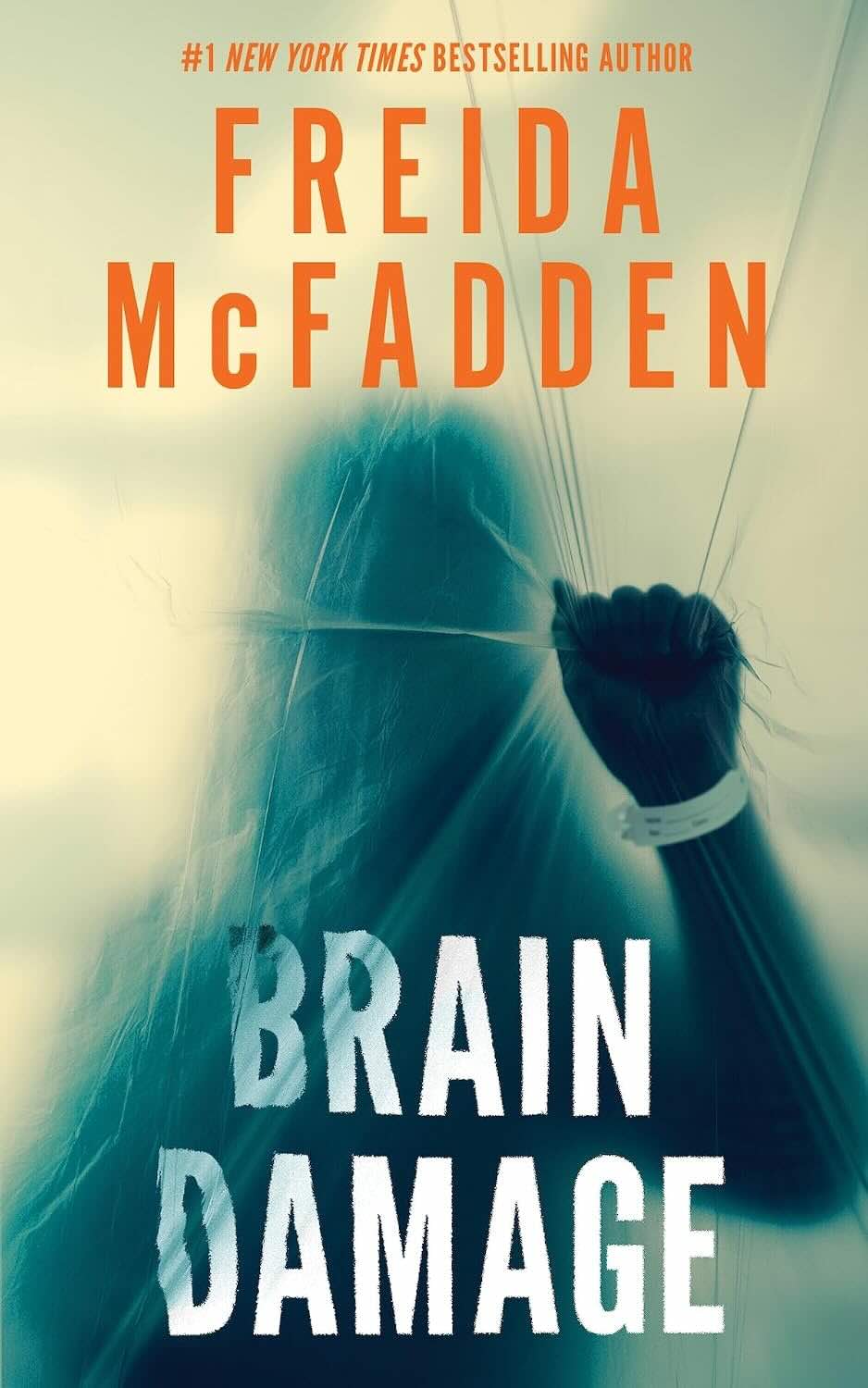
A man in blue scrubs comes into her room. She reads his badge. It says CHRIS, and underneath that it says RAPIST. She screams until a nurse comes running, and the nurse has to explain, kindly, that the badge actually says occupational therapist, and that Charlotte read only the right-hand half of it. The nurse and the therapist both laugh. Charlotte does not see what is funny. She was terrified, and nobody had told her she could no longer be trusted to read a word. That scene lands about a fifth of the way into Brain Damage by Freida McFadden, and it is a joke, and it is also the whole architecture of the book.
Dr. Charlotte McKenna, thirty-seven, is a Manhattan dermatologist with a Central Park view she paid for herself and a rescue cat named Kitty. Someone shoots her in the head in her own hallway. The bullet takes most of the right side of her skull with it, and what she is left with is hemispatial neglect: the left half of the world simply stops existing for her. Not blindness. Something stranger. People materialise out of thin air because they walked in from the left. She eats the right half of every dinner tray and reports that they forgot her drink. She tries to put her left hand on the wheelchair rim and grabs her physical therapist’s arm instead.
And the man who shot her leaned down and whispered one sentence into her left ear.
Where Brain Damage by Freida McFadden Sits on Her Shelf
This is a 2016 novel, now back in circulation, and it predates the machine everybody knows her for. There is no Housemaid engine here, no reveal engineered to make you flip back forty pages. What there is instead is a working physician writing about the ward she actually works on. The dedication reads For my patients. The acknowledgements thank the therapists and staff she shares a team with. That is the credential, and it is all over the page.
So the honest placement is this: if you came to her for the twist, Brain Damage by Freida McFadden will feel slower and stranger than you expect. If you came for a narrator you cannot stop reading, it is one of the two or three best things she has written.
What Freida McFadden Adds Here That the Later Books Don’t
Rehabilitation, described from the inside by someone who does it for a living, and treated as drama rather than as background. This is the material that makes Brain Damage by Freida McFadden worth the detour.
Charlotte is a “Hallway Parker” — wheeled out to the junction of two corridors at mealtimes so the nurses can watch her, because she once undid her own alarmed seatbelt to reach a bathroom five feet away and ended up on the floor. She graduates from Orientation Group to Thinking Skills Group, where four brain-injured adults attempt to play Taboo and she cannot manage the word husband because she reads it as and. She fights her occupational therapist while being dressed, because when she is genuinely upright she feels like she is toppling to the right. And she wears a helmet over the hole in her skull and cannot stop trying to scratch what is underneath it.
None of this is played for pathos, which is why it works. Brain Damage by Freida McFadden is exact about the indignities: the feeding tube, the adult briefs, the change of shift when nobody can come, the insurance company quietly counting down to a nursing home. It is exact, too, about the specific cruelty of being discussed in the third person by people standing over your bed.
What Works
Five things carry the book, and only one of them is a plot device.
- The neglect is structural, not decorative. The novel cannot resolve until her visual field does. That is a genuinely elegant idea: the evidence is not missing, it is stored somewhere she is neurologically incapable of looking.
- Jamie Knox. A bar owner with ataxia who throws peas at her, smears cream cheese on his own face, calls her Helmet Girl, and silently spins her dinner tray around at every meal so she can find the rest of it. It is the warmest thing in the author’s bibliography and it earns every inch.
- The husband as caregiver. Clark’s menace is almost entirely administrative — an “arrangement,” a power of attorney, a refusal to buy her better glasses, a girlfriend introduced to visitors as the nurse. It is far more recognisable than a knife.
- The comic timing survives the subject. A ninety-three-year-old psychiatrist, a German ex-jeweller who appraises the engagement ring, and a man on fluid restriction who drinks from the hygiene sink in group therapy.
- One real medical grace note. The single moment Charlotte’s expertise surfaces intact — she looks at a scalp and names a cancer — is worth more than any twist in the book.
Where Brain Damage Gives Ground
For all its intelligence about injury, Brain Damage by Freida McFadden is careless about several of the things thrillers are normally careful about.
- Clark is a cartoon. He flips from charming to sneering almost exactly at the midpoint and never modulates again. The reveal, when it comes, arrives as a villain explaining his own plan at length to the person he tried to kill.
- The “before” strand is the weaker novel. Everything set in the past — the courtship, the marriage, the unravelling — is a signposted cheating-husband plot with a gun placed on the mantel in plain view.
- It is not really a mystery. There are two plausible culprits and one of them is flagged early. The pleasure is watching Charlotte get there, not guessing.
- The self-loathing is relentless. Charlotte on her weight, her hair, her face, page after page. It is characterisation, and the novel mostly lets it stand rather than answering it.
- It shows its age. Obama, Jerry Springer, Modern Family, Angry Birds, and a Glock that turns into a revolver for one sentence.
Do You Need Her Other Books First?
No. Brain Damage by Freida McFadden stands entirely alone: no series, no recurring cast, no continuity to catch up on. If anything the reverse applies: readers who arrive from the more recent thrillers should reset their expectations, because this one is quieter, warmer and considerably more interested in bodies than in booby traps. It also runs long in the middle by current standards, and the pace is a ward’s pace rather than a chapter-hook pace.
Read These Next
Readers who finish Brain Damage by Freida McFadden tend to want either more of the hospital or more of the marriage.
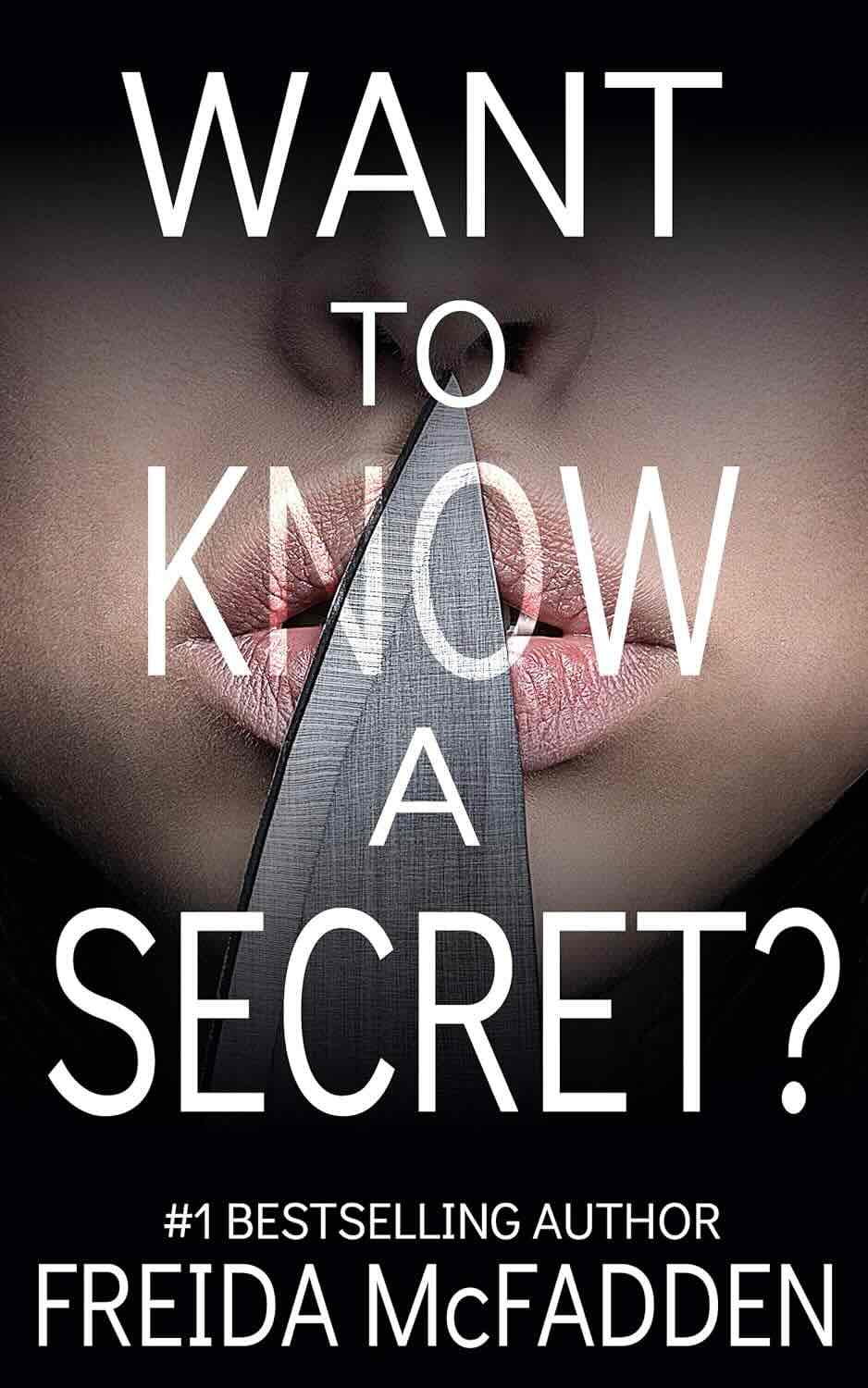
- Want to Know a Secret? by Freida McFadden, the closest cousin in her own catalogue for medical detail and a narrator you are never quite safe with.
- The Widow’s Husband’s Secret Lie by Freida McFadden, if the marriage is what hooked you rather than the hospital.
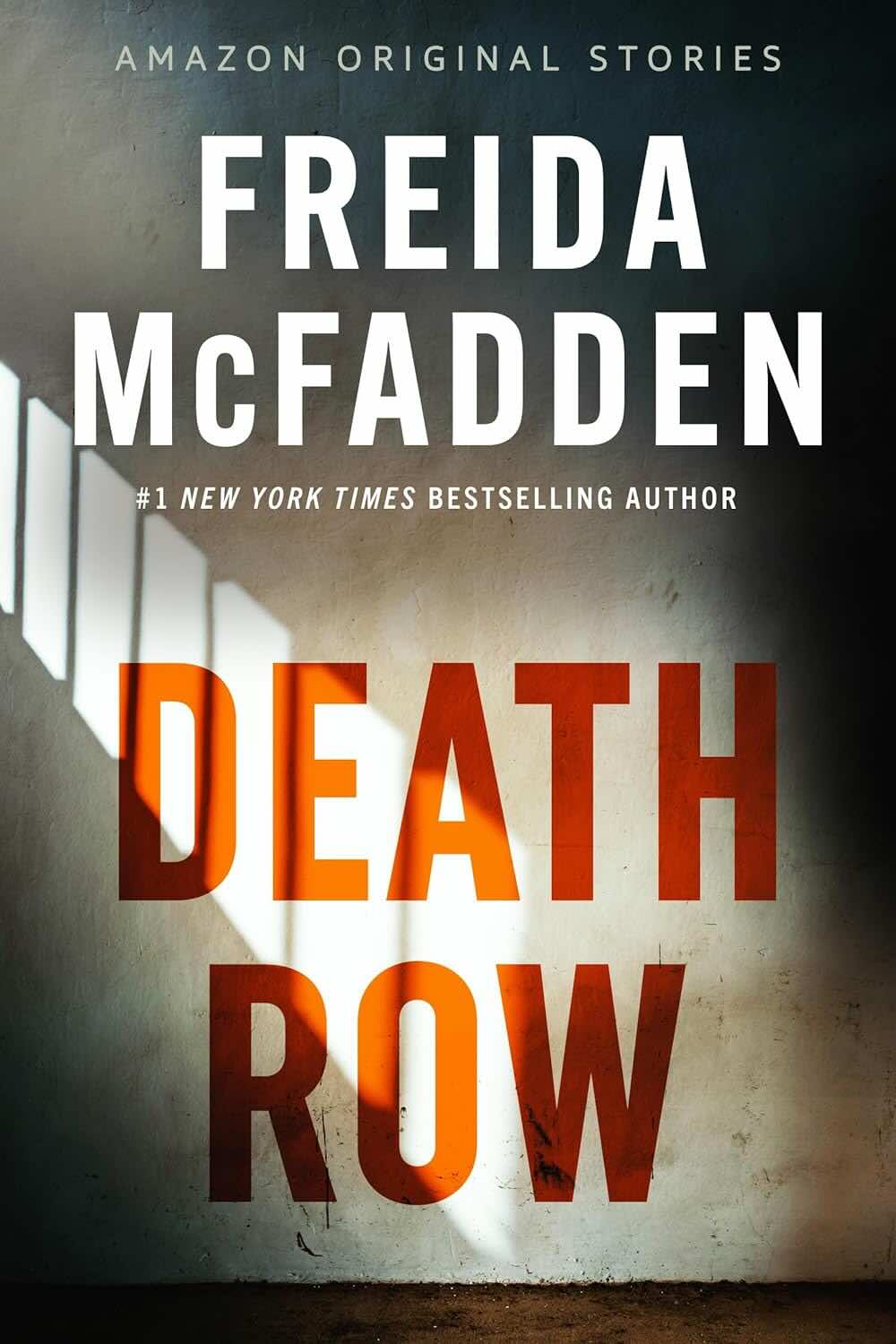
- Death Row by Freida McFadden, for the same clinical eye pointed at a very different institution.
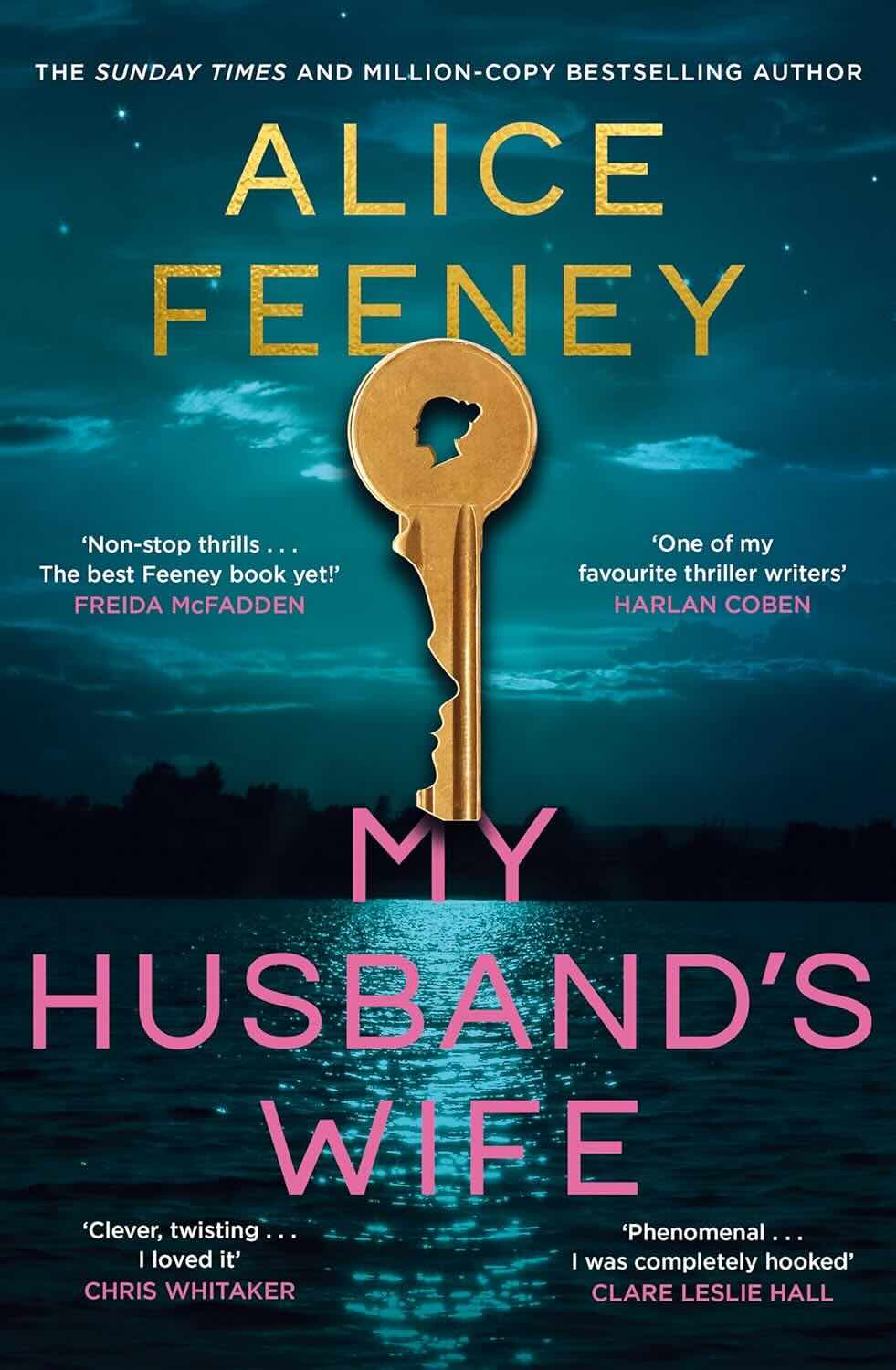
- My Husband’s Wife by Alice Feeney, for a colder, sharper version of the same domestic arithmetic.
- Our roundup of psychological thrillers that play with your head, if perception itself is the thing you want unreliable.
What Stays With You
Not the reveal. The tray.
Every night, in a hospital corridor, a man who can barely feed himself reaches over and turns a woman’s dinner tray a hundred and eighty degrees, without comment, so that the half she cannot perceive becomes the half she can. He never mentions it. She only finds out he has been doing it when somebody else does it wrong.
Brain Damage by Freida McFadden has a killer, a conspiracy, a stolen fortune and a courtroom outcome, and none of that is what the book is about. It is about what a person is still worth once they can no longer do anything for anybody — and it gives you two answers, one from a husband running the numbers and one from a man with a metal cane and no balance at all. Four stars, and the four is for the corridor, not the crime.