Theme: Envy, Religion, Desire, Creativity, Work, Class and Power
Narrator: Third person, switches constantly from the perceptions of one character to those of the next.
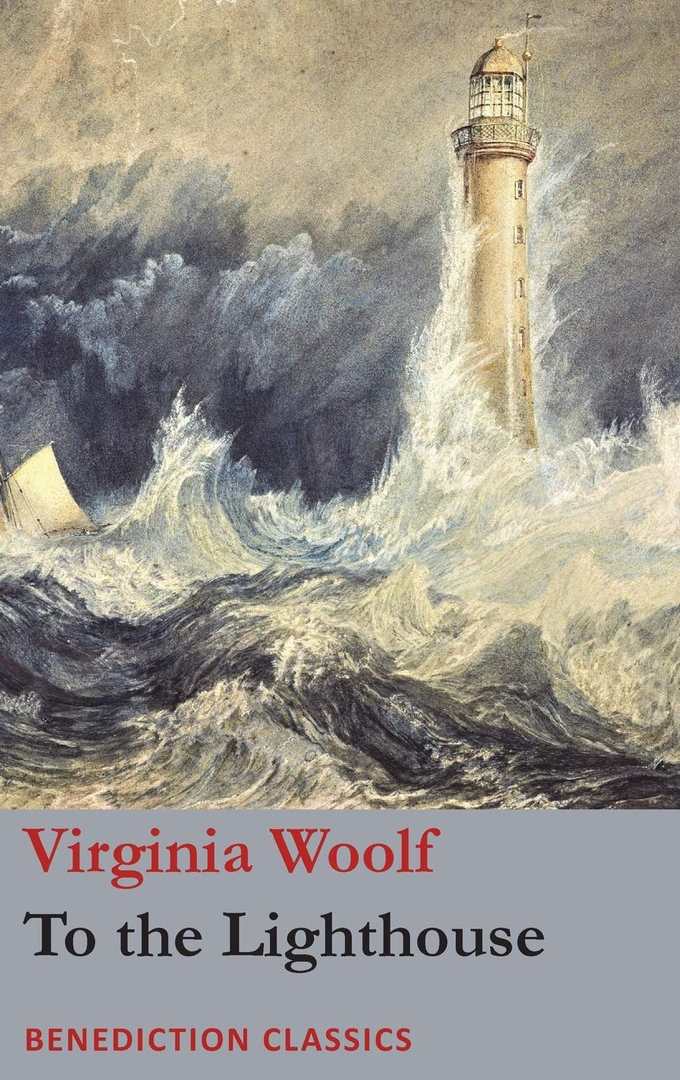
Book Summary: To the Lighthouse by Virginia Woolf
The serene and maternal Mrs. Ramsay, the tragic yet absurd Mr. Ramsay, and their children and assorted guests are on holiday on the Isle of Skye.
From the seemingly trivial postponement of a visit to a nearby lighthouse, Woolf constructs a remarkable, moving examination of the complex tensions and allegiances of family life and the conflict between men and women.
As time winds its way through their lives, the Ramsays face, alone and simultaneously, the greatest of human challenges and its greatest triumph—the human capacity for change.
Book Review: To the Lighthouse by Virginia Woolf
To the Lighthouse by Virginia Woolf is structured into three parts: The Window, Time Passes, and The Lighthouse. In the first part, we meet the Ramsey family and their guests at a summer home in the Hebrides. There is little dialogue and even less action — the prose is all introspection and stream of consciousness. We jump from character to character, spending time in each person’s head before we jump again.
The second part covers about a decade, during which World War I happens and several characters die. Finally, the remaining Ramsay members gather at the summer home again, and this time, surely, they will visit the lighthouse.
“What is the meaning of life? That was all- a simple question; one that tended to close in on one with years, the great revelation had never come. The great revelation perhaps never did come. Instead, there were little daily miracles, illuminations, matches struck unexpectedly in the dark; here was one.”
To the Lighthouse by Virginia Woolf is such a classic of modern English literature that I fear I can’t add anything to the discussion other than to say how much I appreciated it. I loved the thoughtfulness of the writing, how Virginia would cover a scene from several points of view, and how characters would argue with themselves.
The characters in To the Lighthouse by Virginia Woolf unfold slowly, revealed by degrees like a Polaroid, but they are fragmented, and never drawn entirely into focus. The voice is personal, intimate and penetrating. And yet there is such an overwhelming sadness: the knowledge of so many things that cannot be understood, that can never be said.
The expression of an unbridgeable distance that exists between people as they are left to guess at one another, never really knowing, never really understanding, never truly connecting.
“And all the lives we ever lived and all the lives to be are full of trees and changing leaves.”
The passage of time tears through the centre of the narrative like a great fissure, suddenly and irrevocably arresting all actions, rendering all words mute and inconsequential. Exposed is the frailty of human life, and its smallness. Any significance is called into question. We are left (through Lily) to make sense of it all, to wonder what might have been; to examine the pieces and to puzzle at how they might be combined into a meaningful whole.
There is the lighthouse – such a subtle and enigmatic metaphor, expressing distance, impermanence and solitude, but also light and the preservation of life from the cold, indifferent forces of nature. All of these layers of meaning suffuse the writing and permeate the characters – their hopes, their desires, their fears, and their failures.
The novel is about all these things, and yet there is so, so much more.
During her time as a writer, Virginia Woolf was quite invested in the scientific theories of her day. There are, apparently, a lot of her own personal writing that spoke highly of her research into the area and all of the scientific advances being made at the turn of the century, a time heralded by the legendary Charles Darwin. Woolf’s focus wasn’t necessarily on natural selection—although its influence is present—but on the theories and writings surrounding thermodynamics.