


At three in the morning in a moated Suffolk house, something is coming up the stairs. Bare feet on boards, a soft knocking, a pale hand curling round the bedroom door. The girl in the bed holds her breath, and then the thing slides in behind her, presses cold fingers to her pulse and starts to cry. It is her mother. She cannot sleep, the lawyers want her to make a will, and she needs her daughter to promise she will never go. The girl promises, because there is no other answer to give. Rottenheart by Kat Dunn opens with a fake-out that is not really a fake-out at all: the most frightening presence in the book is a living woman, and by the end of the first act she will be dead and still at the door.
The Mother Who Would Not Let Go
Odette Fairfax-Waugh is nineteen, packed for Newnham College, and her mother Lydia, a painter who dressed her daughter as knights and queens for every canvas she never finished, has just died in the family villa in Hampstead. The opening chapters are a close study of Victorian death rites, from the covered mirrors to the coins for the eyes, and Dunn writes them with an unsentimental exactness that makes the grief feel physical.
The real subject is what Lydia was while she lived. Through a series of summer flashbacks at Herne House, the family’s crooked Suffolk manor, we see a woman who was charming, gifted and helpless, permanently ill with headaches and sorrows, and who made her only child into a life raft. Every promise Lydia makes to Odette, from drawing lessons to a sale of paintings that would set her free, curdles before it can be kept. Odette’s learned trick of staring at a brass drawer handle until her body seems to vanish is as precise an image of dissociation as any gothic novel has offered this year.
Dunn understands the double bind exactly. Odette loves her mother and is disgusted by her, wants to escape and fears she will stop existing without that gaze. When the ghost arrives, with grave-cold fingers at her throat and a demand to be revenged, it does not feel like a new horror. It feels like the old one, finally honest. The Author’s Note says the book is first of all about having a mother, and Rottenheart by Kat Dunn is at its most unsettling when it shows how little death changes that relationship.
The structure sharpens this. The present-day story runs in four acts from late September to a bleak December, while the summer chapters move steadily towards the night Lydia fell ill, so the reader watches the past and the aftermath close in on the same moment from opposite directions. Chapters alternate between Odette and Cecilia in a tight present tense, which suits a heroine who cannot see past the next hour.
Running beside it is Odette’s love affair with Cecilia Moore, the friend from the house across the road. It is tender, funny and sexually frank, and it is also where the rot spreads. Grief makes Odette cruel, and Dunn does not excuse her. Some of the most uncomfortable pages in Rottenheart by Kat Dunn show the grieving daughter passing her mother’s habits straight on to the woman who loves her.
Kat Dunn Turns Hamlet Inside Out
The scaffolding is Hamlet, and the transposition is clever. The murdered king becomes a dead mother; the uncle who marries the widow becomes Lydia’s sister Claudine, a stiff former schoolmistress back from Dresden after twenty years of silence, who marries George, the widowed father, abroad. In 1898 that union was illegal in England, and the long fight over the Deceased Wife’s Sister’s Marriage Act gives the book a real legal edge: Odette is not being melodramatic when she calls the match incestuous, because the law of the day agreed with her.
Claudine is the novel’s best-built adult, a woman with good reasons to hate her sister and a talent for making Odette feel stupid in a single sentence. Dunn keeps her guilt in question for most of the book. The ghost might be Lydia, or it might be grief in a shroud, and Odette’s own version of the play within the play, a piece of trickery best met unspoiled, is one of the sharpest scenes in Rottenheart by Kat Dunn. The period texture is just as strong here: house clearances, probate, a will rewritten in the sickroom, and the quiet economics of who in this circle has been living on whose money. Fans of Shakespeare will enjoy spotting where Ophelia, Polonius and Laertes have landed, and some of those landings are genuinely surprising.
Dunn previously retold Carmilla in Hungerstone by Kat Dunn, and before that wrote young adult fiction that earned a Carnegie Medal nomination and shortlistings for the Nero Book Award and the Polari Children’s and YA Prize. This is the more ambitious adult novel: angrier, stranger and less tidy.
Where Kat Dunn Gives Ground
- The refrains loop. Odette weeps, insists nobody understands her grief, and feels cold fingers at her neck, again and again across three hundred pages. The repetition is partly the point, but the middle of the book stops building and starts circling.
- The flashbacks stall the momentum. Twice a summer section arrives just after a cliffhanger in the present. The material in them matters, but readers will feel the brakes go on.
- The final act runs on coincidence. An overnight forgery on a train, a newspaper found in exactly the right café, a letter waiting under a bed: the last sixty pages cram in more plot than the previous two hundred and lean hard on luck to do it.
- The middle sags under its own weight. At its best Rottenheart by Kat Dunn is a taut psychological horror novel; at its slackest it is a long one, and a firmer edit of the second act would have helped the frights land harder.
- The men are ciphers. George speaks in psychology-journal platitudes and is never more than an absence, so a key turn in his behaviour is reported rather than felt.
Read These Next
- Hungerstone by Kat Dunn, her Victorian Carmilla retelling, for appetite, marriage and a predatory house guest.
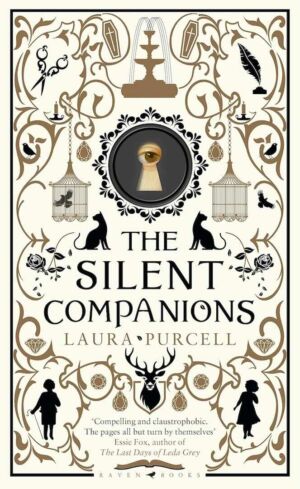
- The Silent Companions by Laura Purcell, for a grieving widow, a decaying country house and horror that may be in her head.
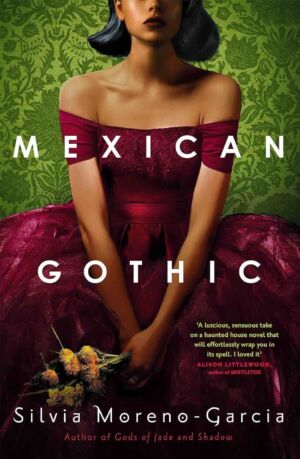
- Mexican Gothic by Silvia Moreno-Garcia, for a rotten family seat and a young woman nobody believes.
- The Haunting of Hill House by Shirley Jackson, for a lonely heroine and a ghost tangled up with a dead mother.
- The Turn of the Screw by Henry James, the classic case of a haunting that may be a governess’s mind.
The Last Word
Rottenheart by Kat Dunn is uneven, overlong in the middle and too busy at the end, and it still does something few gothic novels attempt. It makes the haunting a question of love rather than fear, and it asks what a daughter owes a mother who never let her be separate, living or dead.
Read Rottenheart by Kat Dunn for that question and for Claudine, who deserves her own novel. Then check your own door at three in the morning, and decide who you are hoping to find there.