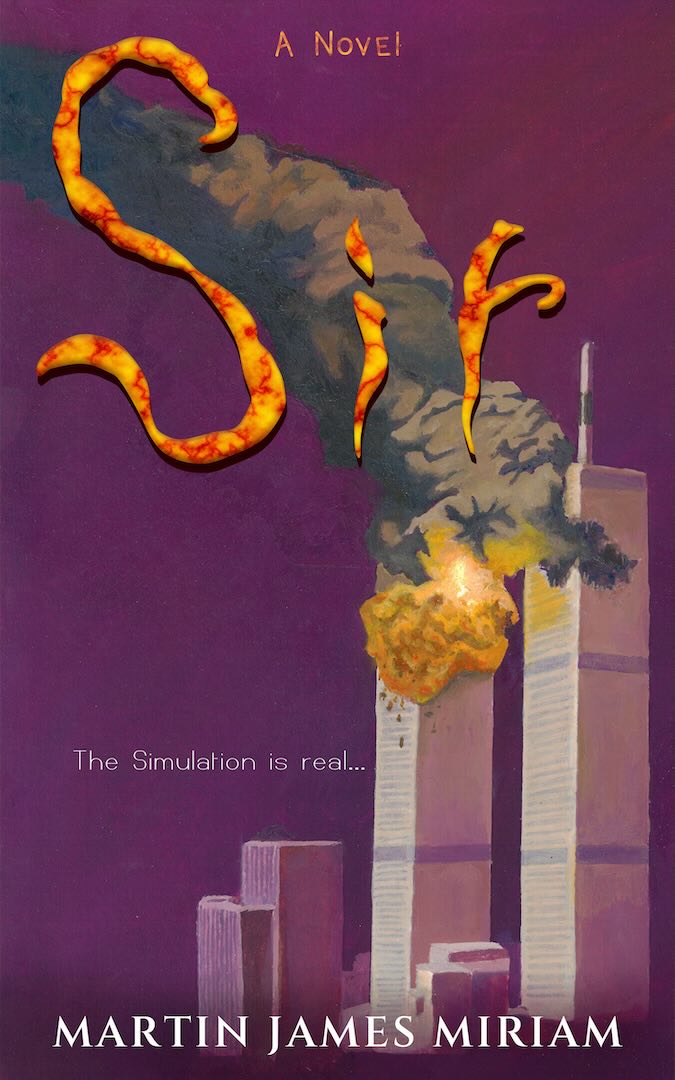
Imagine glancing at your watch and seeing 9:11. Then 11:09. Then a bottle label stamped 11-19. And then a newscaster who stops mid-sentence, looks straight through the screen, and tells you it’s 9:11 in the morning. That is the daily life of John Klee, a sharp, slightly cocky accountant working on the 100th floor of the World Trade Center’s North Tower. He doesn’t believe in ghosts, psychics or “meaningful coincidences.” He believes in spreadsheets. And yet the numbers keep finding him. Sir by Martin James Miriam opens with that small, itchy unease and slowly turns it into something far larger: a story about dreams, warnings, and the unsettling possibility that our world is a game someone else is playing.
The Story Without Spoilers
The novel begins with four short, eerie vignettes set in 1891, 1944, 1966 and 1985. Four strangers, a canning tycoon, a lonely war bride, a law student and a young father, each have the same dream: a circle of people standing in daylight, urging a man named John about a key. None of them ever meets.
Then we jump to 1999 and meet John. His friend Lee, a sound engineer with a taste for the paranormal, gives his problem a name, synchronicity, and later sends him a link to an odd website called The All, run by an anonymous figure who signs himself “Sir.” Its pinned post lays out, in calm technical language, how reality supposedly works: a Grand Simulation with Reality Mode, Dream Mode and Hallucination Mode, overseen by bored, immortal beings called the Controllers.
John laughs it off. That is his first mistake.
What follows involves old diaries hidden beneath an attic floorboard, a phone number made of nines and ones, faces from the past turning up in dreams, and a career-defining appointment that lands on the worst possible date. I’ll stop there. The joy of this book lies in watching the pieces click into place for yourself.
What Works Best
1. A Simulation Theory With Its Own Rulebook
Plenty of novels nod at “maybe we live in a computer.” Sir by Martin James Miriam goes further and builds a full operating manual. The “Read This First” section is one of the book’s boldest choices: several pages of in-world documentation, punctuated by John’s increasingly rattled one-line reactions (“Oh brother…” becomes “Damn…”). It works as both exposition and comedy.
What impressed me most is how the system explains familiar mysteries. Near-death tunnels, dream amnesia, Men in Black, cryptids and false awakenings all slot neatly into Miriam’s framework. Even the fact that most of us forget our dreams becomes a piece of buggy software that “never got beyond the beta stage.” It’s clever, and it gives the horror a strange internal logic.
2. Lucid Dreaming as an Action Arena
As someone who has read a fair amount about lucid dreaming, I appreciated how accurately the author handles the basics: dream journals, reality checks, the trick of staying calm to avoid waking, and the advanced technique known as WILD. Then he pushes those ideas into pure imaginative territory.
The second half turns dreams into a layered gauntlet, each level with its own style, its own terror, and its own rules. One moment you are tiptoeing through a candlelit mansion; the next you are somewhere that looks like a 1940s cartoon. The shifts are wild, often funny, and always in service of John facing what scares him most.
3. Real-World Weirdness Woven Into Fiction
Miriam clearly knows his Fortean history. The 1966 Point Pleasant episode, contactee Woodrow Derenberger and the alien “Indrid Cold” are all reworked here, and the acknowledgements credit researcher John A. Keel as a major inspiration. Readers familiar with The Mothman Prophecies will catch the echoes and enjoy them. Newcomers won’t feel lost, because the book explains just enough.
4. A Villain You Hear Before You See
Sir himself is a fine creation. For long stretches he is only a voice, grave and metallic, calling from an unidentified number. When he finally takes shape, the image is simple and chilling. The Controllers’ scenes, set in a gleaming white room around a holographic table, play like an awful reality show viewed from the producers’ booth.
The Writing Style
Miriam writes fast and plainly. Sentences are short. Dialogue is blunt, funny, and sometimes salty. Pop culture runs through the book: The Police, The Matrix, Back to the Future, Splash, dial-up modems screeching on a Packard Bell. The late-90s detail is spot on and quietly anchors the uncanny parts in a world we recognize.
He also likes to change gears. A section might read like a talk-show transcript, a TV news report, or a sardonic poem delivered by text message. These switches keep the pace brisk and widen the story beyond John’s head, showing how ordinary people, believers and skeptics, react once the idea of the Simulation leaks into public life.
Characters Worth Remembering
- John Klee – Skeptical, flawed and stubborn, which makes his gradual shift so believable.
- Lee Yin – The friend whose curiosity starts everything and whose presence lingers long after.
- Diana Spaulding – A 1940s diarist whose private pages become far more than period color.
- Ashley – Grounded, loving and brave; she gives the story its emotional anchor.
- Robert and Angela – A thoughtful Simplifier and a gentle psychic who bring faith and quiet wisdom into a mechanical worldview.
Themes That Stay With You
Under the thrills, Sir by Martin James Miriam asks real questions. What does free will mean if someone can fast-forward your life to see how it might turn out? How do online communities form around a big idea, and how quickly can they turn on themselves? Why do we believe what we believe?
The novel’s strongest answer is a humane one. Without giving anything away, I’ll say only that the book finally argues for something no amount of technology can manufacture, and it lands with real warmth.
It also treats 9/11 with care. The dedication honors its victims, and the attack itself is never used for spectacle. It sits in the background as a date, a skyline and a weight.
Who Should Read It
- Fans of simulation fiction who want something stranger and more personal than standard cyber-thrillers
- Readers curious about lucid dreaming and dream research
- Anyone who enjoys Mothman, Men in Black and UFO lore
- Thriller readers who like puzzle-box plotting and mounting dread
A note for sensitive readers: the book contains mature language, sexual content, and some disturbing scenes involving death and self-harm themes.
About the Author
Martin James Miriam began as a graphic artist and also created the cover art and illustrations for this book. Sir is his debut novel, so there are no earlier titles to compare it with. His author bio playfully adds that he “may or may not even be real,” which suits this book perfectly.
If You Enjoy This, Try These
- The Mothman Prophecies by John A. Keel – The nonfiction classic that clearly fed this novel’s imagination.
- Ubik by Philip K. Dick – Reality cracks and messages appear where they shouldn’t.
- VALIS by Philip K. Dick – A personal, mystical take on hidden controllers of reality.
- Simulacron-3 by Daniel F. Galouye – One of the earliest novels about living inside a simulation.
- The Lathe of Heaven by Ursula K. Le Guin – Dreams that reshape the waking world.
- Dark Matter by Blake Crouch – Memory, time loops and a fast thriller pace.
Final Thoughts
Sir by Martin James Miriam is an inventive, fast-moving debut that takes a familiar idea and gives it teeth, humor and a beating heart. It mixes Fortean history, dream science and simulation theory into a story that feels both playful and unnerving. By the last page you may find yourself glancing at the clock a little more carefully.
Some books entertain you for an evening. This one follows you to bed.







