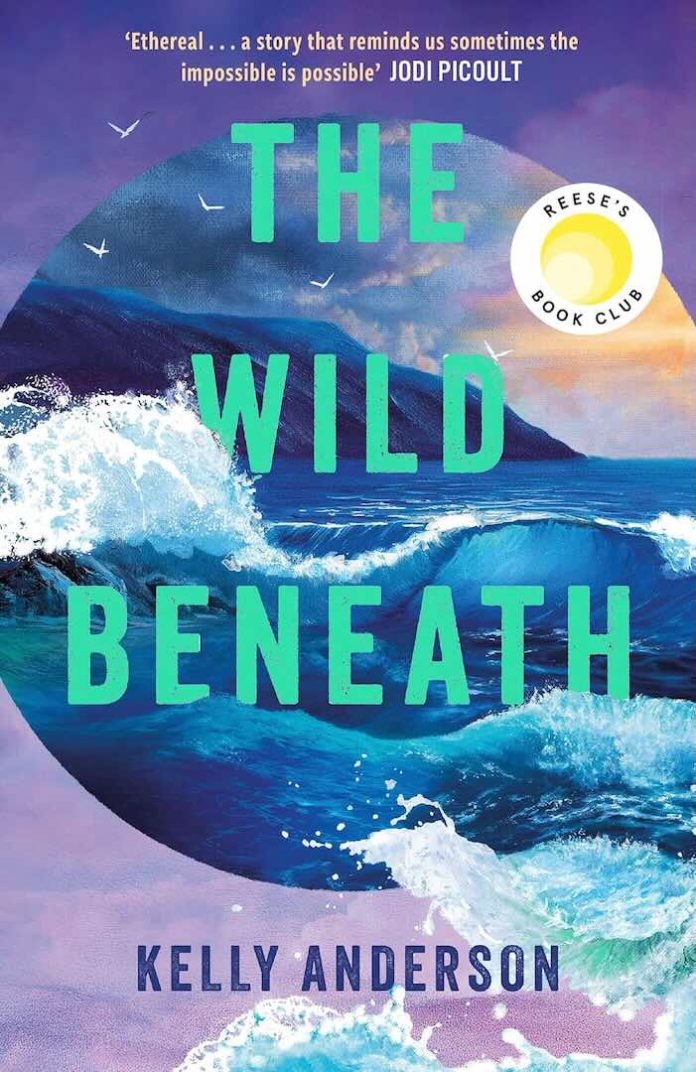
Four days after the wave, a naked young man walks out of the surf onto a beach covered in other people’s belongings. He does not speak. His pulse runs at thirty-two. His blood comes up the wrong colour in the needle and his skin behaves like wet paper until morning. Annie MacLeod, who has just lost her parents and her town, names him Walker and takes him home, and this is where The Wild Beneath by Kelly Anderson either has you or does not.
Kelly Anderson is a practising family physician with fellowships in HIV and emergency medicine, and this is her first novel. Both facts are legible on the page, in different ways and to different effect.
How The Wild Beneath Works
The engine of The Wild Beneath by Kelly Anderson is a magnitude nine rupture on the Cascadia Subduction Zone, roughly 150 kilometres offshore. The tsunami takes most of Hale’s Landing, a logging and fishing town on the north British Columbia coast. Annie survives on high ground. Her parents, Aiden and Mara, do not come back from the water.
The book is built in five movements named for the states of the tide, each opening with a short definition of that state: Low, Slack, Flood, High, Ebb. These are not decorative epigraphs. Each section genuinely behaves like the tide it names, which is a real formal achievement and also the source of the novel’s main problem, since Slack is a hundred and thirty pages of held breath and reads exactly like one.
Two timelines interleave. Now follows the months after the wave. Before runs from forty years back to the morning it happened, and it is quietly assembling an answer to a question the present-day strand has not yet learned to ask. Chapters rotate through Annie, Aiden, Evan, Ruth, Isaac, Henry, and twice through Walker himself.
What Kelly Anderson Does With the Wreckage
The debris is the best thing in The Wild Beneath by Kelly Anderson. Every catalogue of what the water threw back is superb, and there are many: Christmas lights, milk jugs, uninstalled car radios, birthday candles, a spoon engraved with the phases of the moon. Annie starts keeping the salvaged objects on a closet shelf, and when they reappear late in the book, arranged in a circle around a sand dollar, the payoff is earned rather than engineered.
The medicine is the other unmistakable strength. The Wild Beneath by Kelly Anderson contains a cardioversion sequence, timestamped minute by minute, with a chief of emergency who swears continuously and a new nurse who puts the pacing pads on wrong, and it is the sharpest writing in the novel by a distance. Nobody writes that scene without having stood in that room.
What works
The strengths of The Wild Beneath by Kelly Anderson are almost all textural rather than structural.
- The sensory register. Anderson trained deliberately at this, and it shows: the taxonomy of clams, the tide pools, the sand that will not leave a house, in the drain, the mattress seam, the thumb of an oven mitt. Grief in this book behaves exactly like sand.
- The aftermath is bleakly plausible. One coast guard lifeboat. A reporter wanting a sound bite. A laminated relocation notice nailed to a pole. A logging boss who wants the beach cleared so his shipment can leave.
- Aiden at eighteen. A young man idling a boat in the channel before dawn, putting his hand into the water and waiting. It is the quietest chapter in the novel and its most persuasive argument for everything else.
- Henry. Ruth’s brother, a gillnetter who barely speaks and tastes the seawater every time he leaves the dock. The reason why arrives on one of the book’s finest pages.
- The Before strand’s patience. Mara is a genuinely unsettling creation, and the reader assembles her from other people’s misreadings rather than from explanation.
Where it gives ground
Four faults, and they are not small ones, which is what separates The Wild Beneath by Kelly Anderson from the book it very nearly is.
- Walker is a device, not a person. He never argues, never wants anything for himself, never has a bad day, tells Annie repeatedly that she is doing everything right, and calms her physiologically by existing. That makes the triangle structurally unfair, because Evan is a flawed man with a father, a job and a conscience, while Walker is a feeling with a body.
- The dialogue tic. He speaks almost entirely in oracular fragments and then looks off to the left. The novel knows: a character actually asks whether they have wandered into a fortune cookie. Naming the problem is not the same as solving it, and long stretches consist of Annie asking a direct question and receiving a koan.
- The middle sags. After Walker arrives there is a hundred-page stretch of clams, firewood, chickens, laundry and more clams. Thematically apt for grief. Still wearing.
- The city is a straw man. A six-year section in Vancouver contains some of the sharpest observation in the book and also stops the story for eighty pages to re-establish something already established. Urban life here is uniformly cellophane and beige while the sea is uniformly holy, which turns Annie’s supposed dilemma into no dilemma at all.
The ending compounds this. After nearly three hundred pages of Annie needing to know what Walker is, the explanation arrives as a wordless dive. Some readers will find that transporting. Others will feel the novel changed the subject rather than answering it.
Content notes for The Wild Beneath
The Wild Beneath by Kelly Anderson earns a long list. A mass-casualty natural disaster with named deaths. Repeated on-page drowning. Bodies and refuse burned in beach fires. A humpback whale butchered alive with axes and chainsaws over several pages, extended and graphic, and the emotional hinge of the entire Before strand. Involuntary psychiatric hospitalisation with wrist restraints. Terminal illness and the death of a grandmother. Parental death. Suicidal ideation, when a character adrift considers releasing her life jacket. A drink spiked without consent and the bad trip that follows. Explicit sex, roughly three chillies out of five.
Read it if / Skip it if
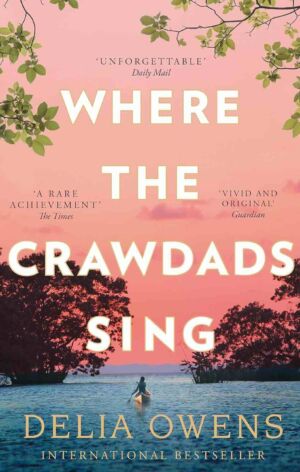
Read it if you want disaster fiction written by someone who has actually treated the injured; if lists of salvaged objects and the taxonomy of shellfish are your idea of pleasure; if you liked Where the Crawdads Sing and wished it had been built with this much care.
Skip it if you need a love triangle with two real contenders; if oracular dialogue makes you itch; if you want The Wild Beneath by Kelly Anderson to explain its own magic before the last page, because it declines.
Read these next
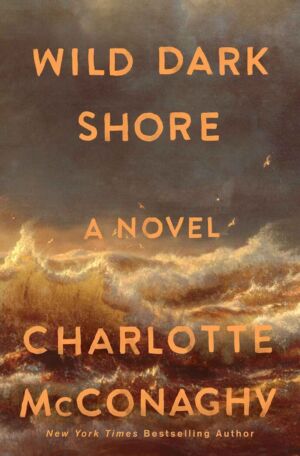
- Wild Dark Shore by Charlotte McConaghy. The closest match in ambition and weather: an island, a rising sea, and a family that will not leave.
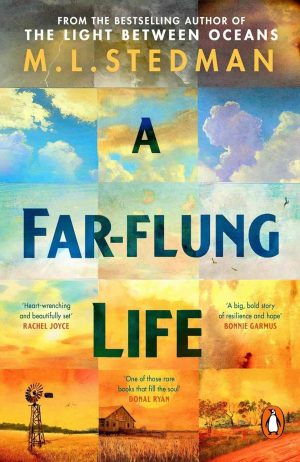
- A Far-Flung Life by M.L. Stedman. From the author of The Light Between Oceans, and the same interest in what the water delivers and who claims it.
- Where the Crawdads Sing by Delia Owens. The obvious commercial comparison, and a fair one.
- The Scent Keeper by Erica Bauermeister. Quoted in this novel’s epigraph and thanked in its acknowledgments, which makes it the book’s declared ancestor.
- The Mermaid of Black Conch by Monique Roffey. A creature from the sea, a small coastal community, and a much harder look at what happens next.
Worth Your Shelf
The Wild Beneath by Kelly Anderson is a debut with two books inside it. One is a precise, sensory, medically literate novel about a coastline erased and a woman sorting other people’s belongings into categories so that something in her life will hold still. That book is very good, and its best pages are as good as anything in the genre this year. The other is a romance with a man who is less a character than a mood, and it takes up more room than it earns. Read it for the wreckage and the clams and the emergency room, and be patient with the surf. The tide comes back either way, which is what the last section is quietly telling you: nothing here is finished, only between states.