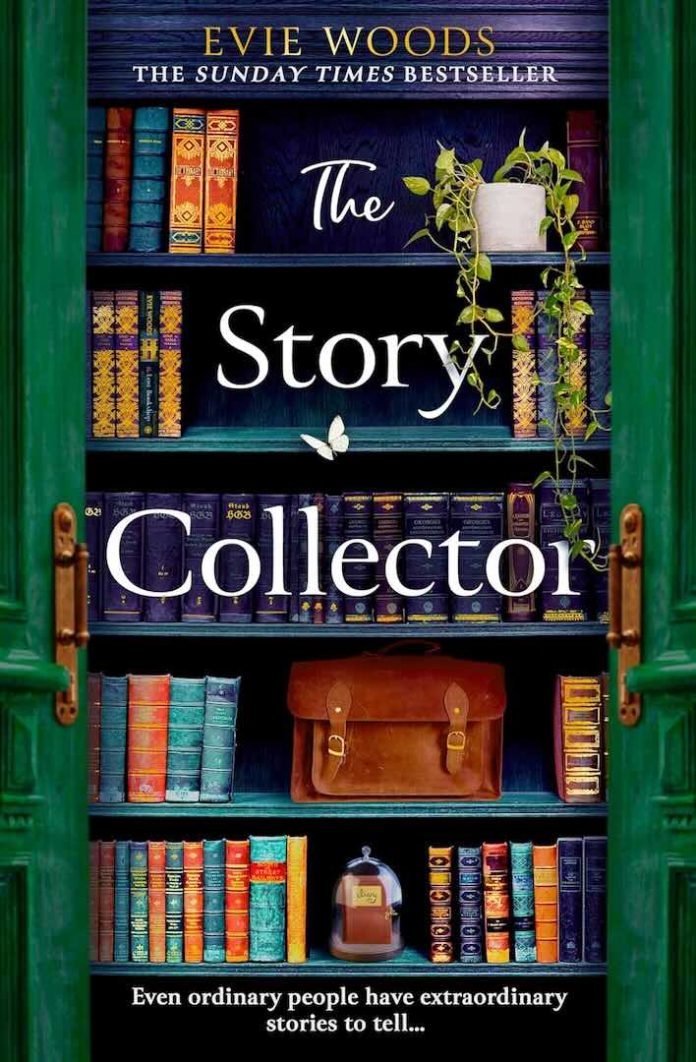
In her captivating novel The Story Collector, Evie Gaughan weaves a mesmerizing dual-timeline narrative that bridges the gap between 1910s rural Ireland and present-day America. With her distinctive talent for blending historical fiction with elements of magical realism, Gaughan creates a world where the boundaries between reality and folklore blur, inviting readers to question what they believe about the unseen forces that shape our lives.
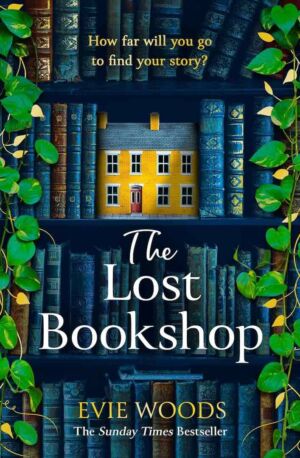
Following the success of her bestseller The Lost Bookshop, Gaughan once again demonstrates her gift for crafting stories that transport readers to enchanting settings while exploring profound themes of grief, belonging, and the healing power of storytelling. The Story Collector is a testament to Gaughan’s growth as a writer, showcasing her ability to navigate complex emotional terrain with sensitivity and insight.
Two Women, One Mystical Connection
At the heart of this novel are two women from different eras whose lives become unexpectedly intertwined. In 1910, we meet Anna Butler, a bright and curious young woman who lives with her family in the small village of Thornwood. When an American scholar named Harold Griffin-Krauss arrives to document local fairy folklore, Anna becomes his assistant, helping him translate tales from Irish to English. What begins as an exciting opportunity for Anna soon leads to dangerous territory as she finds herself entangled with the mysterious Hawley twins at Thornwood House.
In the present day, Sarah Harper impulsively boards a plane to Ireland after leaving her husband in New York, seeking escape from her troubled marriage and the crushing grief of losing her unborn child. Upon arriving in Thornwood, she discovers Anna’s diary hidden in a tree hollow, beginning a journey that will not only uncover long-buried secrets but also help her confront her own pain.
Masterful Storytelling Through Multiple Perspectives
Gaughan’s narrative structure is one of the novel’s greatest strengths. The alternating perspectives between Anna’s diary entries and Sarah’s present-day journey create a compelling rhythm that keeps readers engaged. This approach allows Gaughan to gradually reveal connections between the two timelines, building suspense while exploring how the past continues to influence the present.
The author’s decision to tell Anna’s story through diary entries proves especially effective, offering an intimate glimpse into her thoughts and emotions while maintaining historical authenticity. Through Anna’s eyes, we experience the restrictions placed on women in early 20th-century Ireland alongside the wonder of encountering someone from another world—both Harold with his American education and the enigmatic “Good People” who may be more than just stories.
Ireland: A Character In Its Own Right
Gaughan’s depiction of the Irish countryside deserves special mention. The author brings the setting to vivid life, from the misty fields surrounding Thornwood to the sacred hill of Cnoc na Sí. Her descriptions engage all the senses:
“The air was still and quiet, save for the tiny birds that seemed to live in the hedgerows alongside the narrow road. They whistled and swooped and then disappeared back into the bushes, as though checking out their new neighbour.“
This attention to detail extends to her portrayal of Irish customs and folklore. Rather than relying on stereotypical representations, Gaughan presents beliefs about the fairy folk (or “na Daoine Maithe”—the Good People) with respect and nuance, showing how such traditions could provide comfort and meaning in a world where hardship was commonplace.
Themes That Resonate Across Time
Several powerful themes emerge throughout the narrative:
- The weight of grief and guilt: Both protagonists struggle with profound loss—Anna mourns her sister Milly while harboring guilt about not saying goodbye, while Sarah carries the devastating grief of losing her baby.
- Finding voice and agency: Anna’s journey from shy assistant to a woman capable of standing up for herself parallels Sarah’s path toward healing and self-discovery.
- The tension between tradition and progress: Through Harold’s scholarly pursuit and the villagers’ mixed reactions, Gaughan explores how communities navigate changing beliefs.
- The power of storytelling: Perhaps most significantly, the novel emphasizes how stories help us process trauma, preserve memories, and connect across generations.
Strengths and Weaknesses
What Shines
Gaughan excels at creating authentic characters whose emotional journeys feel genuine. Anna’s youthful naivety gradually giving way to wisdom is particularly well-rendered, while Sarah’s struggle with grief never feels melodramatic or simplified. The supporting characters—from Harold with his scholarly enthusiasm to Fee with her earth-mother wisdom—add richness to the world Gaughan creates.
The novel’s pacing deserves praise as well. Gaughan knows precisely when to accelerate the narrative and when to slow down for moments of reflection. The climactic scene at Thornwood House involving George Hawley, Anna, and the mysterious swarm of bees demonstrates this skill perfectly—building tension before delivering a satisfying (if supernatural) resolution.
The subtle incorporation of magical elements strikes an excellent balance. Rather than overwhelming the narrative with fantastical occurrences, Gaughan introduces just enough mystery to make readers question whether events have ordinary explanations or something more otherworldly at work.
Room for Improvement
While the novel succeeds on many levels, a few aspects could have been strengthened:
- The resolution of Harold and Anna’s romance feels somewhat rushed. After building their connection so carefully throughout the novel, the conclusion of their story comes too quickly, leaving readers wanting more details about how their lives unfolded.
- Certain secondary characters, particularly Olivia Hawley, occasionally veer toward one-dimensional villainy. Her motivations could have been explored with more complexity to avoid falling into stereotypical “evil twin” territory.
- Some readers might find the supernatural elements require too much suspension of disbelief, particularly during the climactic scene with the bees. Those seeking purely historical fiction might struggle with these aspects.
Final Verdict: A Journey Worth Taking
Despite these minor shortcomings, The Story Collector stands as a captivating exploration of how the stories we tell—and those we keep hidden—shape our understanding of ourselves and the world around us. Gaughan has crafted a novel that feels both timeless and timely, addressing universal themes of loss and healing while acknowledging how our connection to the past can help us navigate the present.
The novel will particularly appeal to readers who enjoyed Kate Morton’s The Forgotten Garden, Diane Setterfield’s The Thirteenth Tale, or Susanna Kearsley’s time-slip novels. Fans of Irish writers like Donal Ryan or Claire Keegan will appreciate Gaughan’s authentic portrayal of rural Irish life and folklore.
Like its predecessor The Lost Bookshop, The Story Collector confirms Evie Gaughan’s place as a skilled storyteller capable of blending historical detail with touches of magic. It reminds us that sometimes the most fantastical tales contain the most profound truths—and that healing often begins when we finally give voice to the stories we’ve kept silent.
For Fans Of:
- The Lost Bookshop by Evie Woods (Evie Gaughan)
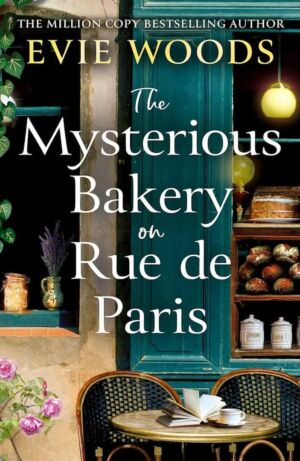
- The Mysterious Bakery on Rue de Paris by Evie Woods
- The Forgotten Garden by Kate Morton
- The House Between Tides by Sarah Maine
- The Winter Witch by Paula Brackston
- The Familiars by Stacey Halls
The Story Collector by Evie Gaughan is published by One More Chapter and is available in paperback, ebook, and audiobook formats. Pick up a copy if you’re looking for a story that reminds us how the past and present are often connected by invisible threads—and how sometimes, the most important stories are the ones we must learn to tell ourselves.