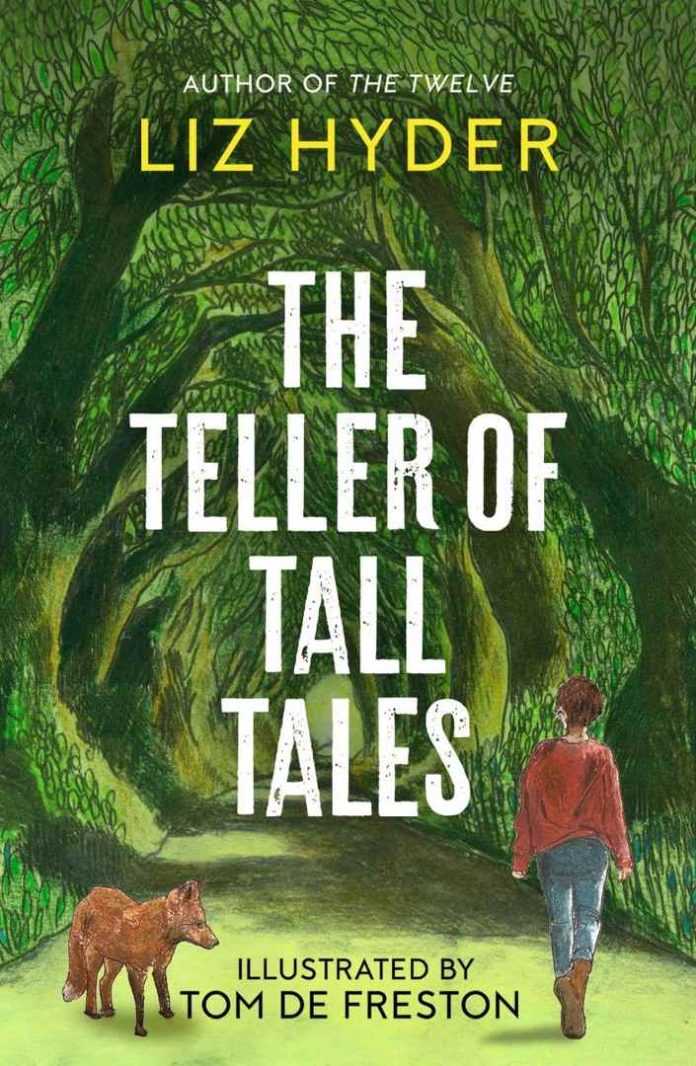





It is January, and the waterfall above the forest has frozen solid. A teenager stands beside it with a grandmother they met for the first time a month ago, still smarting from a story about a charming liar who faded a little with every untruth until his clothes fell empty to the floor. The teenager has just been caught telling classmates they were seriously ill and moving away for treatment. Oma does not scold. She holds a gloved hand and asks for a promise: make up as many stories as you like, but no more big lies. That scene is the hinge of The Teller of Tall Tales by Liz Hyder, a novel that spends a year working out where a story ends and a lie begins.
The Teller of Tall Tales Plot Summary
In The Teller of Tall Tales by Liz Hyder, a fourteen-year-old who has never met their grandmother is allowed to visit her alone, at a cabin deep in snowy woods. Nobody will explain why Oma has been absent for so long; the family line is that it was a misunderstanding. The visits become monthly, from one December to the next. Each weekend brings walks, baking and wild swimming, and ends with Oma telling a tale suited to whatever the teenager is struggling with at home or at school: parents who argue, name-calling, exams, a friendship that goes wrong. Oma promises to tell the real story of the estrangement before the year is out. She is also hiding something about herself.
A Year of Lies, Stories and One Locked Secret
The first thread is honesty, and Hyder handles it with more nuance than the premise suggests. The grandchild’s lie at school grew from something small, and the book is good on how it hardened: the pity it bought, the distance it later kept. Oma’s position is not that inventing things is wrong. Storytelling, she says, has passed down the family for generations, sometimes skipping one, and she spotted it in the baby on the day of the birth. Her worry is habit, the point where a person can no longer tell the difference.
The irony, which readers will see long before the grandchild does, is that the adults are keeping a large untruth of their own, and that the scar on the teenager’s wrist is part of it. The real story, when it arrives in October, is told plainly and treated as a matter of illness rather than villainy. The Teller of Tall Tales by Liz Hyder refuses to make anyone the bad guy, which is the right choice and also the braver one.
Hyder writes the frame in the second person and the present tense, so the reader is the visitor. The pronoun keeps the teenager unspecific enough for any reader to step into, and because the narration slips now and then into Oma’s head, we learn what she conceals (her guilt, her thinning arms, test results she burns) while the visitor does not. That dramatic irony does most of the emotional work in the second half.
Oma’s Tales and the Pictures Around Them
The second thread is the tales, and they are the reason to buy the book. There are eleven, each in a folk-tale register with its own refrain for the moment things turn, and Hyder is not interested in sweetening them. An old woman carries a baby that is not a baby. A curious orphan opens the wrong door in a grandfather clock and becomes part of its face. A collector of jewels takes a dagger from a lake and the lake comes to collect it. The happiest one belongs to Laurie, a sceptical swordswoman who rescues her dragon-mad twin, cures a cursed serpent and declines to marry the prince, who prefers her brother anyway.
Oma keeps telling her grandchild not to look for morals, and the tales work best when they ignore one. Several are genuinely frightening.
The Teller of Tall Tales by Liz Hyder is also an illustrated book, with artwork by Tom de Freston throughout. The text alone, which is what we can judge, makes clear how central it is: the acknowledgements describe the novel as a shared idea from its first seed, and mention the sheer number of images. That matters for the Children’s Booker Prize, which can split its money between an author and illustrator at 50:50 or 75:25, at the Foundation’s discretion. Our Children’s Booker Prize shortlist guide covers the other seven contenders.
Where It Gives Ground
- The pattern is visible. Every month a problem surfaces and a matching tale follows, and despite Oma’s warnings about morals the match is usually exact. By summer you can guess each tale’s subject from the visit’s first page.
- Oma talks in loops. “Love” ends half her sentences, and her cheery asides repeat. Charming for a chapter, wearing across a book.
- The dark tales are properly dark. A drowning, a man shot through the eye, a woman beaten by her husband. Traditional rather than gratuitous, but a lot for an eight-year-old.
The Teller of Tall Tales Ending Explained (Spoilers)
Oma’s secret is cancer, which she hides even from her daughter until a fall puts her in hospital. In December she tells one last tale, about how she met Tomas, and dies with the window open while her grandchild holds her hand. Running to the old tavern she once ran with Tomas, the teenager sees a dagger, a stag’s head, a moth, a grandfather clock and a cauldron on its walls: the seeds of every tale. The book ends with the grandchild beginning a story of their own.
Read These Next
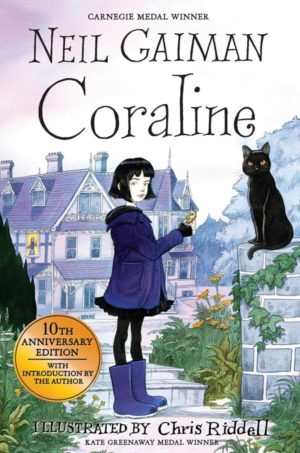
- Coraline by Neil Gaiman: another short, frightening fairy tale that trusts children with real fear.
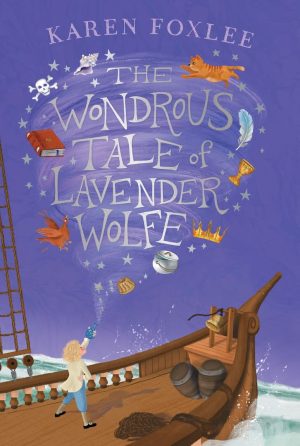
- The Wondrous Tale of Lavender Wolfe by Karen Foxlee: an eighteenth-century middle-grade fantasy told in an old-fashioned voice.
- A Monster Calls by Patrick Ness: tales told to a child facing a dying relative, for the same older readers.
- The Twelve by Liz Hyder: her previous children’s novel, also illustrated by de Freston.
About Liz Hyder
Liz Hyder writes for both young readers and adults, and The Teller of Tall Tales by Liz Hyder continues her partnership with Pushkin’s children’s list.
- Her debut, Bearmouth (2019), a story set in a mine, won the Waterstones Children’s Book Prize for older readers and the Branford Boase Award.
- The Twelve (2024), a Pembrokeshire time-slip novel, won the Nero Book Award for children’s fiction and the Tir na n-Og Award.
- Tom de Freston illustrated The Twelve as well, so this is their second book together.
- Her new novel is out now, published on 22 October 2026.
The Verdict
The Teller of Tall Tales by Liz Hyder is a book about inheritance in the gentlest sense: a habit of noticing, a sourdough starter, a watch, a way of turning what is in front of you into something stranger. Its monthly rhythm is too neat and Oma repeats herself, but the tales are vivid, the secret is handled with compassion, and the last chapter earns every tear it asks for. Give it to a confident eleven-year-old, and be ready to talk afterwards.
Content notes tap to reveal
Where to read The Teller of Tall Tales
Amazon lists the current Kindle, print and audiobook editions, and shows whether the ebook is in Kindle Unlimited right now.
To borrow it free, try your library: Libby and OverDrive lend ebooks and audiobooks with a library card, and WorldCat finds print copies near you.
We don’t link to “free PDF” sites. Those copies are pirated and pay the author nothing.