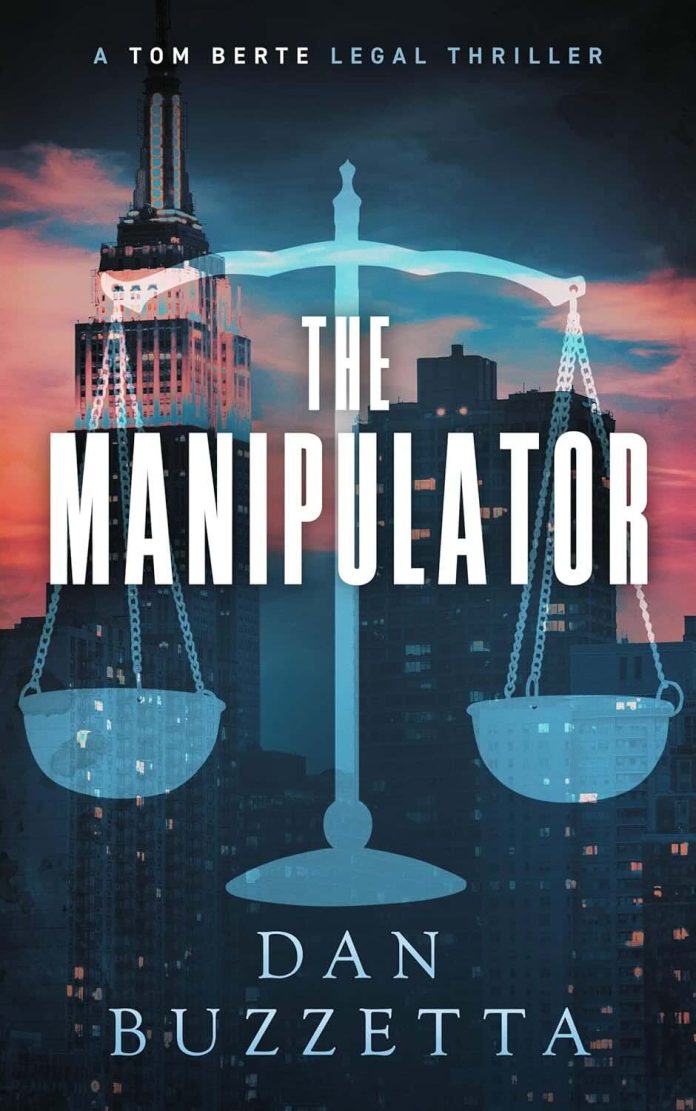
When destiny offers you everything you’ve ever wanted, the price tag rarely comes printed in advance. This uncomfortable truth sits at the heart of The Manipulator by Dan Buzzetta, a legal thriller that transforms familiar crime fiction territory into something far more intimate and philosophically compelling than its genre typically allows.
The Premise That Hooks You
Thomas Berte has achieved what most young attorneys only fantasize about. A Harvard Law graduate clerking for a Chief Judge, then ascending through the ranks of Balatoni, Cartel and Colin, one of the nation’s most prestigious law firms. When the Attorney General personally offers him the position of Executive Deputy Attorney General, charging him with dismantling an international criminal syndicate, it feels like the culmination of a lifetime of hard work.
But nothing about Tom’s ascent proves simple. His target is Cosimo “Nino” Benedetto, a ghost-like figure commanding a criminal empire so sophisticated that most law enforcement agencies have only recently become aware of its existence. Operating from the Vulcania, a floating fortress equipped with military-grade technology that renders it virtually invisible to surveillance, Benedetto represents organized crime evolved beyond anything the DOJ has previously confronted.
What distinguishes The Manipulator by Dan Buzzetta from countless other crime thrillers is the devastating revelation that awaits its protagonist. The investigation doesn’t just lead Tom into professional danger; it forces him to confront foundational truths about his own identity that shake everything he believed about himself.
Character Construction That Earns Every Twist
Buzzetta demonstrates remarkable patience in constructing his characters. Tom Berte arrives fully formed as a principled attorney genuinely motivated by justice rather than ambition. His relationship with wife Brooke provides emotional grounding without descending into romantic cliché. Their interactions feel lived-in, weighted with history and genuine affection that makes subsequent stakes genuinely threatening.
The supporting cast serves the narrative without feeling disposable. FBI Special Agent Bruce Young represents institutional disillusionment personified, a decorated investigator whose resentments and hidden vulnerabilities transform him from ally to unwitting instrument of destruction. Ignatius Balatoni, the legendary firm founder known reverently as “The Pope,” carries secrets that fundamentally reshape the story’s moral landscape when finally revealed.
Most impressively, Buzzetta refuses to paint Cosimo Benedetto as a one-dimensional villain. The crime lord emerges as genuinely complex, capable of both horrific ruthlessness and profound paternal longing. His justifications for his empire carry a twisted logic that the narrative examines without endorsing.
The Web of Institutional Corruption
Beyond individual character work, The Manipulator by Dan Buzzetta offers a sobering examination of how criminal enterprises embed themselves within legitimate institutions. The discovery that BCC, the respected law firm where Tom built his career, has functioned as the Syndicate’s legal apparatus for years creates layers of complicity extending far beyond any single bad actor.
This institutional corruption extends into law enforcement itself. The novel depicts how personal vulnerabilities create openings for exploitation, how systems designed to protect justice can be weaponized against it. When Tom finds himself framed for leaking confidential information, the machinery of the state that should protect him instead threatens his destruction.
The novel excels at demonstrating how manipulation operates at multiple levels simultaneously:
- Personal manipulation through family secrets and emotional leverage
- Professional manipulation through institutional corruption
- Systemic manipulation through the exploitation of legal processes
- Technological manipulation through sophisticated surveillance and digital fabrication
Pacing and Structural Achievements
Buzzetta orchestrates information revelation with impressive control. The central family revelation, which could have felt contrived in lesser hands, arrives only after sufficient groundwork makes it simultaneously surprising and inevitable. Earlier scenes featuring Ignatius Balatoni take on entirely new dimensions upon revisiting them mentally, suggesting careful structural planning.
The pacing accelerates appropriately as Tom’s situation deteriorates. Sequences involving the FBI search of his apartment, his flight through New York streets, and the mounting evidence against him generate genuine tension. The reader shares Tom’s disorientation as the ground shifts beneath him repeatedly.
The climactic confrontation aboard the Vulcania delivers the explosive resolution the narrative has been building toward, but the emotional confrontation between father and son proves equally compelling. Tom’s impossible choice between using his father to save himself and protecting the man who has, however manipulatively, loved him from afar, captures the novel’s thematic complexity beautifully.
Thematic Resonance
The Manipulator by Dan Buzzetta asks uncomfortable questions about merit and achievement. If your successes have been engineered by forces beyond your knowledge, do they still belong to you? Tom wrestles with this question even after his vindication, uncertain whether any of his accomplishments reflected genuine ability or simply Cosimo’s orchestration.
The novel also examines how love can become indistinguishable from control. Cosimo genuinely loves his son, yet that love manifests through manipulation so pervasive it undermines Tom’s entire sense of self. The mother who protected her son by concealing his heritage must reckon with whether protection through deception constitutes its own form of harm.
These questions resonate beyond the specific circumstances of international crime syndicates and federal investigations. They speak to universal experiences of discovering that trusted figures have operated from hidden agendas, that the stories we tell ourselves about our lives rest on foundations others have constructed.
Technical Craft
Buzzetta writes with obvious familiarity regarding legal proceedings, law enforcement operations, and corporate law firm culture. The details feel authentic without becoming didactic. Descriptions of the Vulcania’s technological capabilities might push plausibility, but they establish the Syndicate’s resources effectively while providing appropriately spectacular setting for the climax.
Dialogue serves character revelation without feeling overly expository. Tom’s conversations with Ignatius particularly reward attention, as early exchanges contain foreshadowing only visible in retrospect.
Recommended Reading
Readers who appreciate The Manipulator by Dan Buzzetta should consider exploring John Grisham’s The Firm for its corporate law corruption themes, Scott Turow’s Presumed Innocent for its legal procedural excellence, and Dennis Lehane’s Mystic River for its exploration of how past secrets poison present relationships. Those seeking similar father-son crime dynamics might find Mario Puzo’s The Godfather offers interesting comparative reading, though Buzzetta’s approach proves considerably more psychologically nuanced.
Final Assessment
The Manipulator by Dan Buzzetta transcends genre expectations through its commitment to character complexity and thematic ambition. While delivering the propulsive plotting readers expect from legal thrillers, it never sacrifices emotional authenticity for narrative convenience. The result is a novel that entertains while also haunting, leaving readers to contemplate their own assumptions about identity, achievement, and the price of discovering uncomfortable truths.
For anyone seeking crime fiction that respects both its genre traditions and its readers’ intelligence, this novel represents an impressive achievement worthy of attention.