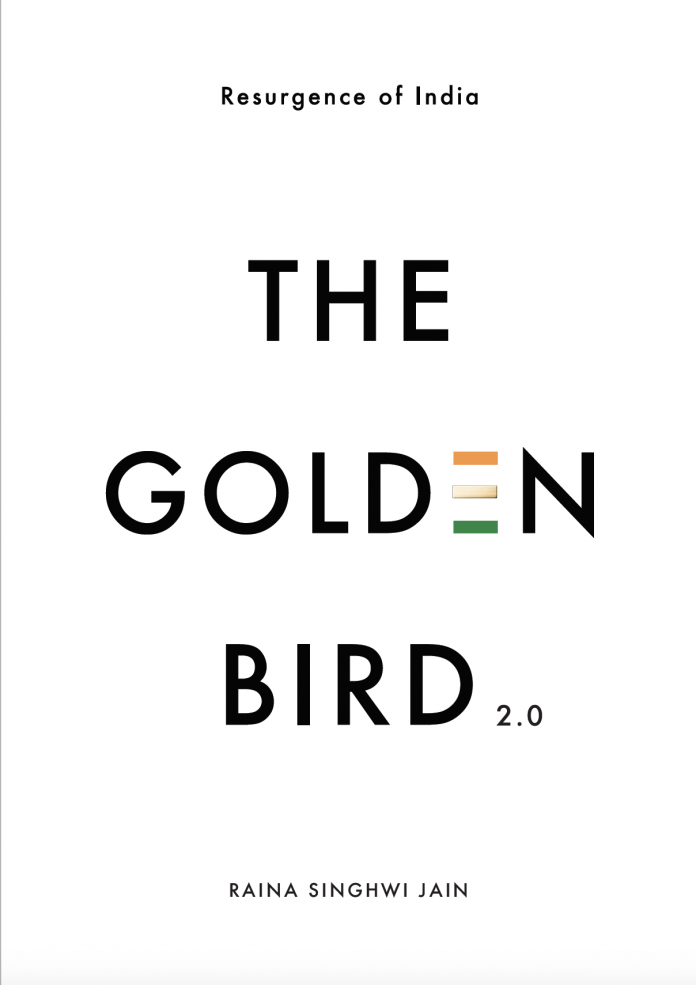
Title: The Golden Bird 2.0
Author: Raina Singhwi Jain
Publisher: Veer Publishing House
Genre: Non Fiction, Business, Management
First Publication: 2020
Language: English
Book Summary: The Golden Bird 2.0 by Raina Singhwi Jain
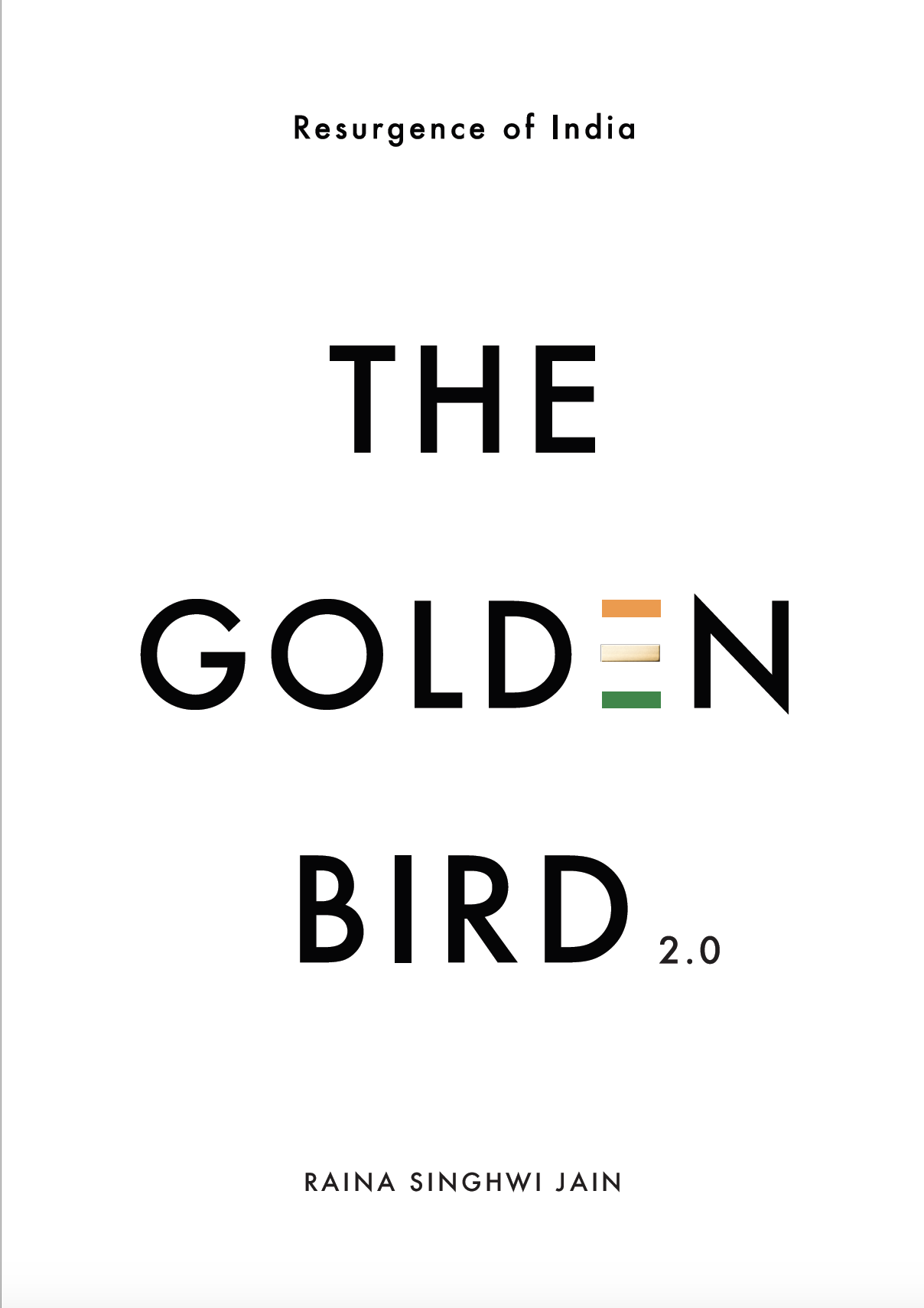 The Golden Bird 2.0 draws from India’s rich past to take a fresh look at its potential for a glorious future—a second golden age, shaped by powerful public will, economic wherewithal, and the nation’s status as the world leader.
What made ancient India the Golden Bird in the first place?
What did China, the Land of the Dragon, have in common with India, and when did these two ancient civilizations diverge on their paths to global success?
Raina Singhwi Jain discusses the immediate need and measures for a quantum jump in our attitude towards development. While conventional wisdom suggests improvements in manufacturing, the ease of doing business and digital technology, Jain goes a step further, drawing surprising parallels between other areas that beg our attention—process engineering, communication design, journalism, and education.
This is a work of reflection and a call to action, urging Indian denizens to act now for a revival of the genius that lies dormant within each one of us.
Book Review: The Golden Bird 2.0 by Raina Singhwi Jain
The Golden Bird 2.0 by Raina Singhwi Jain is an excellent economic history book of India. The main thesis is ultra simple: nations must develop inclusive economic and political institutions if they are to achieve prosperity. Such political institutions include fair and free elections, an independent judiciary, uncorrupted legislative and executive branches etc. Inclusive economic institutions include financial controls. In the U.S., for instance, all three main governmental institutions at the federal level hold each other in check. This is also more or less true in Canada, Western Europe, Japan, Australia, New Zealand.
The Golden Bird 2.0 has a huge amount of good economics. It surveys a wide range of areas: process engineering, communication design, journalism, education, and generally provides up-to-date discussions of some of the latest trends in economics. The discussions of development–particularly in India–are subtle, nuanced and thought provoking. Raina Singhwi Jain is as committed to the method and process as she is to any particular conclusions. She also sheds some light at understanding some of the big questions in growth – like what India needs to do in order to achieve Chinese-levels of growth.
The book also has an interesting shifting back and forth between the advanced economies and developing ones, drawing out similarities but also contrasts between them that help better understand each. Raina Singhwi Jain summarizes the latest economic research on each topic to arrive at intellectually honest interpretations of the data, making this book a model for how economics should be taught and studied.
There are several reasons why this book is a must read, even if (or rather especially if) you are sceptical of economic approaches to policy. First of all, Raina Singhwi, through this book, shows that the state of the art of economics is light-years away from the clichés most people have of the profession, both in terms of methodology used and in terms of the topics that are studied. Second, all the topics studied in the book are really burning issues for the country’s development. By reading The Golden Bird 2.0, you will not just learn a lot about economic analysis, but also develop new perspectives.
Raina Singhwi’s The Golden Bird 2.0 is well written and researched. In fact, it is surprisingly easy to read and understand for a lay person. The author takes a global approach to the subject. What impressed me was the amount of research she did and analysed the data to find out what worked or not for the country. I experience this book as extremely valuable and most interesting and highly recommend it.







