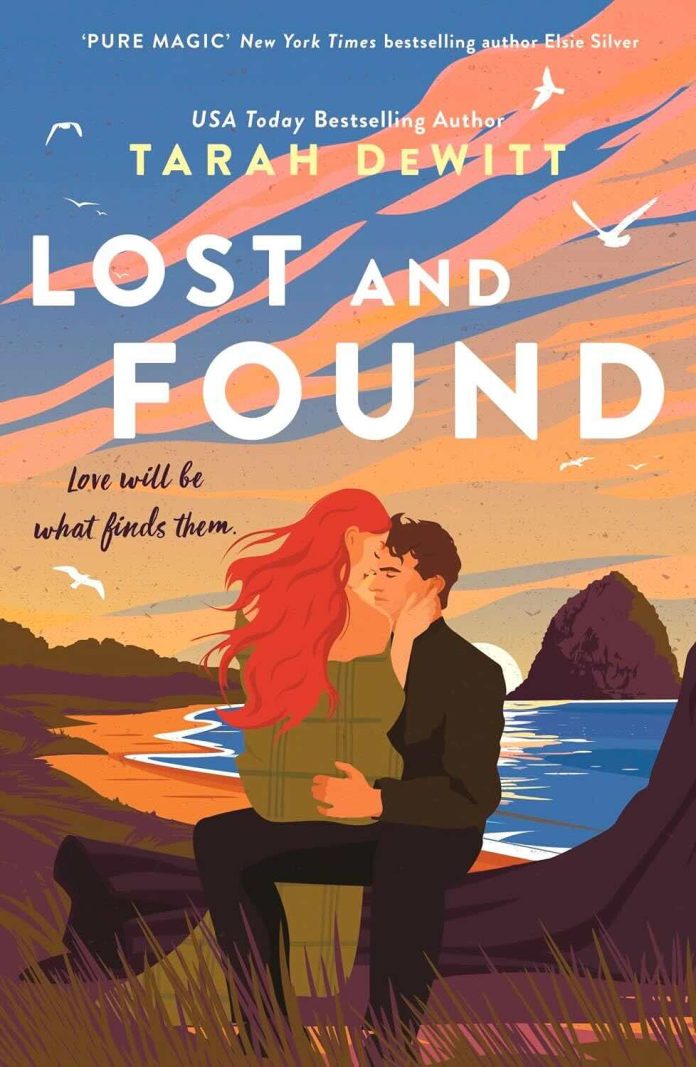
A nervous lawyer tells a thirty-year-old hairstylist that her best friend has left her something in the will. Not jewellery, not money. Eggs, frozen eight years earlier before the first round of chemotherapy, carrying a storage bill of fifty dollars a month and a two-year clock already running.
Lost and Found by Tarah DeWitt opens on that scene and spends the next four hundred pages earning it. Bea Marshall lost Merritt Young to breast cancer a year ago, and Merritt willed her the chance to carry a piece of herself into the world. Bea takes it. She rents out her house to fund IVF, moves into her mother’s guesthouse, is thrown out of it after a fight neither woman wanted, and lands in the spare room of Silas Byrd, the town firefighter she has been carefully not thinking about for eight years.
An Inheritance Romance Has Not Tried Before
Premises this new are rare in contemporary romance, and DeWitt does not waste it on vibes. The IVF arrives as paperwork and logistics: a clinical coordinator who meets Bea’s nervous jokes with a flat request for clarification, a colour-coded medication calendar taped to a bathroom mirror, a card charged on the fifteenth because that is the week they thaw the eggs. Bea spends half an hour failing to give herself the first injection. That texture is the book’s engine, and it keeps a plot that could have floated off on sentiment tethered to a bank balance and a needle.
DeWitt is candid about her thumb on the scale. A note before chapter one warns that Bea conceives on the first round and tells readers for whom that would sting to proceed carefully. The honesty is admirable. It also names the book’s structural problem in advance.
Where This Sits in the Spunes Series
Newcomers can start here, since DeWitt supplies a character recap up front, though the ensemble hits harder if you have met them before.
- Savor It (Book 1), Sage Byrd and Fisher Lange
- Left of Forever (Book 2), Ellis and Wren Byrd
- Lost and Found (Book 3), Bea Marshall and Silas Byrd
Readers new to DeWitt should also know The Co-op, plus her earlier standalones Funny Feelings and Rootbound.
The Golden Boy, Rewritten
Silas is the most interesting thing in Lost and Found by Tarah DeWitt. He arrives dressed as a familiar archetype, the small-town heartbreaker with dimples and a reputation, and DeWitt spends the novel taking the costume off him. Twenty months before the story opens he went off a mountain in a ball of fire. He is left with scars across his throat, hand, hip and knee, skin that no longer sweats where it was grafted, and a habit of calling his unburned hand his “good hand.”
The scene where Bea refuses to let that phrase stand is the best writing in the novel. She has his ruined hand in her lap with a bottle of nail polish, and she itemises what it has done: fed the cat, held her steady through injections, mattered. She makes him say the words back. DeWitt has been building to it since chapter one, and it lands without a trace of the inspirational gloss the subject usually attracts.
Just as good is the burn survivors’ group he keeps failing to enter. He bolts from the car park twice. When he finally gets inside, nobody arranges chairs in a circle; they play Ping-Pong and five-card draw and eat all the cookies, and a widow named Caprice tells him his pain is not obliged to teach him anything. It is a sharper portrait of peer support for burn survivors than most novels manage, because it refuses to become a therapy montage.
Grief with a Structure
The novel alternates Bea and Silas in the present with flashbacks titled “One Night, Twelve Years Ago” and “One Night, Eight Years Ago,” and DeWitt doles them out with real discipline. What happened between these two, and why Merritt sits in the middle of it, is withheld long enough to reframe the present twice.
The grief lives in small physical objects rather than speeches: a blanket shoved into a credenza because it still smells of Merritt, a shop owner who keeps Butterfingers in stock for a customer who died, a client in the salon chair who asks to be told about her. Bea decides grief works like distance running and borrows the rule of thirds for it, and Lost and Found by Tarah DeWitt mostly lives in the third where you are simply doing the work. That is a braver place to set a romance.
What Works
- The premise pays its paperwork. Cost, timing, insurance and a two-year cryopreservation window drive the plot as hard as the attraction does.
- Silas’s body is a subject, not a prop. Male body image and disfigurement get sustained interior attention, and the resolution comes through argument rather than reassurance.
- The comedy never apologises for the grief. A jar of special-order sour candy leaves both leads drooling into a kitchen sink minutes after a toast to a dead woman, and neither register cancels the other.
- The ensemble behaves like a family. Previous couples turn up with ongoing lives of their own, and a group-chat chapter at six in the morning is funnier than most books manage in a full act.
Where It Stumbles
- The third act invents its conflict. Once the leads commit, the only tension left is Silas misreading some boxes in Bea’s car and assuming she is leaving. One text would have solved it, in a relationship the novel spent two hundred pages establishing as unusually communicative.
- The pregnancy plot meets no resistance. Thirteen of twenty eggs fertilise, the first transfer takes, nothing goes wrong. The back half loses its stakes and settles into happiness described at length.
- Devin is the sharpest objection and the most wasted character. Merritt’s sister, furious that Bea is having the baby her sister never got and raising it with the man her sister wanted, gets one restaurant scene of real force and is then resolved offstage. Bea’s mother receives a full reconciliation; the harder opponent gets a paragraph.
- The epilogue keeps going after it has ended. Handing Merritt her own dying interiority in third person is unexpected and moving. Running on into a catalogue that checks in on every series couple, then addresses the reader directly, turns an ending into a curtain call.
Romance, Heat, and Content
Heat Level at a Glance
Roughly four chillies out of five. The first half of Lost and Found by Tarah DeWitt runs on restraint, then the back half turns fully explicit and stays there, with filthy, funny dialogue and a hero who talks constantly.
A Word on Content Warnings
DeWitt supplies her own list and it should be taken at face value: cancer, the death of a loved one from cancer, sustained grief, bodily injury, negative self-talk about a scarred body, and IVF. The fertility thread is the one to weigh carefully, and the author’s spoiler-flagged note exists so readers can decide in advance.
Who This Is For
Reach for Lost and Found by Tarah DeWitt if you want a romance where the heroine’s central project is her own rather than the hero’s, and where grief is load-bearing instead of decorative. Skip it if you need a third act with teeth, if frictionless fertility plots are painful ground, or if you prefer romance leads who are less articulate about their feelings.
Read These Next
- Promise Me Sunshine by Cara Bastone. DeWitt names it in her acknowledgements as proof a love story could hold hands with grief.
- Before I Let Go by Kennedy Ryan. Grief written with less mercy, in a second-chance structure that earns it.
- Just for the Summer by Abby Jimenez. The closest tonal cousin: medical specificity, heavy subject matter, jokes that keep landing anyway.
- If Tomorrow Never Comes by Allison Ashley. Another romance built around a medical decision that cannot be taken back.
The Last Word
This is the strongest book in the Spunes series and the one with the widest gap between its halves. Officiating his brother’s wedding in chapter one, Silas asks, “What is bravery, if not hope in action?”, and for two hundred pages the novel tests that claim with needles, invoices and a scarred hand held in a woman’s lap. Then it gets everything it wants, and the wanting was the best part. What survives is Silas, who spends a lifetime being nobody’s first call and finally becomes somebody’s, and a dead woman who left a letter, a list of small regrets, and a question about halibut. Lost and Found by Tarah DeWitt is a romance about the arithmetic of hope, generous enough to show its working.







