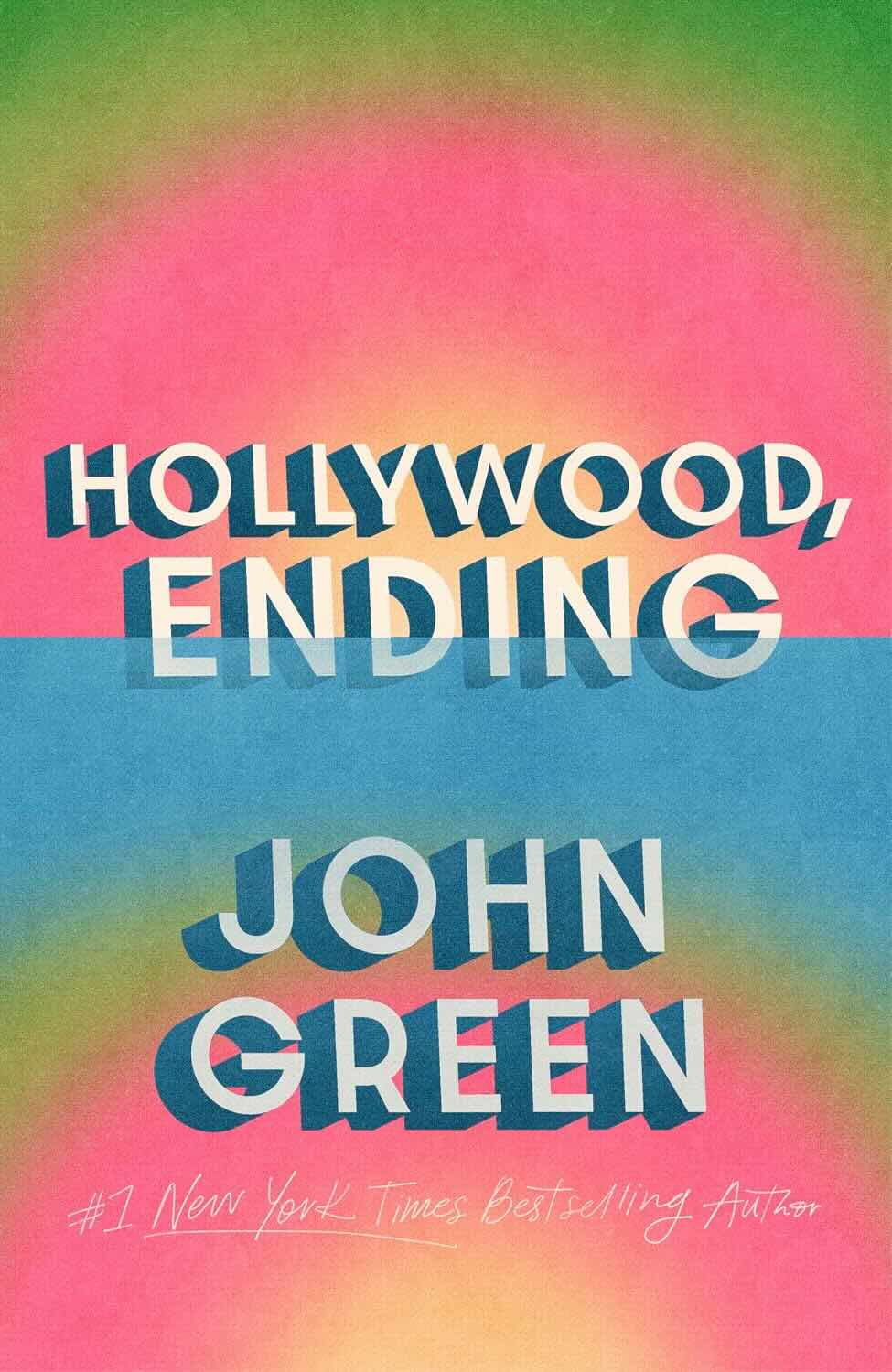
When Juniper Castillo was six, her mother taught her to take her own pulse: fifteen seconds at the wrist, multiply by four. Get it down to eighty. Then her mother would hit her and ask for the number again, and Juniper learned to hold it at eighty while it was happening. She is twenty-two now, and she can still do it on request. She demonstrates it once, on a couch in a rented Pittsburgh apartment, holding out her arm so a boy she has known three weeks can feel the trick work. Acting, she calls it. Just like she taught me. That scene sits forty pages into Hollywood, Ending by John Green and it explains almost everything that comes after it.
Which is not to say the book is grim. It is very funny, and it is considerably harder than funny.
What Hollywood, Ending Knows About a Film Set
The premise is small and the execution is not. A former Nickelodeon child star and a boy from Indianapolis who has never been in a movie are cast opposite a Marvel superstar in a modest biopic about the last year of Andy Warhol’s life. It is a thirty-four day shoot on a fourteen million dollar budget. Nobody expects much. Then the test scores come back at ninety-two percent, and the machine switches on.
Green has done the work here, and it shows in the vocabulary rather than in tourism. Trailers are ranked: a full trailer, then a double-banger you share with your costar and through whose wall you can hear everything, then a triple, then the honeywagon for day players. Producers watch from Video Village. A line producer knows to the dollar what a forgotten line costs. When a star stays on set to read his lines off camera during someone else’s coverage, that is treated as an act of real generosity, because it is.
Matthew Malone, the superstar, delivers the book’s thesis at a raw vegan restaurant on day one. Every industry converts human time into money, he says, but in this one they are not using your labour to turn iron into steel. They are using your labour to turn you into ticket sales. You are not just the labour. You are also the raw material.
Hollywood, Ending by John Green then spends four hundred pages proving him right in ways he did not intend.
The Pronoun John Green Never Defines
Kai Laramie was abused by his high school English teacher from the age of fourteen. He was chosen to testify at the trial because he was the straight-presenting athlete and the boy who actually reported it had a drug charge. The teacher is dead now. Kai has never once said the word out loud if he can help it. Throughout the novel it is only ever it — a pronoun that needs no antecedent, that saturates a room the moment anyone finds out. In a way, he says, it made me the it.
This is where the book earns its adult designation, and not because of the sex. Green writes desire from inside somebody whose desire was defined for him before he had one. Kai cannot work out whether wanting Juniper is permitted, whether imagining her is itself a violation, whether an evening he initiated at fifteen was indulgence or survival. He asks that last question of himself in a hotel room at two in the morning, and Hollywood, Ending by John Green refuses to answer it for him, which is the correct and the harder choice.
Then his abuse leaks, and the industry converts it. A gossip headline makes him a hero who put a predator away. Another survivor, correctly furious, posts a thread saying that is not what happened. His agent tells him it helps. His publicist tells him to get out in front of it. And for the next three weeks he sits in windowless conference rooms while a new reporter arrives every seven minutes and says, you have been very public about this, which is the phrase that grants permission.
The junket chapters are the best formal writing Green has done. Part three eventually gives up on scenes altogether and becomes an unbroken run of talking points — Matthew is a legend, I love Juniper, our favourite animal is the rhinoceros that escaped from the Prague Zoo, victims have nothing to be ashamed of — repeated until Kai notes that all of it is true and saying it this often has started to feel like a betrayal.
Where Hollywood, Ending Gives Ground
Almost everything wrong with Hollywood, Ending by John Green happens in the last hundred pages, and none of it is fatal.
- Part four is the conventional stretch. Six chapters headed DAY 1 through DAY 6, a reconciliation in Jamaica, and beats that arrive in roughly the order you expect them to. It is warm and well-observed and it is the only section where you can see the outline.
- The villain confesses. The reveal of who leaked Kai’s history is delivered by the culprit himself, unprompted, on a red carpet, in dialogue that explains his own motive. After three hundred pages of characters saying the opposite of what they mean, the moment plays a little easy.
- Two narrators, one cadence. Juniper is a compulsive note-taker and Kai is dyslexic and slow to read, and yet both produce aphorisms in the same shapely, essayistic rhythm. Green’s nonfiction voice keeps surfacing through people who should not sound like it.
- The agent and the executive are broad. Bob’s profane monologues and Todd’s endless jokes are genuinely funny, and they are cartoons standing next to the precision of Ellen, who is the finest character in the book and knows exactly what she is complicit in.
- The Warhol material occasionally arrives as research. Two or three passages read like the biography Juniper is holding rather than something she thought.
Content Notes
Child sexual abuse by a teacher, treated without graphic description but with real specificity about grooming, testimony and the aftermath. Physical abuse of a child by a parent, and parental alcoholism. A recent parental death. Drug use and a bleeding nose staged within a film scene. Disordered eating touched on lightly. Explicit consensual sex between adults. The long-term effects of childhood sexual abuse that Hollywood, Ending by John Green describes are recognisable and accurately drawn, which is part of why the book lands so hard.
Read These Next
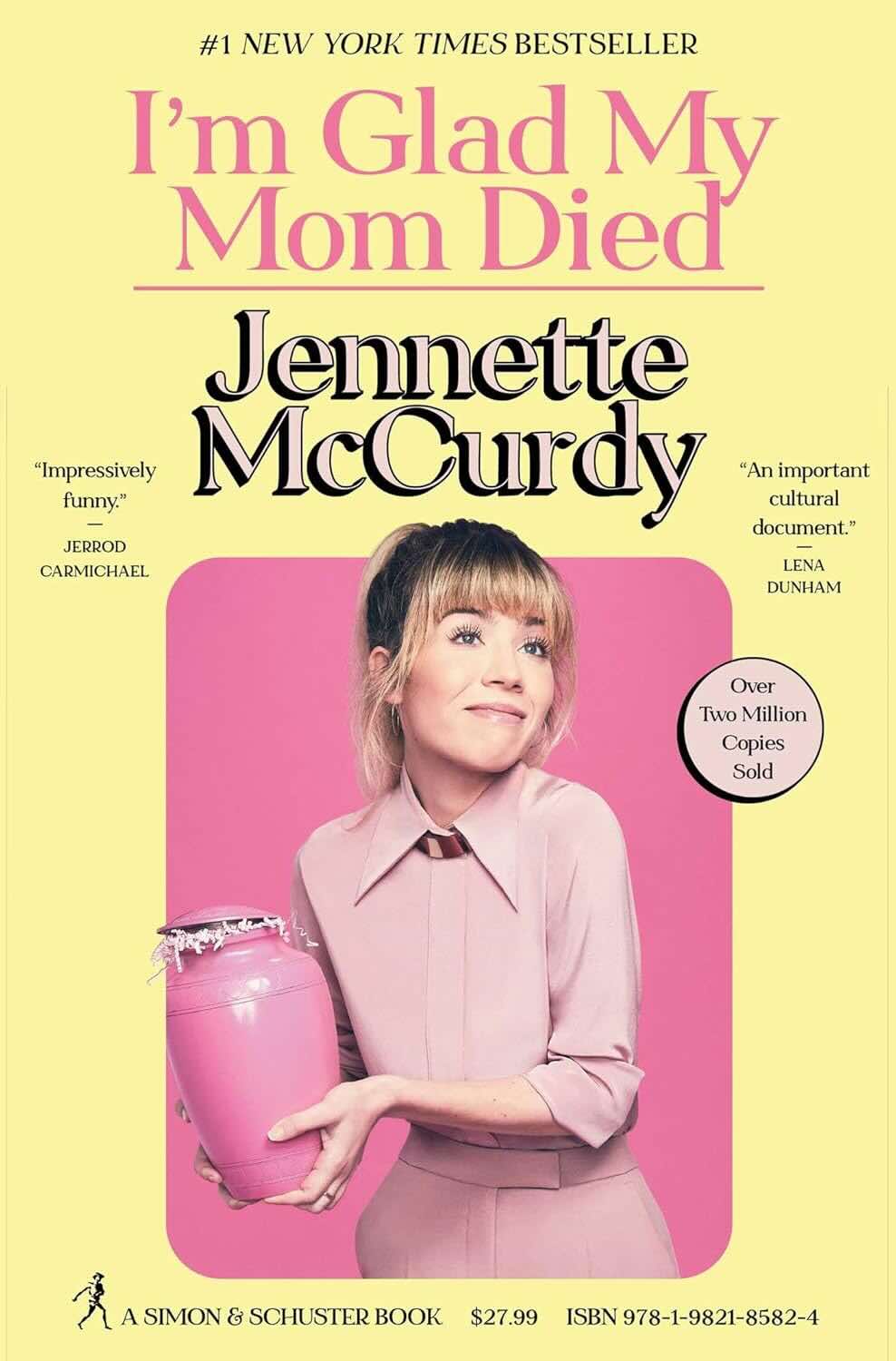
- I’m Glad My Mom Died by Jennette McCurdy. The nonfiction companion to Juniper’s half of the book, down to the pool at the pilot-season apartment complex.
- The Seven Husbands of Evelyn Hugo by Taylor Jenkins Reid. Glamour as a managed product, from the other end of a career.
- The Anthropocene Reviewed by John Green. Where the essayistic voice in this novel actually belongs, and where it is unimprovable.
- Turtles All the Way Down by John Green, his previous novel and the closest thing in his backlist to this one’s interest in a mind that will not leave its owner alone.
- Yellowface by R. F. Kuang, for the same publishing-machine nausea in a different industry.
Worth Your Shelf
The romance at the centre of Hollywood, Ending by John Green works because both of these people are running the same broken calculation. Juniper wants to be great and cannot separate that from her dead mother’s approval. Kai has natural gifts he did not ask for and no idea what he wants, having never been permitted to find out. Their obstacle, when they finally name it, is that neither can disentangle what they want from what they are supposed to want. Very few novels about famous people bother to be that specific.
What stays is the smaller stuff. A boy telling a woman he has just met that he loves her a little, because love is big and reckless and he says it whenever he feels it. A publicist admitting that caring about her client is an impediment to doing her job. A stick of mint gum, chewed hard, because when you are chewing it you cannot smell anything else. Hollywood, Ending by John Green is his best book, and the first one where the machine grinding away underneath the story is the story.